14 Best Stock Photography Sites
Choosing a stock library is a licensing decision before it is a photography decision. Two sites can carry near-identical images and differ completely in what...

Choosing a stock library is a licensing decision before it is a photography decision. Two sites can carry near-identical images and differ completely in what you are legally allowed to do with them, and the difference is usually a sentence buried in a licence page.
The 14 platforms below split into free libraries, subscription services and premium or specialist agencies. For each one, the useful question is not "is the photography good?" but "does this licence cover the thing I am about to do with it?"
Licensing terms change, and prices change faster. Treat the descriptions here as structural, and confirm the current terms on the provider's own licence page before you spend money or publish.
Free Libraries
Photo: energepic.com — CC0, via Openverse.
1. Unsplash. A large library of high-quality lifestyle, landscape and portrait photography, free to use under a broad licence that does not require attribution. The catch is oversaturation: some images become recognisable because they have been used on thousands of sites. Search carefully, and avoid the first page of results.
2. Pexels. Similar in spirit to Unsplash and increasingly strong on video as well as stills. Good interface, generous terms, and a licence that suits commercial work without paperwork. Attribution is not required but is a courtesy some photographers appreciate.
3. Pixabay. Mixes photographs, illustrations, vector graphics and video in a single library under a permissive licence. The photographic quality is more variable than Unsplash or Pexels, and it remains useful when you need something specific rather than something beautiful.
4. Wikimedia Commons. Expired-copyright and freely licensed material at high resolution, including press and government images. This is the library to check for historical photographs, specific buildings and scientific subjects. Licences vary file by file, so read each one; some require attribution and share-alike terms.
Subscription and Credit Services
5. Shutterstock. Enormous library, heavily used by agencies and designers, with both credit packs and subscription plans. Their collection includes editorial and news material as well as commercial work. Contributor economics at the volume end are famously tight, which is worth knowing if you are considering both sides of the market.
6. Adobe Stock. Integrated directly into Creative Cloud applications, which is its main advantage: you can licence and place an image without leaving the software. Credit packs or subscription, with a large library and reasonable curation. Also accepts generative AI imagery with specific labelling requirements.
7. iStock. Getty's volume brand, offering credit packs and subscriptions at lower price points than the Getty main library. A sensible middle ground when a client wants recognisable quality without premium licensing costs.
8. Getty Images. Premium rights-managed and royalty-free licensing, plus a deep editorial archive. Expensive, and warranted when the campaign justifies exclusivity and the legal certainty that comes with a major agency. The editorial side is often the reason people end up here at all.
9. Alamy. A large UK-based library with a high proportion of editorial and location-specific work. Particularly good for accurate photographs of specific towns, buildings, professions and events that general libraries treat generically.
10. Dreamstime. A long-running microstock agency with credit packs and subscription options. The library is broad rather than fashionable, and it is a reasonable place to check when a common subject is priced too high elsewhere.
11. Depositphotos. Credit packages plus subscription plans, with a library that leans towards business, lifestyle and conceptual imagery. Frequently used in bundles for agencies that need volume at low cost.
12. Pond5. Video-led, and the image library is secondary to the footage and audio, but this is where you go when you need moving images with the same licence as your stills. Editorial and commercial options are separated clearly.
13. Stocksy. A curated library owned by its contributing artists, positioned at the higher end of commercial photography. Prices are higher, quality and consistency are noticeably above the microstock average, and the collection avoids the generic look that plagues bigger libraries.
14. Wire services: Reuters, Associated Press, Agence France-Presse. Not libraries in the ordinary sense. These distribute editorial news photography for licensed publication, and they are the correct route when you need verifiable images of a current event with a documented chain of custody. Editorial licensing only, and not for commercial or promotional use.
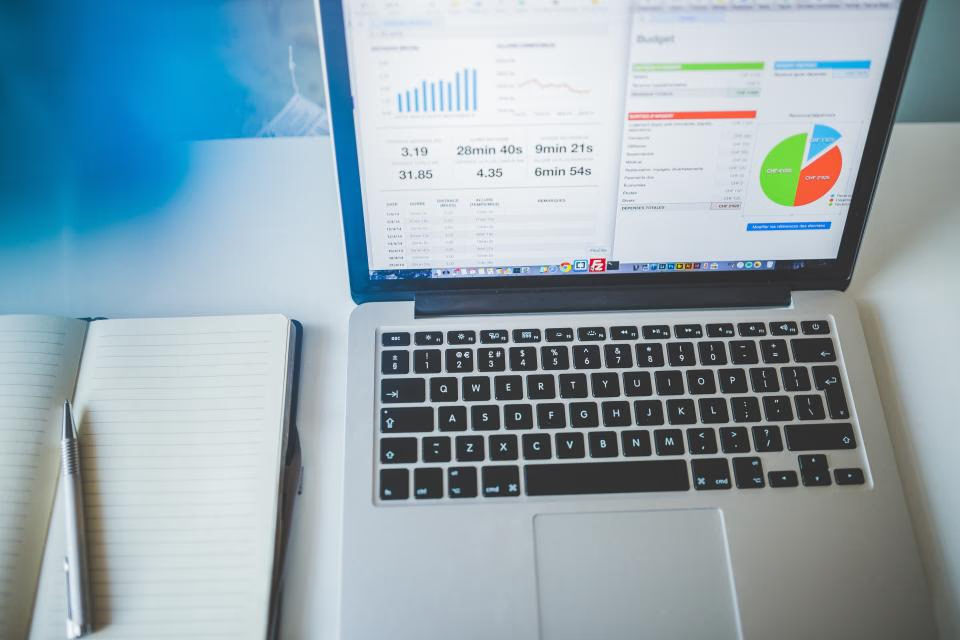
Photo: Negative Space — CC0, via Openverse.
How to Judge Whether a Licence Covers You
The licence page is the document that matters, not the marketing page. Four questions resolve most of the ambiguity.
Commercial or editorial? Commercial use includes anything promoting a product, service or organisation. Editorial use covers publication of newsworthy or informative content. Most free libraries allow commercial use. Most news wire material does not.
Is there a release? An image containing identifiable people without a model release is usually restricted to editorial use regardless of the library's general terms. Property releases cover identifiable private buildings and property, and their absence limits commercial licensing too.
What about print runs and resale? Subscriptions sometimes sidestep print run limits, but some licences cap the number of copies or explicitly exclude merchandise, book covers and resale products. If you are planning a physical product, check this before designing it.
Is it AI-generated? Many libraries now accept synthetic imagery with a disclosure requirement. If your client needs provenance they can defend publicly, that label matters, and the current industry fight over AI-generated mockups in fashion campaigns shows how contentious the question has become. At the industrial end, some studios are now producing millions of AI-assisted images a year, which changes what a library is for.
Choosing Between Free and Paid
Free libraries cover a lot of ground now, and for blog posts, social content and internal documents they are usually sufficient. Pay for two reasons only: when you need a subject that free libraries simply do not have, and when you need the legal certainty that comes with a documented licence and indemnity.
That second reason matters more than people expect. A free image with an unclear provenance can become a legal problem later, particularly if a model later objects to commercial use or if a contributor uploaded something they did not own. A paid licence with releases on file transfers that risk to the agency, which is often the actual product you are buying.
For anything visual that involves new technology and its limits, the underlying capture technology matters as well, and the direction of AI and computational processing inside cameras is worth understanding before you assume a library image can be pushed further in editing than it can.

Photo: Burst — CC0, via Openverse.
Workflow Habits That Save Money
Check your brief before you search, and write down every image you need in a list. Browsing without a list is how credit packs get spent on images that do not end up in the final design.
Search by concept as well as subject. Art directors brief by meaning rather than by object, so "isolation" or "renewal" will find material that "man standing on rock" will not.
Download the largest size you might need. Re-licensing an image at a bigger size costs more than the original licence did, and re-downloading the same file at a higher resolution within the same licence window is not always permitted.
Keep the licence record with the file. A folder of images with no record of which licence applies to which is a liability, and it becomes a serious problem the moment a project gets audited or a client asks questions.
Tips for Licensing Well
- Read the licence page, not the marketing page, before you download anything.
- Check for a model release on any image of an identifiable person, especially for commercial work.
- Avoid the most popular free images. Familiarity makes a campaign look cheap.
- Prefer one library you know well over four you half understand.
- Buy the largest size you might plausibly need in one go.
- Archive the licence and the download receipt alongside the file.
- If the project is advertising or merchandise, budget for a paid licence from the start.
Conclusion
The right library depends entirely on what you are making. Free platforms handle most editorial and content work. Mid-tier subscription services handle agency and client work at reasonable cost. Premium and wire services exist for campaigns where exclusivity, provenance and indemnity are worth paying for.
Learn one licence structure properly. Most licensing mistakes happen because someone assumed a rule from one platform applied on another, and the correction afterwards usually costs more than the original licence would have.
FAQ
Which stock photography site is best for free commercial use?
Unsplash, Pexels and Pixabay all permit commercial use without attribution, and all are adequate for websites, presentations and social content. Check the current licence text for anything involving merchandise or resale, and be aware that free images are heavily used.
Do I need a model release to use a stock photo of a person?
For editorial use, usually not. For commercial or promotional use, yes in most cases. An image of an identifiable person without a release is generally restricted to editorial licensing, which is why library filters for released and unreleased images matter.
Why are free stock photos risky?
The main risks are unclear provenance and heavy overuse. If a contributor uploaded material they did not own, or a model later objects to commercial use, the problem lands on you rather than on the platform. Paid licences from established agencies shift that risk to the licensor.
Is it cheaper to buy credits or a subscription?
Credits suit occasional use and let you buy a specific image at a specific size. Subscriptions suit regular volume, and usually include daily or monthly download limits rather than per-image costs. Work out your realistic monthly need before committing to either.
Are AI-generated images allowed on stock platforms?
Many major libraries now accept them with disclosure requirements, and policies are still evolving. If your project needs defensible provenance, prefer licensed photography from a human contributor with releases on file.
Can I use the same stock image as a competitor?
Yes, and this is one of the strongest arguments for licensing less common material. Generic free images appear across thousands of sites, which is why small differences in subject and treatment matter more than most people expect.
Continue reading

Which Fashion Brands Are Winning the AI Discovery Battle — And Why It Matters More Than SEO
May 24, 2026
How to Photograph Children: 29 Tips for Creative and Fun Photos
May 24, 2026
Fashion's Top Executives Gather in London to Explore AI's Role in the Industry
May 24, 2026
8 Sibling Rivalry Poses That Turn Fights Into Epic Photoshoots
July 11, 2026
5 Chic Jeans and Top Combos You'll Be Wearing All Summer Long
May 24, 2026
8 Sustainable Fashion Photoshoot Ideas That Wow on Instagram
July 11, 2026
Casual Going Out Fit: How Luxury Streetwear Is Redefining After-Dark Dressing
May 25, 2026
6 Chic Sandal Trends That Will Give Your Summer Shoe Collection Some Personality
May 24, 2026
61 Best Photography Books for All Levels
September 25, 2026
Making Money with Stock Photography
September 25, 2026
Instagram Stars Share Their Secrets to Taking Amazing Photos
September 27, 2026
42 Free Photography Books to Download (PDF + eBooks)
May 24, 2026
How to Take the Perfect Engagement Photos: The 5 Rules
September 27, 2026
Colorful Shoes, Woven Bags, Tankinis: 7 Fun Summer Trends Worth Shopping Right Now
May 25, 2026
Fashion People and Zara Agree: You Can't Go Wrong With This Effortless 3-Piece Summer Outfit Idea
May 25, 2026