AI-Generated Mockups Are Going Viral — But Are They Good for Fashion Brands?
AI has made it easier than ever for creators to dream up and share unofficial product concepts. But while these fan-made renders build buzz, they're also set...
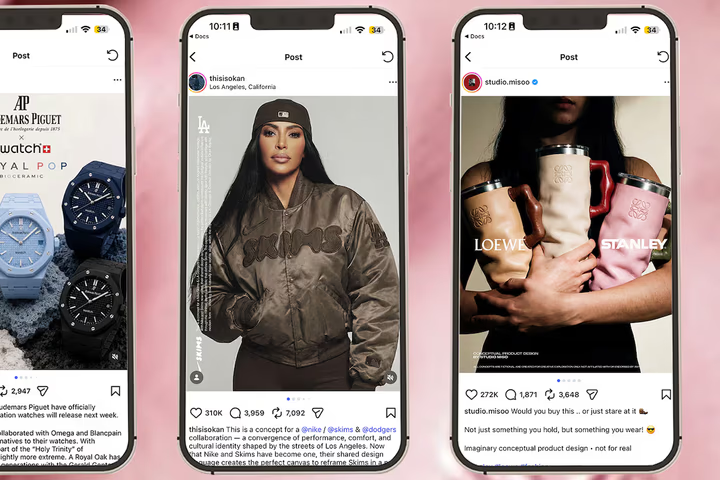
AI has made it easier than ever for creators to dream up and share unofficial product concepts. But while these fan-made renders build buzz, they're also setting expectations that real products can't always meet. AI-generated mock-ups of dream collaborations that have gone viral on Instagram. (BoF Studios/@hidden.ny, @studio.misoo, and @thisisokan)
Introduction
Scroll through Instagram or TikTok on any given day and you're likely to come across a strikingly polished image of a product that doesn't actually exist — a sneaker collaboration between two unlikely brands, a limited-edition handbag in an unexpected colorway, or a watch that blends two iconic design languages into one. These are AI-generated mockups, and they're becoming a fixture of fashion's online culture.
Thanks to increasingly accessible AI image generation tools, creators and fans can now produce near-photorealistic product concepts in minutes. The results often look convincing enough to fool casual scrollers — and sometimes even dedicated brand followers. But as this trend grows, it's raising real questions for the brands caught in the middle of it.
What Are AI Fashion Mockups?
AI mockups — sometimes called "concept renders" or "fan designs" — are digitally generated images that imagine what a product might look like, typically without any involvement from the brand itself. They range from plausible-looking sneaker colorways to elaborate fantasy collaborations between luxury houses and streetwear labels.
The practice isn't entirely new. Designers and enthusiasts have long created concept art and fan edits. But the arrival of powerful AI image tools has dramatically lowered the barrier to entry. What once required professional design skills and hours of work can now be produced by anyone with a smartphone and the right app. The quality, too, has improved to the point where even experienced eyes can be fooled at first glance.
When Swatch announced a real collaboration with Audemars Piguet, for instance, the internet was already flooded with AI-generated concepts of what such a watch might look like — setting a visual baseline that the actual product would inevitably be measured against.
The Upside: Organic Hype and Community Engagement
From a marketing perspective, there's an undeniable appeal to this kind of organic content. When fans are excited enough about a brand to imagine new products for it, that's a sign of deep cultural relevance. AI mockups can function as a form of free advertising — generating impressions, sparking conversation, and keeping a brand top of mind between official releases.
For brands that thrive on hype and limited-edition drops, the viral spread of concept renders can amplify anticipation in ways that paid campaigns struggle to replicate. The content feels authentic precisely because it comes from the community, not a marketing department.
Some brands have even leaned into this dynamic, engaging with fan concepts on social media or drawing inspiration from community-generated ideas. In a landscape where consumer co-creation is increasingly valued, AI mockups represent a new form of participatory culture around fashion.
The Downside: Confusion, Disappointment, and Brand Risk
But the same qualities that make AI mockups exciting also make them potentially damaging. The core problem is expectation management.
When a convincing AI render of a product goes viral, it shapes what consumers expect the real thing to look like. If the actual product — when it eventually launches — doesn't match the fantasy version, the reaction can be swift and harsh. Social media comment sections fill with disappointment. "This isn't what I wanted" becomes a refrain, even when the real product is objectively well-designed.
This dynamic puts brands in a difficult position. They have little control over what fans create and share, yet they're held accountable for the gap between fan imagination and commercial reality. A product that might have been well-received on its own merits can be overshadowed by the "better" version that never existed.
There's also the issue of misinformation. Not all viewers can tell the difference between an official teaser and a fan-made render. Mockups can circulate as if they were real leaks, leading to genuine confusion about what a brand is actually releasing. This is particularly problematic in the luxury and collectibles space, where authenticity and precise product knowledge matter enormously to buyers.
Branding and Intellectual Property Concerns
Beyond consumer confusion, AI mockups raise thornier questions around intellectual property and brand identity. When a creator uses a brand's logos, design language, and visual codes to generate a product concept, are they infringing on that brand's IP? The legal landscape here is still evolving, and most brands have been slow to take action against individual creators.
But the reputational dimension is more immediate. A poorly conceived or offensive AI mockup bearing a brand's visual identity can spread just as quickly as a flattering one — and the brand has no editorial control over it. As AI tools become more capable and more widely used, the volume of this kind of content is only going to increase.
Luxury brands, in particular, have reason to be cautious. Their value is built on carefully controlled narratives of exclusivity, craftsmanship, and creative vision. Unofficial AI renders — even well-intentioned ones — can dilute that narrative by suggesting that anyone can imagine (and therefore, in some sense, "create") a luxury product.
How Brands Are Responding
Most brands have taken a wait-and-see approach, neither actively embracing nor aggressively policing AI mockup culture. A few have begun issuing clearer guidelines about the use of their visual assets in AI-generated content, but enforcement remains inconsistent.
Some forward-thinking brands are exploring ways to channel this creative energy productively — for example, by hosting official design competitions or creating sanctioned spaces for fan creativity. Others are investing in faster, more responsive product development processes so that the gap between fan concept and real release is narrower.
What's clear is that ignoring the trend entirely is no longer a viable strategy. AI mockup culture is here, it's growing, and it's shaping how consumers perceive and talk about brands in real time.
Practical Tips for Brands Navigating AI Mockup Culture
- Monitor social media proactively. Set up alerts for your brand name combined with terms like "concept," "render," or "AI" to track what's circulating.
- Engage selectively and thoughtfully. Acknowledging fan creativity can build goodwill, but be careful not to imply endorsement of unofficial designs.
- Communicate clearly around real launches. When an actual product drops, make sure official imagery and messaging cut through any pre-existing fan-generated noise.
- Consider your IP strategy. Work with legal counsel to understand your options if AI mockups start causing genuine brand harm.
- Use fan concepts as market research. The products fans imagine can offer genuine insight into what your audience actually wants.
Conclusion
AI-generated fashion mockups are a double-edged phenomenon. They reflect genuine enthusiasm for brands and can generate meaningful organic buzz. But they also create expectation gaps, spread misinformation, and raise unresolved questions about intellectual property and brand control. As AI image tools become more powerful and more accessible, every fashion brand — from streetwear upstarts to heritage luxury houses — will need a thoughtful strategy for navigating this new reality.
The brands that handle it best will be those that understand the culture driving it, engage with it on their own terms, and find ways to turn fan creativity into a genuine asset rather than a liability.
FAQ
Q: Are AI-generated fashion mockups legal? Using a brand's logos or trademarked design elements in AI-generated content without permission can potentially infringe on intellectual property rights. However, the legal landscape is still developing, and enforcement varies widely. Most individual creators operate in a gray area that brands have been slow to challenge directly.
Q: Can AI mockups actually hurt a brand's sales? Potentially, yes. If a viral AI concept sets unrealistic expectations for an upcoming product, the real release can face a backlash that dampens initial enthusiasm and sales momentum. The effect is most pronounced when the AI version is significantly more elaborate or exciting than the actual product.
Q: How can consumers tell the difference between an official product teaser and an AI mockup? Look for official brand channels and verified accounts. Unofficial renders are typically shared by individual creators or fan accounts, often with captions like "concept," "fan-made," or "what if." When in doubt, check the brand's official website or press releases before assuming a product is real.
Q: Why do AI mockups go viral so easily? They tap into wishful thinking — the fantasy of a product that combines the best of two beloved brands or takes a familiar design in an exciting new direction. That emotional resonance, combined with increasingly photorealistic quality, makes them highly shareable content.
Q: What should brands do if a damaging AI mockup goes viral? Act quickly and clearly. Issue an official statement clarifying that the image is not affiliated with the brand, and if possible, redirect attention to actual upcoming products. Avoid overreacting in ways that amplify the original content's reach.
Continue reading

Instagram Stars Share Their Secrets to Taking Amazing Photos
September 27, 2026
How to Take the Perfect Engagement Photos: The 5 Rules
September 27, 2026
A French Woman Walks Into Nordstrom — 33 Items She's Buying From the Half-Yearly Sale
May 24, 2026
How to Include Pets in Family Photos: Tips and Pose Ideas
July 11, 2026
How AI Is Improving Digital Cameras
May 24, 2026
6 Chic Sandal Trends That Will Give Your Summer Shoe Collection Some Personality
May 24, 2026
How Big Is a 4×6 Photo? Sizes in Inches, Centimeters, and Pixels
May 24, 2026
Sibling Photoshoot Poses
September 25, 2026
How to Fix Bad Lighting in Photos on iPhone, Lightroom, and Photoshop
May 24, 2026
Want to Know What Your Customers Think? Ask an AI-Generated Focus Group
May 24, 2026
Strike a Pose: Street Style Star Hanneli Mustaparta Shows Us How
September 27, 2026
123 Types of Photography to Try
September 25, 2026
How to Edit Concert Photos for Best Results
July 11, 2026
Is AI Antithetical to Luxury? What Prada's Controversial Campaign Reveals About Fashion's Biggest Tension
May 24, 2026
61 Best Photography Books for All Levels
September 25, 2026