Instagram Stars Share Their Secrets to Taking Amazing Photos
The most useful photography advice rarely comes from people with a studio and a crew. It comes from people who have spent years shooting every day with whate...
The most useful photography advice rarely comes from people with a studio and a crew. It comes from people who have spent years shooting every day with whatever camera was within reach, and who can explain exactly why a picture worked.
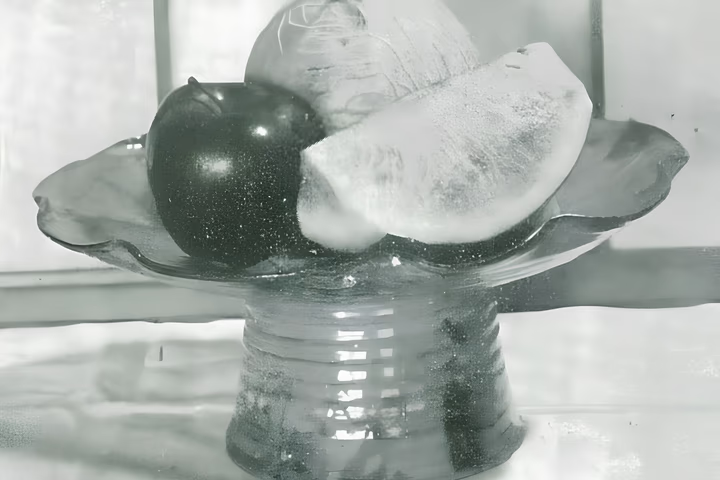
The five photographers below are all self-taught. Between them they shoot food, rooftops, kitchens, colour-blocked buildings and the Sardinian coast, and they use a mix of phones and small cameras to do it. Their advice has one thing in common: it is practical, and most of it can be applied on your next walk. Photo: Fruit platter 1 (Hoshigaoka Saryō).png.png) by Rosanjin — Public domain, via Wikimedia Commons.
The Foodie: Joann Pai on Food Photography
Joann Pai's interest in food came long before photography. "I started photographing food as a way to document moments of my life and share them with friends and family, mainly through social media," she says. The two interests merged when a Vancouver business owner asked her to photograph food products professionally, and she has been doing it since.
The camera matters less than you think
Pai shoots with a Fuji Xe2 or her iPhone. "I was looking for a compact camera with an interchangeable lens to travel with," she says. "I love the quick focus of the Fuji, the quality and the tones of the images. But really, I'm just a sucker for the retro look." A capable mirrorless body plus a phone covers almost everything a food photographer needs, without a bag full of gear to carry to a restaurant.
Find the window before you find the plate
The iPhone takes good photographs when there is plenty of light in the room, and that is the whole trick. When eating out, Pai goes for the window seat, and avoids the hard artificial lighting most restaurants rely on. Top-down shots also tend to work better because they reduce the distortion from a phone's wide lens.
The practical version of this advice: if a plate looks flat and yellow on the table, you are photographing the ceiling lights. Move to the window and the same dish becomes vivid. It is the single highest-value change you can make to food photography, and it costs nothing, which is also why fixing bad lighting is usually a matter of position rather than equipment.
Photograph the meal, not just the dish
Pictures that pull back and tell a story tend to do better than tight close-ups. Think about the narrative before you compose: who is at the table, what the room looks like, what time of day it is. Try several angles and move the props around until something clicks. A frame that includes a coffee cup, a newspaper or the edge of a window frame often says more than a macro of the food alone.
Build a recognisable style
To be noticed as a food photographer you need a consistent voice. Someone landing on your page should immediately understand what your work is about, which means deciding what you like and then doing it repeatedly. Instagram is a community rather than a gallery, so reply to comments, engage with other photographers, and reach out to collaborate.
Keep the editing restrained
Pai edits in VSCO and Snapseed, and sometimes straight in Instagram. Her filters stay dialled down, roughly between three and six on the intensity slider, for a specific reason: "I like food to look like food."
The Urban Dweller: Nicholas La on Street Photography
Nicholas La learned by doing. "I learned mostly through shooting out in the field, reading photography books, and watching videos online," he says. He now shoots for clients including Land Rover, which is a useful reminder that self-taught is not a limitation.
A discreet camera is a working advantage
La shoots with Leica bodies, chosen for a specific reason. "I chose the Leica specifically because of its ability to produce amazing photographs in such a small body," he explains. "I also love the minimal design and compact size because it allows me to shoot street photography while being discreet and not attracting much attention."
Size changes behaviour, both yours and your subjects'. A smaller camera is easier to carry every day, and it draws less attention when you raise it, which is most of what street photography requires.
Be ready, because the moment is not repeatable
Street moments last a fraction of a second and do not come back. Stay aware, keep the camera accessible, have exposure and focus pre-set for the conditions, and keep scanning. Most missed frames are not technical failures at all; they are the result of the camera being in a bag with the lens cap on.
Go where the angles are
La is known for rooftop perspectives, and he is honest about what that involves. "Sometimes an elevator to the highest floor and finding the roof door does the trick; other times it means walking up 50 flights of stairs; and other times it requires crawling out a window and climbing onto the roof." The lesson is not to climb onto roofs; it is that unusual photographs usually require some inconvenience that most people will not accept.
Wait longer than feels reasonable
Some photographs take hours, some take days, and some take years of returning to the same place. Patience is the part that cannot be shortcut, and rushing it produces exactly the pictures everyone else already has.
Put people in the frame
"When I shoot, I think about the end result as well as the message or emotion I want my viewers to get," La says. Including figures gives a landscape scale and gives an empty scene emotion that architecture alone cannot carry. A single person walking through a huge space says something about the space and about being in it.
Composition serves the story
"Composition can be tricky at times, but as long as you can direct your viewers to the subject of the photo while capturing an emotion or telling a story, then that alone is a great photo." Which is another way of saying that a technically tidy frame of nothing in particular is worth less than a slightly imperfect frame with a subject.
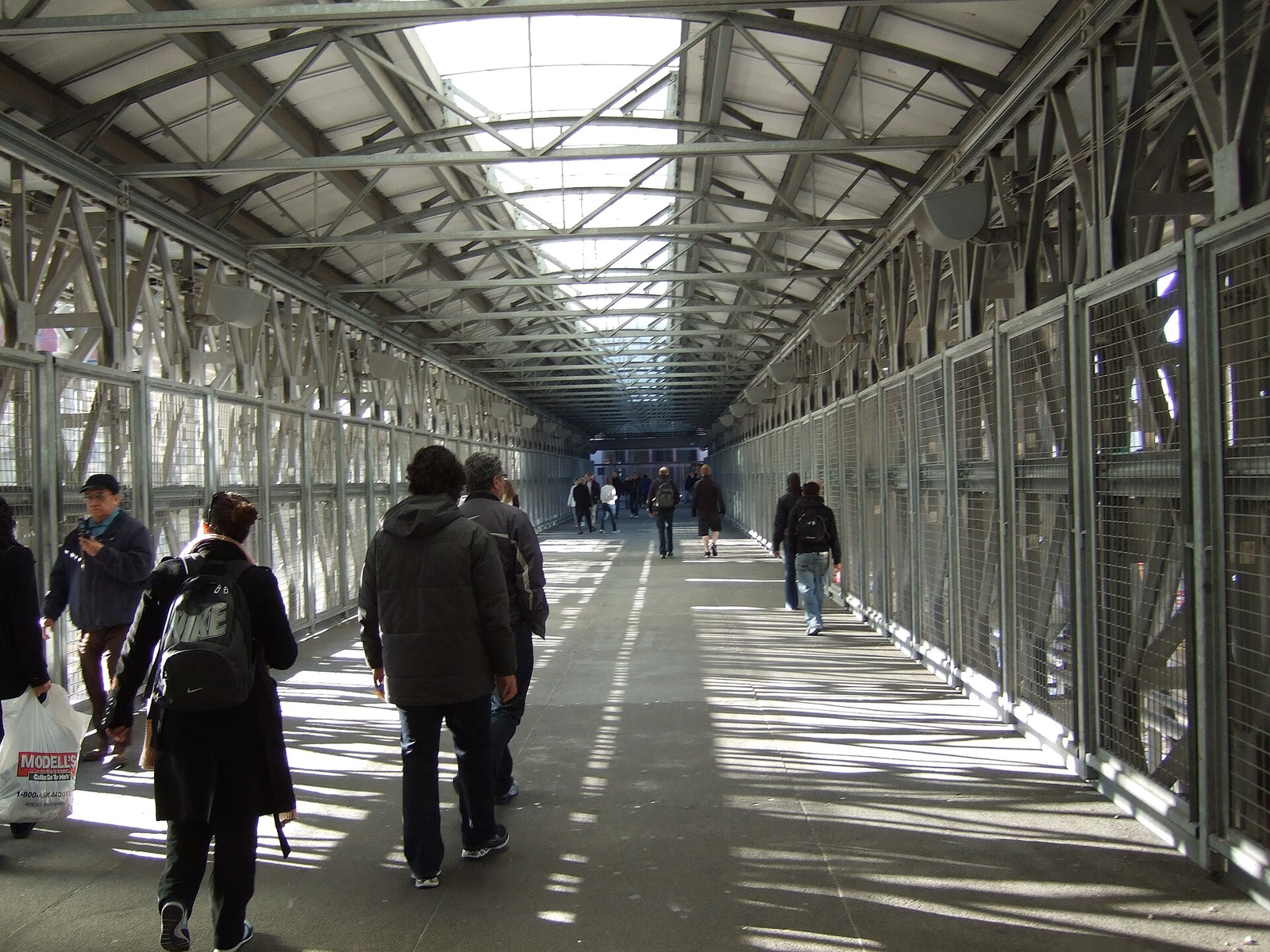
Photo: Manhattan New York City 2009 PD 20091129 009.JPG by Sterilgutassistentin — CC BY-SA 3.0, via Wikimedia Commons.
The Mom: Uzma Mir on Interiors and Everyday Life
Uzma Mir is a trained doctor who took a break to raise three children and found Instagram as a creative outlet. "My home is my primary creative outlet, and I love creating beautiful spaces," she says, which makes her a good argument against the idea that interesting photographs require interesting locations.
The best camera is the one that is always there
Mir works almost entirely on her phone. "The iPhone is always on me, so I never miss a chance to take a picture. And because the iPhone has so many great apps, I get to edit my pictures easily and quickly." This is the oldest advice in photography, and it is still the most reliable: the camera you have beats the camera you left at home.
Photograph what is already around you
Mir's children have grown up as her subjects. "Seeing as I am happier behind the camera, a happy result is that I get ready-and-willing subjects," she says. The people, rooms and routines nearest to you are the ones you know how to photograph well, and they are the images that tend to hold up over time.
Let the interruptions stay in the frame
"I often mean to take a photo of a landscape or some urban scene, and my kids decide they want in and stride into the shot. Some photos are posed, but most are candid." The interruptions are usually an improvement. Family work is largely the discipline of accepting what enters the frame instead of clearing it out.
Pick a palette and stay in it
"I have never been good with color, and you will never see yellows or oranges in my feed. I can really only handle one or two colors at a time. Surrounding myself with neutrals is soothing." A restricted palette is what makes a feed feel like a body of work rather than an album of unrelated pictures.
Compose the feed, then edit down
"I figure out what my feed needs, more close-ups or distance shots, and take it from there. I usually fit more into my composition than needed and edit out things until it feels right. Less is always more." Composing with room to remove is much easier than trying to add elements that were never in the frame.
The Color Enthusiast: Paulo del Valle on Symmetry and Colour
Paulo del Valle joined Instagram in 2011 and started with landscapes. In 2013 he opened a second account devoted to "colors, portraits, and symmetry," which is where the distinctive work comes from.
Choose images that work with the last one
"I actually think a lot before posting a new photo, so I make sure the colors of the new one will go well with the colors of the previous one." That single habit is the difference between a curated feed and a folder of loose pictures. It also forces you to be honest about whether an image is actually good, rather than merely recent.
Use the grid, especially for symmetry
Turn the grid overlay on. It splits the frame into nine rectangles. If you are shooting a door or a building, stand exactly in the middle, use the grid to keep the spacing equal on both sides, breathe out and shoot. The grid is the most underrated tool in photography, and it costs nothing to switch on.
Ask strangers properly
If someone on the street interests you, go and talk to them. Introduce yourself, explain why you want the photograph, and make clear there is no commercial use. Ask whether they are on Instagram so you can tag them. Have an actual conversation before raising the camera, because the two minutes of talking are what make the portrait possible.
Place the subject deliberately
Del Valle either centres a subject or follows the rule of thirds. "When you turn on the grid, you have two vertical lines and two horizontal lines. I place my subject in one of these lines or at their intersection. The horizontal lines help you align your horizon so your photos don't look crooked." Centred composition reads as formal and graphic; the third lines read as natural. Both work, and neither should happen by accident. If you want a wider vocabulary for placing people in a frame, the angles that flatter most faces are worth knowing before you improvise.
Treat overcast weather as a gift
"Cloudy days are good for shooting portraits because the light spreads out everywhere." An overcast sky is a softbox the size of the city, and it removes the hard shadows and squinting that make outdoor portraits difficult. Most photographers cancel sessions in weather that del Valle prefers.
The Sea Lover: Cédric Dasesson on Landscape and Natural Light
Cédric Dasesson is from Sardinia and spends much of his time at the coast. "The recurring theme of my account is the sea and its natural geometry outlining the coasts," he says, which is a description of a project rather than a subject.
Interpret a place instead of recording it
With a background in architecture, Dasesson looks for geometric elements and natural proportions, and each photograph belongs to a larger project chosen around a concept rather than a view. That framing is what turns a coastal photograph into part of a body of work rather than another pretty sunset.
Prefer natural light, almost always
"I prefer to use natural light at certain times of the day and with particular weather conditions in order to communicate my concept of isolation." He uses flash only as an experiment. For landscape work, learning to read light is more valuable than learning to add it.
Shoot at the edges of the day
"I love getting soft shadows and contrasts. I usually shoot at dawn and dusk or during overcast days." The low sun gives dimension, warmth and texture. Midday light flattens water and sky into the same grey, and the difference is why shooting in the golden hour is repeated as advice everywhere it applies.
Build a style someone can recognise
"You need to find an identifiable style in every shot." Consistency is what builds an audience. When your image appears in someone's feed and they know it is yours before checking the username, you have a style rather than a collection.
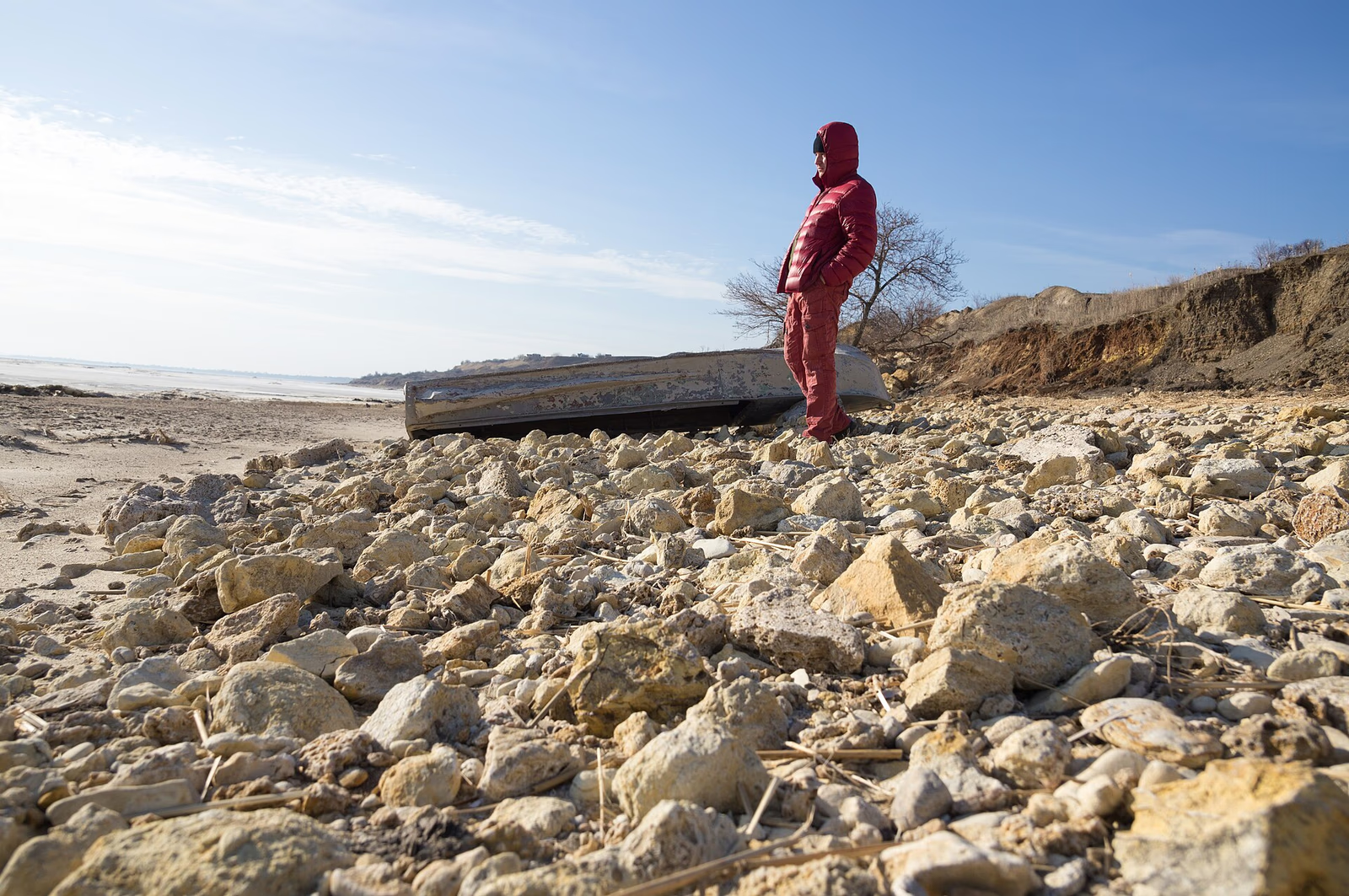
Photo: Merzhanovo, Coast, Sea of Azov, Russia.jpg by Vyacheslav Argenberg — CC BY 4.0, via Wikimedia Commons.
Practical Tips
- Sit near a window when photographing food indoors, and avoid restaurant ceiling light.
- Turn the camera grid on and use it for symmetry and horizons.
- Shoot in the last hour before sunset, at dawn, or on overcast days for the most forgiving light.
- Curate a feed by colour, and check how a new image sits beside the previous one.
- Use the camera you have. A phone with good light beats a good camera with none.
- Be patient. Some frames take hours, some take a season of returning.
- Put people in landscapes to give scale and emotion.
- Approach strangers politely, explain the use, and talk before you photograph.
- Keep editing restrained. Subtle filters age better than heavy ones.
Conclusion
The common thread across all five photographers is that technique was learned, not gifted, and none of them depend on expensive equipment. A phone by a window, a small camera carried every day, a feed edited with one palette in mind: those are the working conditions behind the pictures.
The rest is the four habits that repeat through every section above. Notice the light and move towards it. Use the grid so your compositions are deliberate. Choose a style and repeat it until it is recognisable. And put something human in the frame, because scale and emotion are what people respond to.
Start with one of those habits this week rather than all four at once. The photographers here built their work over years of ordinary days, which is exactly how it is supposed to go.
FAQ
What is the best camera for Instagram photography?
The one you have with you. The photographers here use phones alongside Fuji, Leica and Sony bodies, and their phones are not a compromise. Start with your phone, get good at light and composition, and buy a dedicated camera when your phone is genuinely the thing holding you back.
How do I get better light in food photos?
Put yourself beside a window and avoid overhead restaurant lighting. Shoot from above to reduce wide-lens distortion. Keep the editing subtle so the food still looks like food.
How do I make an Instagram feed look cohesive?
Restrict your palette and check each new image against the previous one before posting. Use similar editing across everything. Decide whether the feed needs close-ups or wide shots and shoot to fill that gap rather than posting whatever happens to be newest.
How does the rule of thirds work?
Turn on the grid overlay, which divides the frame into nine rectangles. Place your subject on one of the two vertical or two horizontal lines, or where they intersect. Use the horizontal lines to keep the horizon straight. Centred composition is equally valid, as long as it is deliberate.
How do I approach a stranger for a street portrait?
Introduce yourself, explain why you want the photograph, and say clearly that it is not for commercial use. Ask whether they are on Instagram so you can tag them. Have a conversation first, take the picture second, and accept it gracefully if they decline.
Do I need to shoot at golden hour for landscapes?
It helps enormously, and it is the single fastest improvement for most people. Low sun gives water, sand and buildings texture and colour that midday light removes. Overcast days are the next best thing, especially for portraits.
How long should I wait for a street photograph?
As long as it takes. Some frames arrive in a minute and others require returning to the same corner for months. The photographers who produce distinctive street work are usually the most patient ones, not the fastest.
Continue reading
Family Photoshoot Poses
September 25, 2026
Annie Leibovitz on 5 Images That Have Shaped Her Career
September 27, 2026
31 Famous Photographers to Know
September 25, 2026
Which Fashion Brands Are Winning the AI Discovery Battle — And Why It Matters More Than SEO
May 24, 2026
Is AI Antithetical to Luxury? What Prada's Controversial Campaign Reveals About Fashion's Biggest Tension
May 24, 2026
Nvidia and Antoine Arnault Are Betting on Virtual Try-On — Here's What RealFit Could Change
May 24, 2026
How to Photograph Shy, Difficult, or Anxious Pets
May 24, 2026
A French Woman Walks Into Nordstrom — 33 Items She's Buying From the Half-Yearly Sale
May 24, 2026
The 4 Best Ways to Digitize Old Photos (and How to Store Them)
May 24, 2026
How Big Is a 4×6 Photo? Sizes in Inches, Centimeters, and Pixels
May 24, 2026
Everything to Know About Wedding Photography Styles
September 27, 2026
Fashion People and Zara Agree: You Can't Go Wrong With This Effortless 3-Piece Summer Outfit Idea
May 25, 2026
How Pixel Moda Is Producing 14 Million AI-Assisted Images a Year — Without Losing the Human Touch
May 24, 2026
How to Take the Perfect Engagement Photos: The 5 Rules
September 27, 2026
Met Gala Photographer Hunter Abrams' Tips for Peak Creativity
September 27, 2026