27 Flattering Portrait Poses
Most people who say they photograph badly are not wrong about the results, and they are wrong about the cause. The problem is almost never the face. It is th...
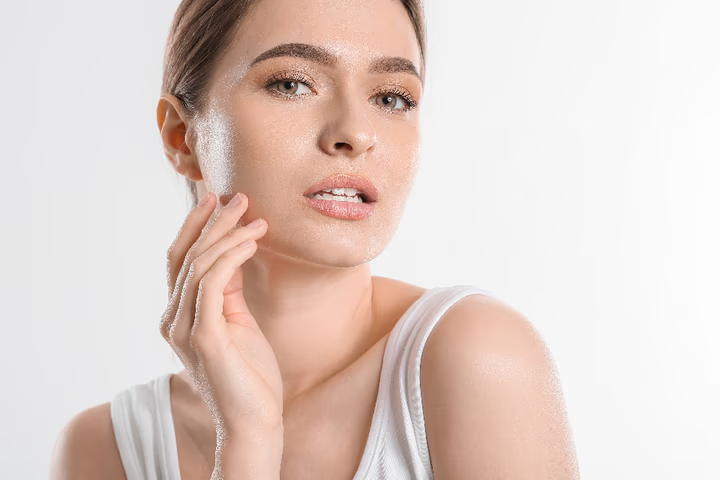
Most people who say they photograph badly are not wrong about the results, and they are wrong about the cause. The problem is almost never the face. It is the camera height, the direction the shoulders are pointing, and the fact that their hands have nothing to do.
Change those three things and a person who insists they are unphotogenic will usually produce something they actually like. The poses below are arranged so that most of them fix two or three of those problems at once. Photo: Authentic Stock — CC0, via Openverse.
Standing Poses
1. Weight on the back foot. Shift the weight onto the foot furthest from the camera and let the front knee soften and come slightly forward. The hip furthest from the lens drops. This one adjustment fixes more standing portraits than any other instruction.
2. Three-quarter turn with the chin toward the light. Turn the body 45 degrees away from the camera, then bring the face back toward the lens. Add a slight lift of the chin toward the light source. The body slims, the neck lengthens, and the light falls across the face rather than flat onto it.
3. Hand in the hair, elbow lifted. Bring one hand to the side of the head with the elbow raised to about shoulder height. This frames the face and fills the dead space above the shoulders, which is a recurring problem in standing portraits.
4. Collar or necklace touch. Fingers resting on a shirt collar, a jacket lapel or a pendant. It is a small gesture, and small gestures read as natural where large ones read as posed.
5. Wall lean, one knee bent. Shoulder and hip against a wall, one foot flat against it at knee height. Walls give a subject something to react to, and the bent leg adds a triangle to the silhouette.
6. Loose arm cross. Arms crossed, but resting rather than clamped. If the arms are pressed tight to the body the shoulders rise and the pose reads as defensive. Ask for a breath out, then shoot.
7. Hands in pockets, thumbs out. The most useful instruction for men who freeze in front of a camera. Thumbs resting on the outside of the pocket keeps the hands visible and the arms slightly away from the body.
8. Hands behind the back. Simple, formal and hard to do badly. Works well for full-length portraits and corporate work, and gives the arms a clear line.
9. The stride and turn. Ask the subject to walk two steps and then turn back toward you. Movement removes the stiffness, and you get a natural weight shift without explaining one.
10. Leaning forward from the hips. Standing but tilted slightly toward the lens, weight on one leg. It creates engagement and works especially well for portraits that need energy rather than calm.
Seated Poses
11. On a stool, one foot on the rung. A stool removes the chair-back problem and keeps the subject upright rather than slumped. One foot up on the rung gives the legs something to do and creates a diagonal.
12. Perched on the edge, leaning forward. Sitting on the front third of a seat and leaning in toward the camera reads as attentive and confident. Slumping back into a chair reads as passive, which is why most seated portraits go wrong.
13. Sitting sideways, twisting back. Seated sideways on a chair, torso twisted toward the lens, one arm draped over the back. The twist creates a spiral through the body and is one of the most flattering seated shapes there is.
14. Cross-legged on the floor, elbows on knees. Grounded and informal, with the face resting near the hands. Works well for artistic and editorial portraits, and it suits people who feel absurd standing in front of a backdrop.
15. Knees drawn up. Sitting with the knees bent and arms wrapped loosely around them. Shoot from slightly above and the pose reads as intentional and compact rather than defensive.
16. Backwards on a chair. Straddling the chair and folding the arms over the back of it. Confident and slightly confrontational, and the chair back gives the hands somewhere to rest.
17. On a step, hands between the knees. Simple, casual and very hard to make look bad. Effective for outdoor portraits and for subjects who will not sit on the ground.
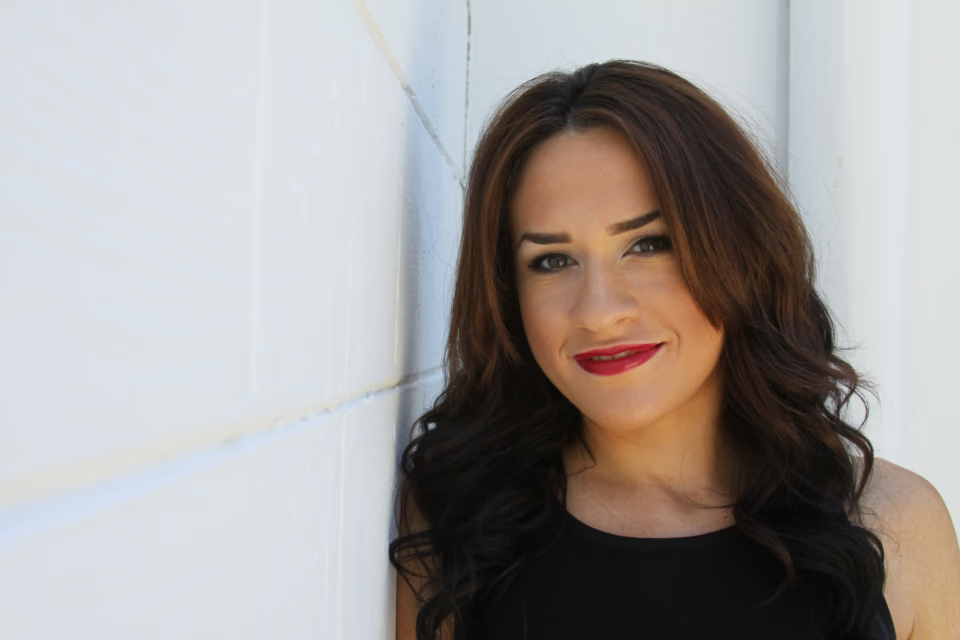
Photo: Candace McDaniel — CC0, via Openverse.
Reclining and Head-and-Shoulders
18. Lying on one side, propped on the forearm. Keep the supporting elbow in front of the shoulder rather than behind it, or the whole pose collapses backward. The upper arm can rest along the body or reach forward; either creates a line.
19. Head and shoulders, chin slightly forward and down. Two centimetres of chin movement changes a face more than any lighting modifier. Forward reduces the double chin; down reduces the look of looking up a nose.
20. Profile with the jaw lifted. Turn nearly to profile and lift the chin very slightly. The neck and jaw carry the image and the expression barely matters.
21. Looking down and away. Eyes off the lens and downward, photographed from slightly above eye level. It reads as unguarded and works beautifully in soft window light.
22. Looking over the shoulder. Body away from the camera, face turned back over the nearer shoulder. Chin level rather than tucked. The twist separates the two sides of the face and lengthens the neck.
23. Eyes closed, then open. Ask the subject to close their eyes, breathe, and open on your count. You catch the expression a fraction before they remember they are being photographed, which is usually the best one available.
Hands and Small Gestures
24. Hands framing the face loosely. Fingertips at the jaw or temples, no pressure. Loose is essential; pressed hands distort the face and read as a catalogue pose.
25. One hand at the jaw. A single finger along the jawline, thinking rather than posing. Useful when a subject's hands have nowhere natural to go.
26. Fidgeting with an object. A cup, a hat, a camera, a book. Giving someone something to hold solves the hand problem completely and makes the portrait about a person rather than a pose.
27. Mid-conversation. Ask a real question and photograph the answer. This is the pose that is not a pose, and for most subjects it outperforms everything else in this list.
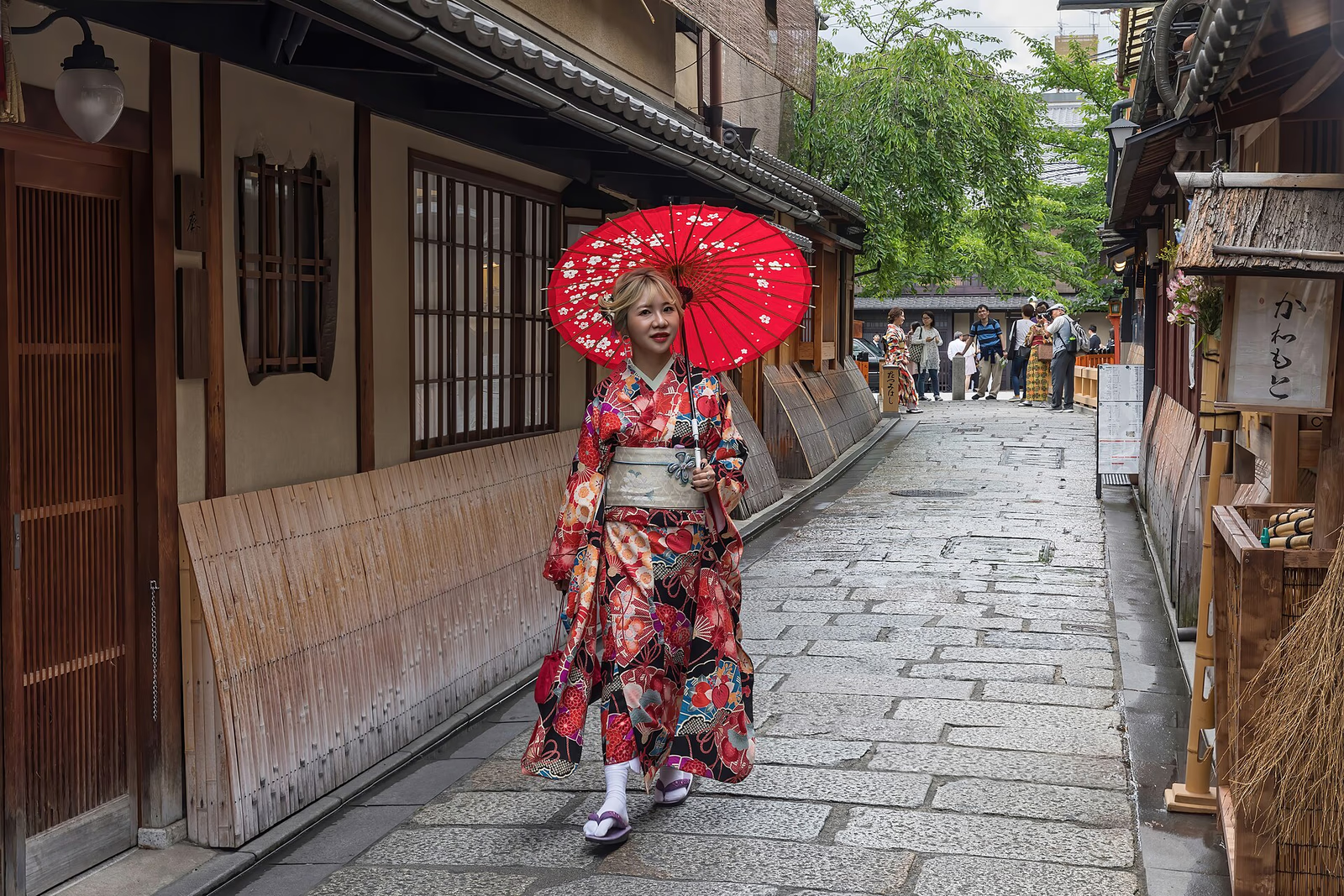
Photo: Basile Morin — CC BY-SA 4.0, via Wikimedia Commons.
Camera Height Does Most of the Work
Slightly above the subject's eye level flatters almost everyone. Below eye level flatters almost nobody, because it widens the jaw and exaggerates the nose.
Take one pose and shoot it at four heights: ten centimetres below the eyes, level, ten above, and thirty above. The difference will be obvious immediately, and it is the fastest way to teach a client why they prefer some photographs of themselves to others.
Focus on the eye nearest the camera, and shoot at a moderate aperture if the subject will not hold still. A razor-thin depth of field is a stylistic choice, not a default, and half-focused eyes ruin a portrait faster than a busy background does.
Light, Shoulders and Limbs
Short lighting, where the side of the face turned away from the camera is lit and the side facing it falls into shadow, generally produces more shape and depth than flat frontal light. It also narrows a face rather than widening it.
Turn the shoulders away from the lens even when the face is square to it. A portrait where the shoulders are parallel to the camera looks like a passport photograph regardless of everything else.
Keep the limbs away from the body. Any gap between an arm and a torso, or a forearm and a waist, keeps the pose from flattening into a blob. Where a limb touches the body, you lose the silhouette.
Directing Someone Who Hates This
Give one instruction at a time, and demonstrate it with your own body rather than describing it. Verbal descriptions of poses are interpreted in wildly different ways.
Talk continuously while you shoot. Silence makes people self-conscious, and the sound of the shutter without conversation creates a feeling of being judged. Ask questions, react to the answers, and take frames throughout.
Show them a good frame on the back of the camera. Not every frame, which trains them to look at the screen instead of you, but one or two good ones early on. Confidence changes posture more than any cue.
Lens Choice and Faces
Focal length changes a face. Wide lenses shot close exaggerate whatever is nearest the lens, which is usually the nose. Longer focal lengths compress features and flatter most people, at the cost of needing more distance and a shallower depth of field.
For portraits, a moderate telephoto is the safe default, and a normal prime is a reasonable compromise when space is limited. Whatever you use, back up before zooming in; distance flatters, and zooming does not.
Tips for Flattering Anyone
- Move the camera height before adjusting the pose. It is the lever with the biggest effect.
- Ask for the shoulders to turn, then the chin, then the hands, in that order.
- Give every subject something to do with their hands, even if it is only a cup.
- Shoot continuously through the awkward first minute rather than waiting for them to relax.
- Use open shade or a window for subjects who tense up in bright sun.
- Let the subject move between frames. Micro-adjustments produce better expressions than instructions.
- Stop when you have the frame. Sessions that run long get worse, not better.
Conclusion
Flattering portraits come from a small number of controllable variables: camera height, shoulder angle, chin position, hand placement and the quality of the light. None of them require a flattering face, and all of them are things you can change in seconds.
The most common mistake made by people new to portraiture is spending the session searching for a pose instead of fixing the geometry. Learn the six or seven fundamentals above and most of the 27 poses in this list become variations on the same idea, which is exactly what they are.
If you are working with someone who freezes rather than poses, the approach that works is movement-based, using small continuous actions rather than static positions. That is the principle behind the more fluid posing techniques used in editorial work, and it is often the fastest route with a self-conscious subject. Pair it with warm, low-angle light outdoors and you have most of what a good portrait needs before you have touched a slider.
FAQ
What is the most flattering angle for a portrait?
Very slightly above eye level, with the subject's body turned about 45 degrees away from the camera and the face brought back toward the lens. That combination narrows the face, lengthens the neck and avoids the distortions of a low angle.
What should a subject do with their hands?
Give them something to hold or a small gesture near the face or collar. Loose hands read as natural, and the two reliable fallbacks are hands in pockets with the thumbs out and one hand resting at the jaw.
How do I photograph someone who hates having their picture taken?
Give one instruction at a time, keep talking throughout the session, and use continuous action rather than static poses. Show them one good frame early to build confidence, and shoot through the first minute while they settle.
Does focal length really change how a face looks?
Yes, significantly. Wide lenses used close up exaggerate the nose and widen the face. Moderate telephoto lengths compress features, which is why they are the standard choice for portraits. Back away from the subject rather than zooming where you can.
Where should the light be?
Slightly to one side and slightly above the subject, or in open shade with the light falling from one direction. Flat frontal light removes all shape from a face, and backlight works only when you expose for the face and accept a bright background.
How many poses should I shoot in a portrait session?
Three or four well-executed poses, photographed from several camera heights and two lighting angles, will produce more usable frames than twenty poses shot once each. Depth beats variety.
Continue reading

Making Money with Stock Photography
September 25, 2026
Want to Know What Your Customers Think? Ask an AI-Generated Focus Group
May 24, 2026
13 Unique Father's Day Gifts That Go Way Beyond the Usual Mug
May 24, 2026
99 Most Inspirational Photography Quotes
September 25, 2026
Fashion's Top Executives Gather in London to Explore AI's Role in the Industry
May 24, 2026
Afterparty Style: Why Custom Clothing Is the Ultimate Expression of Personal Identity
May 25, 2026
Casual Going Out Fit: How Luxury Streetwear Is Redefining After-Dark Dressing
May 25, 2026
'POV Shopping' Videos Are Going Viral — And Luxury Brands Should Be Worried
May 24, 2026
Working With Roxanne Lowit, the Queen of Backstage Photography
September 27, 2026
Sibling Photoshoot Poses
September 25, 2026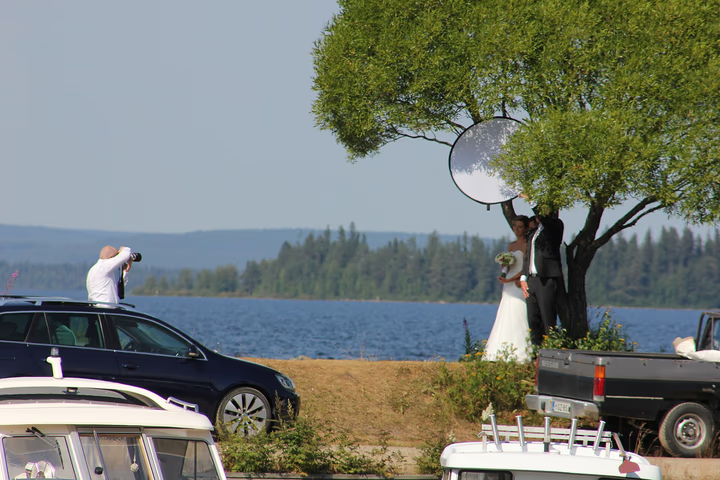
Everything to Know About Wedding Photography Styles
September 27, 2026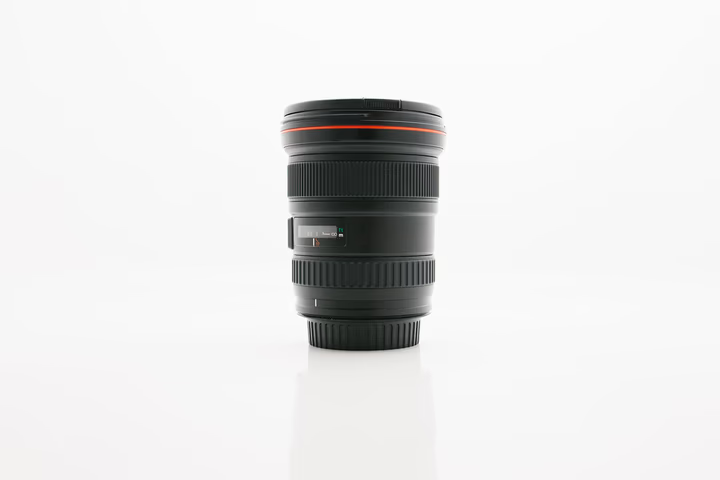
42 Free Photography Books to Download (PDF + eBooks)
May 24, 2026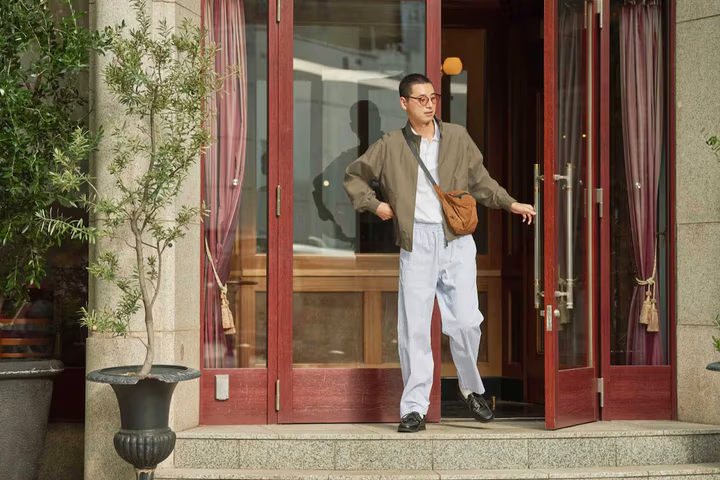
Which Fashion Brands Are Winning the AI Discovery Battle — And Why It Matters More Than SEO
May 24, 2026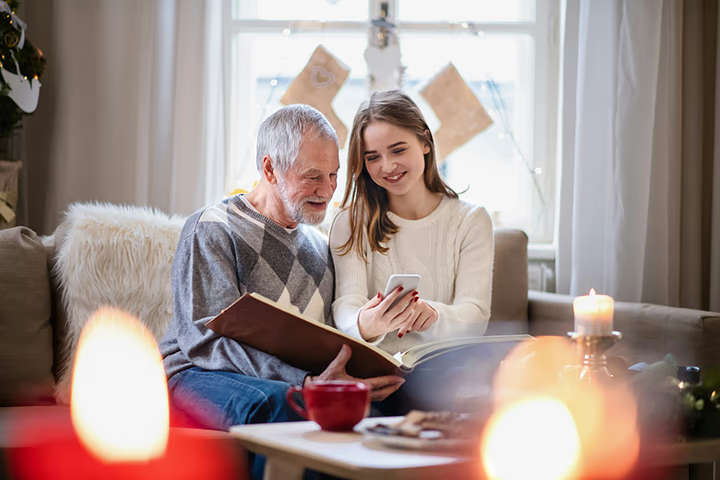
The 4 Best Ways to Digitize Old Photos (and How to Store Them)
May 24, 2026
AI-Generated Mockups Are Going Viral — But Are They Good for Fashion Brands?
May 24, 2026