'POV Shopping' Videos Are Going Viral — And Luxury Brands Should Be Worried
Point-of-view videos secretly filmed inside high-end boutiques by creators wearing smart glasses are flooding TikTok and Instagram. For brands like Gucci and...
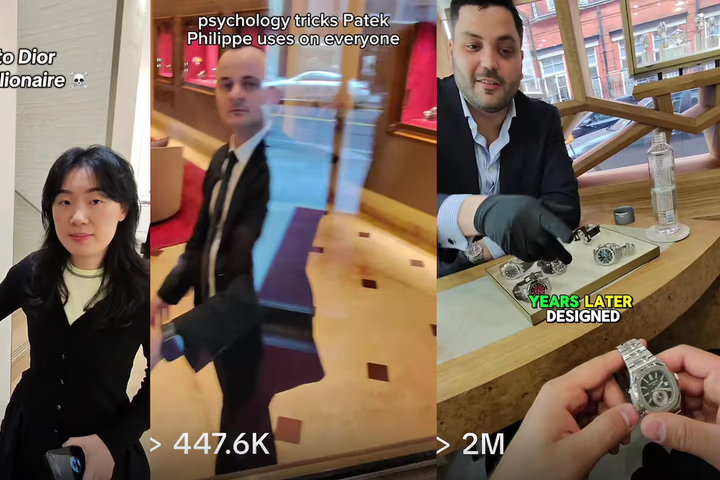
Point-of-view videos secretly filmed inside high-end boutiques by creators wearing smart glasses are flooding TikTok and Instagram. For brands like Gucci and Patek Philippe, the reputational stakes are real. Somewhere between a GoPro and a hidden camera, smart glasses have introduced a new genre of social media content that lets curious viewers peer inside the exclusive world of ultra-luxury retail. (TikTok)
Introduction
There's a new genre of content taking over luxury-adjacent corners of social media, and it's making some of the world's most exclusive brands deeply uncomfortable. "POV shopping" videos — filmed from the first-person perspective of a creator browsing inside a high-end boutique — are racking up millions of views on TikTok and Instagram. The twist: many of these videos are captured covertly using smart glasses, with the creator's hands free and no visible camera in sight.
For viewers, the appeal is obvious. These videos offer an unfiltered, voyeuristic glimpse into spaces that most people will never enter — the hushed interiors of a Patek Philippe salon, the marble floors of a Gucci flagship, the white-gloved service of a top-tier jewelry house. But for the brands themselves, the trend represents a growing and largely uncontrollable reputational risk.
What Are POV Shopping Videos?
POV shopping videos are short-form clips filmed from the creator's point of view as they browse, try on, or interact with staff inside retail stores. The format has existed for years in more casual retail contexts — think "come shopping with me" content at fast fashion chains — but the introduction of wearable camera technology, particularly Meta's Ray-Ban smart glasses, has brought it into a new and more sensitive territory.
Unlike a phone camera, smart glasses are nearly invisible in use. A creator can walk into a boutique, engage with sales staff, handle merchandise, and capture the entire experience without anyone in the store knowing they're being filmed. The resulting footage is intimate, immersive, and often surprisingly revealing — showing everything from staff behavior and sales tactics to the actual prices of items that brands rarely advertise publicly.
The videos tend to perform extremely well on social platforms. Luxury content consistently draws strong engagement, and the voyeuristic quality of POV footage adds an extra layer of intrigue. Some creators have built significant followings specifically around this format.
Why This Is a Problem for Luxury Brands
Luxury retail is, at its core, a carefully choreographed experience. Every element — the lighting, the music, the way staff are trained to greet and serve clients — is designed to reinforce a specific brand narrative. That narrative is built on exclusivity, discretion, and the sense that what happens inside these stores is private and special.
POV shopping videos puncture that carefully constructed bubble. When the interior of a boutique is broadcast to millions of TikTok users, the exclusivity evaporates. The "secret world" of luxury shopping becomes public spectacle. And unlike official brand content, these videos are entirely outside the brand's editorial control.
The risks are multiple:
Reputational exposure. A staff member having a bad day, a moment of awkward silence, or a clumsy interaction with a customer can be captured and shared with a global audience. Out of context, these moments can look far worse than they are — and once a clip goes viral, the damage is difficult to undo.
Privacy and consent issues. Staff members filmed without their knowledge have not consented to being recorded. In many jurisdictions, this raises genuine legal questions, particularly in regions with strong privacy protections. Brands may face pressure to take legal action even when they'd prefer to avoid the publicity of doing so.
Undermining the premium experience. Part of what justifies the price premium of luxury goods is the experience of acquiring them. When that experience is demystified and democratized through social media, it can subtly erode the perceived value of the brand.
Competitive intelligence leaks. POV videos sometimes capture pricing, product availability, and sales strategies that brands consider proprietary. A competitor watching these videos can glean useful intelligence without ever setting foot in the store.
The Smart Glasses Factor
The rapid mainstream adoption of smart glasses — led by Meta's Ray-Ban collaboration but with competitors following closely — has dramatically accelerated this trend. Earlier generations of wearable cameras were bulky and conspicuous. Today's smart glasses look like ordinary eyewear. Many luxury boutiques have no-photography policies, but enforcing those policies against a device that's indistinguishable from regular glasses is practically impossible.
This creates a genuine enforcement gap. Brands can post signs, train staff to watch for suspicious behavior, and ask customers to put away their phones — but they have no reliable way to detect or prevent covert recording via smart glasses. The technology has outpaced the policies designed to manage it.
Some brands are reportedly exploring technological countermeasures, including RF detection systems that can identify active wireless devices. But these solutions are expensive, imperfect, and raise their own privacy concerns.
How Luxury Brands Are Responding
The industry's response so far has been cautious and largely reactive. A handful of brands have updated their in-store policies to explicitly prohibit the use of smart glasses and other wearable recording devices. Some have begun briefing staff on how to politely but firmly address the issue if they suspect a customer is recording.
A few brands have taken a more proactive approach, engaging directly with creators who produce this kind of content — sometimes offering official access in exchange for more controlled, brand-approved coverage. This approach carries its own risks, but it at least gives brands some influence over the narrative.
What most brands have not yet done is develop a comprehensive strategy for the smart glasses era. That gap is becoming increasingly difficult to justify as the volume of POV content continues to grow.
Practical Tips for Luxury Retailers
- Update your in-store policies to explicitly address wearable recording devices, not just phones and cameras.
- Train staff to recognize smart glasses and other wearable tech, and give them clear, tactful scripts for addressing the issue.
- Monitor social media regularly for content filmed inside your stores, and have a response protocol ready.
- Consider your legal options — in many markets, covert recording in private commercial spaces is legally actionable. Know your rights.
- Engage proactively with creators who cover your brand. Building relationships with content creators gives you more influence over how your stores are portrayed.
- Invest in the in-store experience in ways that translate well even when filmed — if the experience is genuinely exceptional, even uncontrolled coverage can work in your favor.
Conclusion
POV shopping videos represent a new frontier of reputational risk for luxury brands — one that's being driven by consumer technology that's advancing faster than brand policy can keep up with. The voyeuristic appeal of these videos is powerful, and the platforms that host them have little incentive to restrict them. For luxury houses built on exclusivity and controlled narratives, the challenge is significant.
The brands that navigate this era most successfully will be those that combine clear, enforceable policies with genuine investment in experiences worth sharing — and that understand the difference between content that demystifies luxury and content that actually enhances it.
FAQ
Q: Are POV shopping videos filmed with smart glasses legal? It depends on the jurisdiction and the specific circumstances. In many countries, recording in a private commercial space without consent — particularly if staff are captured — can violate privacy laws. However, enforcement is inconsistent, and most creators operate in a legal gray area. Brands considering legal action should consult local counsel.
Q: Can luxury brands ban smart glasses from their stores? Technically, yes — private businesses can set their own entry conditions. But enforcing such a ban is extremely difficult in practice, since modern smart glasses are visually indistinguishable from regular eyewear. Brands would need to either rely on staff vigilance or invest in detection technology.
Q: Why are these videos so popular on TikTok and Instagram? They offer something genuinely rare: an unfiltered, first-person look inside spaces that most people can't access. Luxury retail has always fascinated a broad audience, and the POV format makes viewers feel like they're actually there. The combination of aspiration and accessibility is a proven formula for social media virality.
Q: Do these videos actually hurt luxury brand sales? The direct sales impact is hard to measure. The more significant risk is to brand perception — particularly the sense of exclusivity and mystique that underpins luxury pricing. If the "secret world" of luxury shopping becomes too familiar and accessible, it may subtly erode the premium that brands can command.
Q: What's the difference between a brand-approved influencer visit and a covert POV video? Everything. Brand-approved influencer content is planned, controlled, and aligned with the brand's messaging. Covert POV videos are uncontrolled, unedited, and may capture moments the brand would never choose to share publicly. The distinction matters enormously for brand management purposes.
Continue reading
Strike a Pose: Street Style Star Hanneli Mustaparta Shows Us How
September 27, 2026
How to Photograph Shy, Difficult, or Anxious Pets
May 24, 2026
14 Best Stock Photography Sites
September 25, 2026
61 Best Photography Books for All Levels
September 25, 2026
Fashion People and Zara Agree: You Can't Go Wrong With This Effortless 3-Piece Summer Outfit Idea
May 25, 2026
Instagram Stars Share Their Secrets to Taking Amazing Photos
September 27, 2026
AI-Generated Mockups Are Going Viral — But Are They Good for Fashion Brands?
May 24, 2026
How Pixel Moda Is Producing 14 Million AI-Assisted Images a Year — Without Losing the Human Touch
May 24, 2026
How to Edit Concert Photos for Best Results
July 11, 2026
Working With Roxanne Lowit, the Queen of Backstage Photography
September 27, 2026
31 Famous Photographers to Know
September 25, 2026
Afterparty Style: Why Custom Clothing Is the Ultimate Expression of Personal Identity
May 25, 2026
How to Photograph Children: 29 Tips for Creative and Fun Photos
May 24, 2026
Colorful Shoes, Woven Bags, Tankinis: 7 Fun Summer Trends Worth Shopping Right Now
May 25, 2026
8 Sibling Rivalry Poses That Turn Fights Into Epic Photoshoots
July 11, 2026