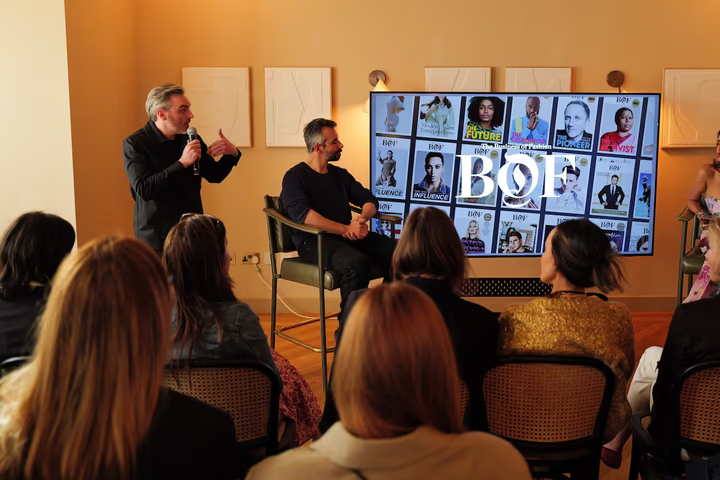
Why People Are Starting to Hate AI — And What Fashion Brands Need to Understand
The fashion industry's aggressive push toward AI-driven efficiency is starting to rub consumers the wrong way. Understanding why people are pushing back is t...
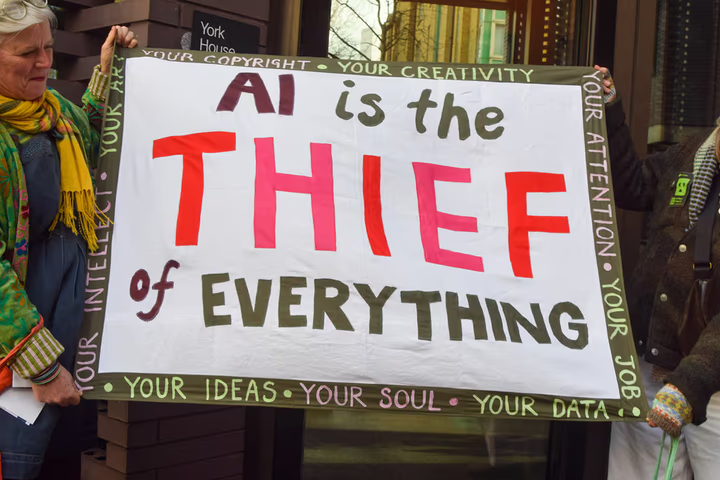
The fashion industry's aggressive push toward AI-driven efficiency is starting to rub consumers the wrong way. Understanding why people are pushing back is the first step to using AI without losing your audience. The growing backlash against AI in fashion is about more than technology — it's about what consumers feel they're losing.
Introduction
Artificial intelligence is everywhere in fashion right now — in the ads you see, the product recommendations you receive, the customer service chatbots you interact with, and increasingly, in the creative content that brands produce. For the executives driving these initiatives, AI represents a once-in-a-generation opportunity to cut costs, move faster, and personalize at scale.
But a growing number of consumers aren't seeing it that way. Anger toward AI is building, and it's showing up in comment sections, in brand perception surveys, and in the kind of quiet disengagement that's hard to measure but impossible to ignore. The industry's push for AI-led efficiency is starting to rub shoppers the wrong way — and brands that don't understand why are at risk of making the problem worse.
The Backlash Is Real — and Growing
Consumer sentiment toward AI has shifted noticeably over the past year. What was once met with curiosity or cautious optimism is increasingly met with skepticism, frustration, and in some cases, outright hostility.
The complaints take different forms depending on the context. Some consumers are angry about AI-generated imagery that feels uncanny or inauthentic. Others are frustrated by AI-powered customer service that can't actually solve their problems. Many are simply unsettled by the feeling that the brands they love are prioritizing efficiency over the human connection that made them worth loving in the first place.
This isn't just a niche reaction from tech-skeptical consumers. It's showing up across demographics and price points, from fast fashion shoppers annoyed by chatbot runarounds to luxury customers who feel that AI-generated campaign imagery cheapens the brands they've invested in emotionally and financially.
The Core Reasons People Hate AI in Fashion
Understanding the backlash requires looking at its root causes. Several distinct grievances are driving consumer frustration.
It feels inauthentic. Fashion has always been about human expression — the vision of a designer, the story of a craftsperson, the identity of a wearer. When AI generates the imagery, writes the copy, or designs the product, something feels lost. Consumers may not always be able to articulate exactly what's missing, but they sense it. The result is content that looks polished but feels hollow.
It replaces human connection with automation. One of the things that makes shopping — particularly luxury shopping — meaningful is the human interaction involved. A knowledgeable sales associate who remembers your preferences, a customer service representative who genuinely solves your problem, a brand that communicates like a person rather than an algorithm. AI-powered automation threatens all of these touchpoints, and consumers notice.
It signals that brands don't value their customers. When a brand replaces human customer service with a chatbot, or swaps human models for AI-generated ones, or uses AI to produce marketing content at scale, the implicit message is: "We'd rather save money than invest in you." That message — even when unintended — lands badly with consumers who feel they deserve better.
It creates a sense of being manipulated. AI-powered personalization and recommendation engines are designed to influence behavior. Most consumers understand this at some level, and many are uncomfortable with it. The feeling of being "profiled" and served content specifically engineered to trigger a purchase can feel invasive and manipulative, even when the recommendations are genuinely useful.
It threatens jobs and livelihoods. Consumer attitudes toward AI aren't formed in a vacuum. People are aware that AI is displacing workers — photographers, models, copywriters, customer service agents, designers. For many shoppers, buying from a brand that aggressively deploys AI feels like complicity in that displacement. This is particularly resonant with younger consumers who are attuned to issues of economic justice and labor rights.
The Fashion Industry's Particular Vulnerability
Not all industries face the same level of consumer backlash against AI. Fashion — and luxury fashion in particular — is especially vulnerable for a specific reason: its entire value proposition is built on human creativity and human connection.
When you buy a luxury handbag, you're not just buying a functional object. You're buying into a story — the story of the designer's vision, the craftsperson's skill, the brand's heritage. AI threatens to hollow out that story. If the design was generated by an algorithm, the campaign was produced by a machine, and the customer service was handled by a bot, what exactly are you paying a premium for?
This is why the backlash hits luxury brands harder than it hits, say, a logistics company that deploys AI to optimize delivery routes. The emotional stakes are higher, and the gap between what AI represents (efficiency, automation, scale) and what luxury represents (human artistry, exclusivity, personal attention) is wider.
What Brands Can Do Differently
The answer isn't to abandon AI — the competitive and operational benefits are too significant for that. The answer is to be more thoughtful about where, how, and with what level of transparency AI is deployed.
Be honest about AI use. Consumers are more forgiving of AI when brands are upfront about it. Trying to pass AI-generated content off as human-made is a recipe for backlash when it's discovered — and it usually is.
Protect the human touchpoints that matter most. Not every customer interaction needs to be automated. Identify the moments where human connection is most valuable to your customers and protect those from AI displacement.
Use AI to enhance human work, not replace it. The most successful AI deployments in fashion are those where AI handles the repetitive, time-consuming tasks that free up human talent to do more creative, high-value work.
Listen to your customers. Sentiment toward AI is evolving rapidly. Brands that stay close to their customers' attitudes — through research, social listening, and genuine dialogue — will be better positioned to adapt as those attitudes shift.
Don't optimize your way out of your brand identity. Efficiency gains are real and important. But if the pursuit of efficiency strips away the qualities that make your brand worth caring about, you've made a bad trade.
Practical Tips for Fashion Brands
- Audit your AI touchpoints. Map every place where AI currently touches the customer experience and evaluate each one honestly: does this enhance or diminish the relationship?
- Create a clear AI communication policy. Decide what you will and won't disclose about AI use, and be consistent.
- Test consumer reactions before scaling. Before rolling out AI-generated content or AI-powered features broadly, test them with real customers and pay attention to the feedback.
- Invest in AI literacy across your organization. Employees who understand AI are better equipped to deploy it responsibly and to explain it to customers.
- Watch the cultural conversation. AI sentiment is being shaped by broader cultural forces — news coverage, political debates, viral moments. Stay aware of the context your customers are operating in.
Conclusion
The growing backlash against AI in fashion isn't irrational, and it isn't going away. It reflects genuine concerns about authenticity, human connection, and the values that fashion — at its best — is supposed to embody. Brands that dismiss this backlash as technophobia are misreading the situation.
The path forward isn't less AI — it's smarter AI. Deployed thoughtfully, transparently, and in service of genuine human value, AI can be a powerful tool for fashion brands. Deployed carelessly, in pursuit of efficiency at the expense of connection, it can quietly erode the trust and loyalty that brands have spent years building.
FAQ
Q: Is the backlash against AI in fashion just a temporary trend? Probably not. While the specific forms of the backlash will evolve, the underlying concerns — about authenticity, human connection, and the displacement of workers — are likely to persist as AI becomes more deeply embedded in the industry. Brands should treat this as a long-term challenge, not a passing moment.
Q: Do luxury consumers feel differently about AI than mass-market shoppers? Yes, generally. Luxury consumers tend to be more resistant to AI in areas that touch the brand's creative identity and customer experience, because those are the things they're paying a premium for. Mass-market shoppers are often more accepting of AI-driven convenience features, though they share concerns about authenticity and job displacement.
Q: Can brands use AI without consumers knowing? Technically, yes — but it's increasingly risky. Consumers and journalists are becoming more adept at identifying AI-generated content, and the reputational damage from being caught using AI covertly can be significant. Transparency is generally the safer and more ethical approach.
Q: What's the difference between AI that consumers accept and AI they reject? Consumers tend to accept AI that makes their experience genuinely better — faster, more personalized, more convenient — without feeling like it's replacing something valuable. They tend to reject AI that feels like it's cutting corners, replacing human creativity with machine output, or prioritizing brand efficiency over customer experience.
Q: How should brands communicate about their AI use to consumers? Clearly, honestly, and proactively. Don't wait to be asked — if you're using AI in ways that affect the customer experience or the creative product, say so. Frame it in terms of what it enables for the customer, not just what it saves for the brand. And be specific: "we use AI to personalize your recommendations" lands better than vague claims about "leveraging cutting-edge technology."
Continue reading

How to Include Pets in Family Photos: Tips and Pose Ideas
July 11, 2026
12 Grandparent-and-Grandchild Photo Poses
May 24, 2026
42 Free Photography Books to Download (PDF + eBooks)
May 24, 2026
Strike a Pose: Street Style Star Hanneli Mustaparta Shows Us How
September 27, 2026
123 Types of Photography to Try
September 25, 2026
Which Fashion Brands Are Winning the AI Discovery Battle — And Why It Matters More Than SEO
May 24, 2026
How to Photograph Children: 29 Tips for Creative and Fun Photos
May 24, 2026
Sibling Photoshoot Poses
September 25, 2026
8 Sibling Rivalry Poses That Turn Fights Into Epic Photoshoots
July 11, 2026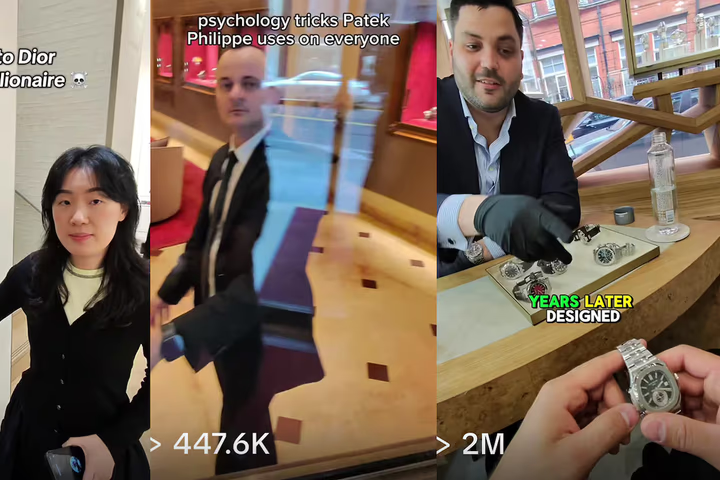
'POV Shopping' Videos Are Going Viral — And Luxury Brands Should Be Worried
May 24, 2026
Want to Know What Your Customers Think? Ask an AI-Generated Focus Group
May 24, 2026
14 Best Stock Photography Sites
September 25, 2026
61 Best Photography Books for All Levels
September 25, 2026
13 Unique Father's Day Gifts That Go Way Beyond the Usual Mug
May 24, 2026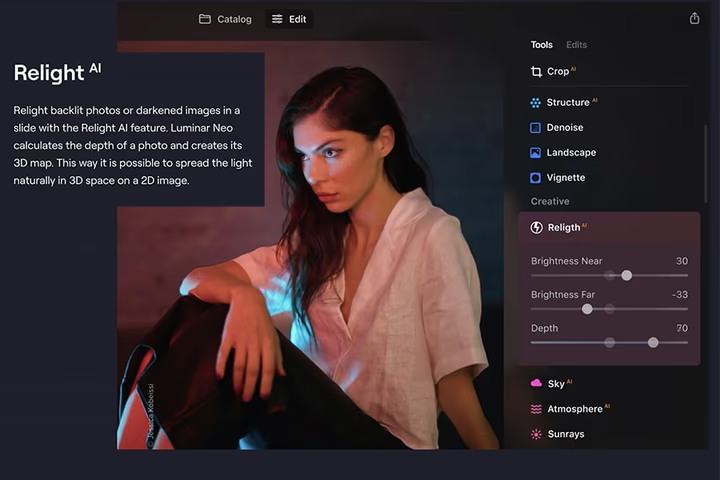
How to Fix Bad Lighting in Photos on iPhone, Lightroom, and Photoshop
May 24, 2026