Working With Roxanne Lowit, the Queen of Backstage Photography
Roxanne Lowit did not simply photograph backstage at fashion shows. She invented the genre. Long before behind-the-scenes footage became the standard currenc...
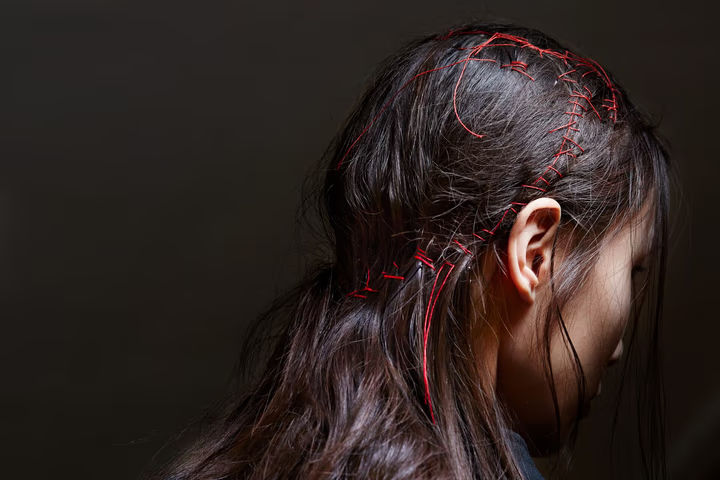
Roxanne Lowit did not simply photograph backstage at fashion shows. She invented the genre. Long before behind-the-scenes footage became the standard currency of fashion week, she was standing in the narrow space between the runway and the chaos, photographing models mid-fitting, designers mid-panic, and the small human moments nobody else thought were worth a frame.
Ivan Shaw, corporate photography director at Condé Nast, worked alongside her at Vogue, and his account of how she operated is more useful than any technical guide. Lowit's advantage was never her camera. It was access, judgement and the way she treated the people in front of her. Photo: Haider Ackermann backstage at the Paris Fashion Week Fall-Winter 2015 (11).jpg.jpg) by Aveda Corporation — CC BY 2.0, via Wikimedia Commons.
Access Is Earned, Not Given
Lowit's access to the most closed rooms in fashion was not handed to her by a magazine. She built it over decades by being reliable, discreet, and consistently delivering images that made everyone involved look good.
Designers trusted her because she did not create problems. Models were comfortable around her because she never used a vulnerable frame against them. Hair and makeup artists knew their work would be photographed properly. Those three things together are the entire reason she could go where other photographers could not.
For anyone trying to shoot events, the implication is uncomfortable but simple: access is a long game. It is built out of professionalism and repetition, not a single email. Turn up early. Deliver what you promised. Respect the boundaries you are given. Then do it again next season. Doors open slowly and stay open for people who do not make the people behind them regret it.
Find the Story in the Chaos
Backstage at a show is controlled panic. Models are being fitted, garments are being altered on the body, makeup is being fixed, designers are re-deciding things they settled weeks ago, and the clock is running towards the first walk.
In that environment the obvious photographs are also the worst ones, because everyone takes them. Lowit's skill was finding the quiet human moment inside the frenzy: a model asleep in a chair between fittings, a designer's hands trembling as they adjust a hem, two collaborators exchanging a look that says everything about the pressure they are under.
That instinct transfers to any chaotic environment, whether it is a wedding, a protest, a hospital or a football terrace. The spectacle photographs itself. The story usually happens at the edges, in the two seconds between events, and it requires a photographer who is watching people rather than looking for action.
Respect Your Subjects
The reason Lowit kept getting invited back, when other photographers did not, is that she genuinely respected the people she photographed. She did not exploit their vulnerability, and she did not publish images that would embarrass them. Supermodels, seamstresses and interns were all treated as collaborators rather than props.
That ethical line matters more now than it did in her era, because everyone carries a camera and the incentive structure rewards shock. But the commercial logic holds too. A photographer who publishes an unflattering frame of someone who trusted them gets one viral image and loses the room. A photographer who consistently declines to do that gets access for twenty years.
The photographs you choose not to take, or not to publish, are as much a part of your body of work as the ones you do.
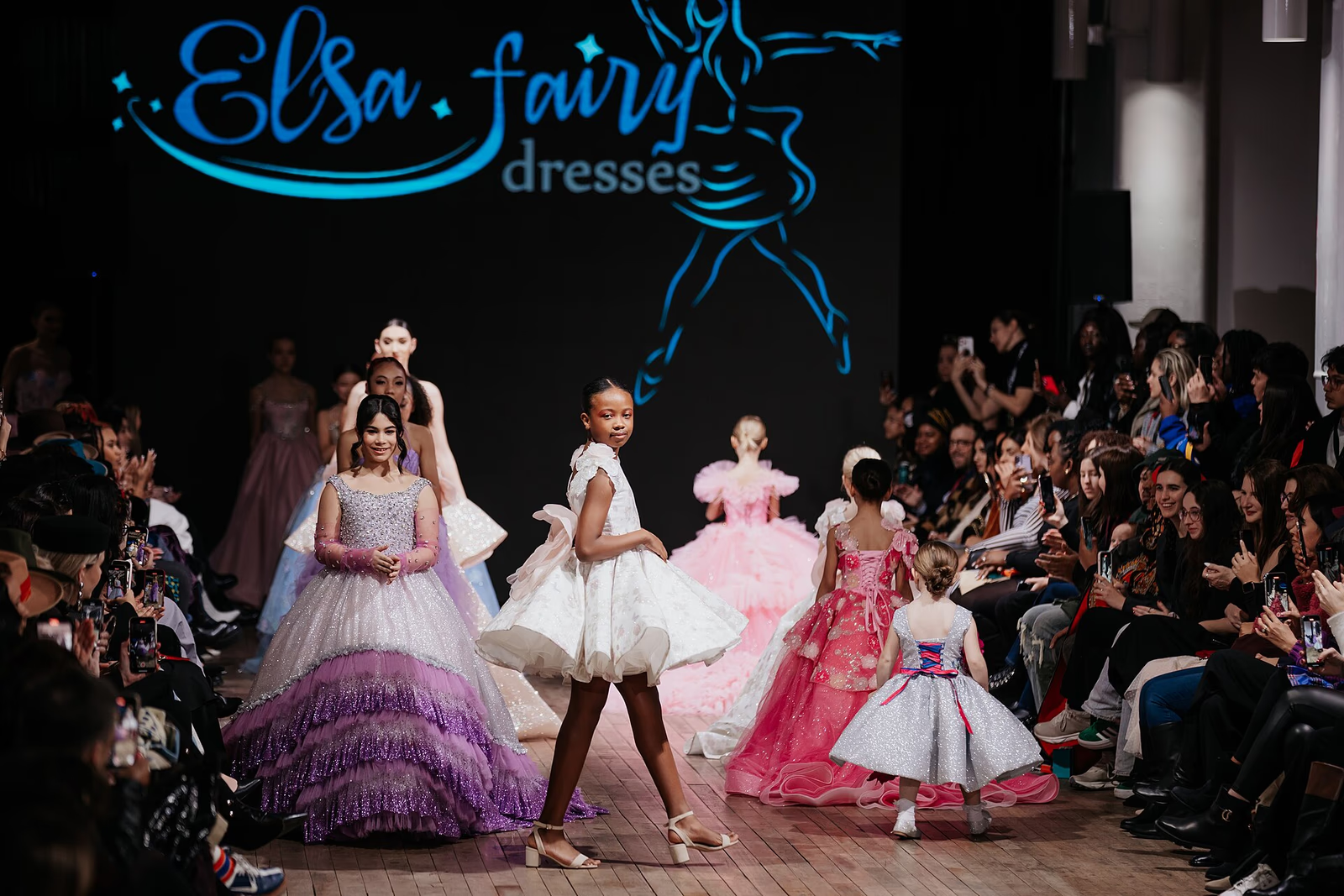
Photo: Runway show in New York 1.jpg by IrinamykytiukELSAfairy — CC BY-SA 4.0, via Wikimedia Commons.
Be Invisible When It Counts
The best backstage photographers function as a fly on the wall: present, but not a participant. Lowit understood when to step forward and when to disappear into the crowd of assistants and dressers.
Reading the room is the skill underneath that. Some moments want a quiet observer with a long lens and no direction at all. Others benefit from a small prompt, or from a subject being asked to move into the light. Deciding which is which comes with experience, and getting it wrong is obvious immediately: either the picture is a polite record of nothing, or the photographer has interrupted the thing that made the scene worth photographing.
The rule to work by is that your presence should improve the moment or stay invisible. It should never take it over.
Develop Your Signature
Lowit's photographs are instantly recognisable, and not because of a filter or a technique. They are recognisable because she consistently saw intimacy, humour and humanity, and she found beauty in the unglamorous parts of a glamorous industry.
That is a different thing from a visual style. A signature built on how you edit can be copied in an afternoon. A signature built on what you notice and what you value takes years, cannot be purchased, and is the only durable advantage a photographer has. If your work is recognisable only because of a preset, you do not have a voice yet. If someone can identify your photographs from the subjects you choose and the moments you favour, you do.
Backstage Practicalities: Gear and Settings
The conditions backstage are hostile to equipment: low light, mixed colour temperature, moving subjects, and no space. The technical choices that work are boring and reliable.
Use a compact, quiet camera. A small mirrorless body with a fast prime lens, around 35mm or 50mm, is the standard for backstage work. It performs in low light, stays out of the way, and does not change how people behave the way a large body with a white lens does.
Open the aperture. Somewhere between f/1.4 and f/2.8 gets you usable shutter speeds without raising the ISO to the point where detail disappears. It also separates your subject from a background that will otherwise be a wall of cables and clothing racks.
Keep the shutter above 1/250. People move quickly backstage, and motion blur on a moment that lasts half a second cannot be recovered. Priority on shutter speed, not aperture, when you have to choose.
Use Auto ISO with a sensible ceiling. Light changes constantly as you move between rooms, and you will not have time to adjust manually. Set a maximum you are happy to work with, then forget it.
Shoot RAW. Mixed lighting is the norm, and white balance will need correcting per image. RAW is the difference between fixing that in an edit and losing the shot entirely. Most of those corrections are the same ones used for any photograph taken in difficult light, just applied more aggressively.
Shoot in bursts, but not constantly. Burst mode raises your odds of catching the exact expression, and if you hold the shutter down permanently you will spend the next week deleting and miss the scene in front of you. The workflow used for concert and live event photographs is a good model here: fewer, better frames, edited properly.
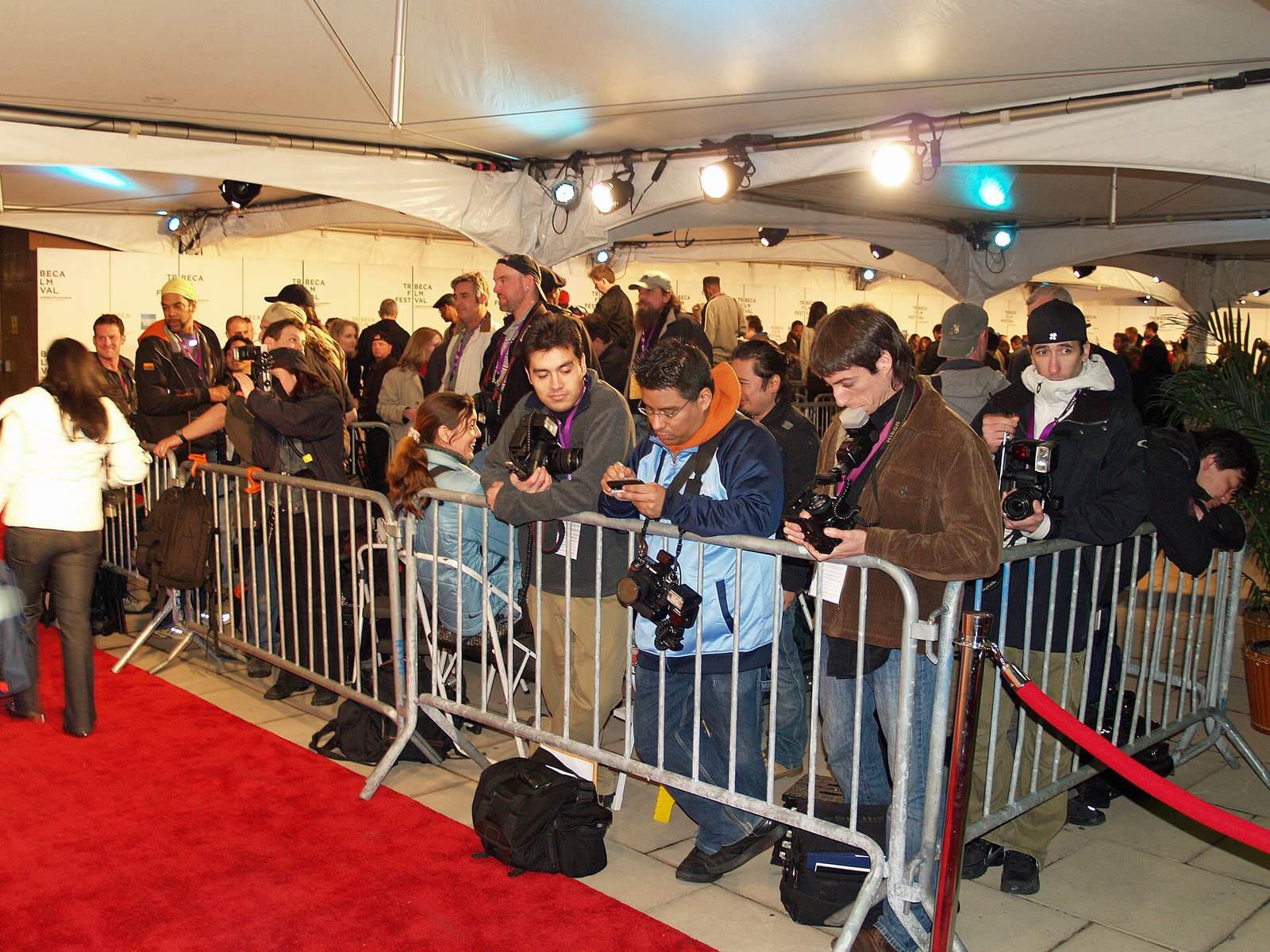
Photo: Paparazzi by David Shankbone.jpg by David Shankbone — CC BY-SA 3.0, via Wikimedia Commons.
Practical Tips
- Build access slowly. Reliability and discretion open more doors than talent alone.
- Look for quiet human moments inside chaotic events. The spectacle photographs itself.
- Never publish a frame that embarrasses a subject who trusted you.
- Learn when to be invisible and when to engage. Your presence should enhance, not hijack.
- Develop a signature based on what you notice, not on how you edit.
- Shoot with a compact body and a fast prime. Be quiet and mobile.
- Keep the shutter speed up, use Auto ISO, and shoot RAW in mixed light.
- Show up early, stay late, and deliver everything you promised.
Conclusion
Roxanne Lowit's legacy is a way of working rather than a set of images. Access, trust and integrity mattered more to her than gear, and the result was a body of work that captures the unguarded humanity behind one of the most controlled industries in the world.
None of that requires her contacts or her era. Turn up when you say you will. Photograph people rather than events. Decline the frame that would cost someone their dignity. Notice the quiet moment in the middle of the noise. Her photographs are one of the clearest arguments that the photographers who last are the ones whose subjects trust them, and that is available to anybody with a camera.
FAQ
How do I get access to shoot backstage at fashion shows?
Build it over time rather than asking for it. Start with smaller local shows and events, deliver consistently good work, and be professional and discreet with the people who let you in. Reputation is what produces invitations to larger shows, and it accumulates slowly.
What is the best camera for backstage photography?
A compact, quiet mirrorless camera with a fast prime lens in the 35mm to 50mm range. Low light performance and unobtrusiveness matter more than resolution. Many photographers also use a phone for quick candid frames where a larger camera would be intrusive.
What settings should I use when shooting backstage?
A fast aperture between f/1.4 and f/2.8, a shutter speed of 1/250 or faster to freeze movement, Auto ISO with a maximum you are comfortable with, and RAW files so mixed lighting can be corrected. Set it before the show starts and adjust as little as possible.
How do I photograph chaotic, fast-moving environments?
Stay calm and watch people rather than the action. Anticipate where something will happen and position yourself there in advance. Do not try to cover everything. Burst mode helps, but selective shooting beats holding the shutter down.
How do I develop a photography style that stands out?
Pay attention to what consistently draws your eye, whether that is emotion, geometry, colour or humour, and then shoot enough to see the pattern in your own archive. A style based on how you see lasts. A style based on a filter can be copied by anyone.
How do I photograph people who are under pressure without getting in the way?
Keep your footprint small, work from the edges of the room, and avoid interrupting a process to get a picture. If you need direction, give it briefly and then step back out of the scene. Photographers who are useful rather than demanding get invited back.
Continue reading
Which Fashion Brands Are Winning the AI Discovery Battle — And Why It Matters More Than SEO
May 24, 2026
Nvidia and Antoine Arnault Are Betting on Virtual Try-On — Here's What RealFit Could Change
May 24, 2026
123 Types of Photography to Try
September 25, 2026
How to Take the Perfect Engagement Photos: The 5 Rules
September 27, 2026
5 Chic Jeans and Top Combos You'll Be Wearing All Summer Long
May 24, 2026
Strike a Pose: Street Style Star Hanneli Mustaparta Shows Us How
September 27, 2026
8 Sustainable Fashion Photoshoot Ideas That Wow on Instagram
July 11, 2026
How to Edit Concert Photos for Best Results
July 11, 2026
A Day by Boat: How to Dress, What to Bring, and Why It's the Ultimate Summer Experience ⛵️
May 24, 2026
Fashion's Top Executives Gather in London to Explore AI's Role in the Industry
May 24, 2026
14 Best Stock Photography Sites
September 25, 2026
How to Include Pets in Family Photos: Tips and Pose Ideas
July 11, 2026
Everything to Know About Wedding Photography Styles
September 27, 2026
How to Format an SD Card on a Mac
May 24, 2026
Casual Going Out Fit: How Luxury Streetwear Is Redefining After-Dark Dressing
May 25, 2026