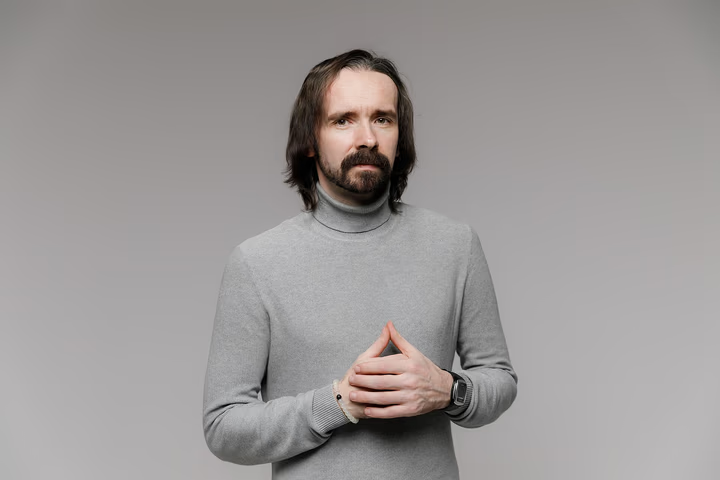
Strike a Pose: Street Style Star Hanneli Mustaparta Shows Us How
Hanneli Mustaparta has worked both sides of the lens. She was a model, she is a stylist, she photographs, and for years she has been one of the most photogra...
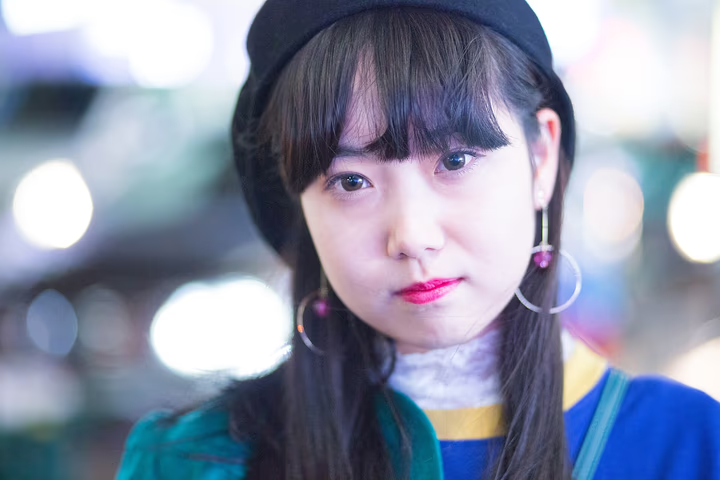
Hanneli Mustaparta has worked both sides of the lens. She was a model, she is a stylist, she photographs, and for years she has been one of the most photographed people on the street during fashion week. That combination is unusually useful, because she can explain a photograph from both ends: what the subject experiences while being shot, and what the photographer is trying to build.
Her advice, given to Vogue, is refreshingly free of theory. Listen to direction. Keep moving. Use the street. Watch the light. Edit lightly. And put in the thousands of frames that separate a good photograph from a recognisable point of view. Photo: Harajuku Fashion Street Snap (November 11, 2017) (46370502754).jpg_(46370502754).jpg) by Dick Thomas Johnson from Tokyo, Japan — CC BY 2.0, via Wikimedia Commons.
Listen Up, Even in the Chaos
"A good photographer gives direction, so it's important to listen even amidst the din," Mustaparta says. "It makes for a better picture."
The line works in both directions. If you are photographing, it is a reminder that communication is not optional and that a subject who has been given something specific to do will produce a better frame than one who has been left to guess. If you are being photographed, it is a reason to trust the instructions you are given. When a photographer says to turn towards the light or tilt your chin, they are describing something you cannot see from your side of the lens.
The practical consequence is simple. Photographers should talk. Subjects should listen. The session that produces good pictures is almost always the one where both of those things happen, whether it is on a crowded street corner or in a quiet studio.
Master the Art of Posing Naturally
Mustaparta spent years modelling before she picked up a camera, so she understands posing better than most of the people who write about it. Her approach is simple to describe and hard to fake: do not look like you are posing.
The images that survive from street style are the unguarded ones. Mid-stride. A glance over the shoulder. Laughing at something off-camera. Standing straight and looking into the lens at attention almost never produces anything interesting, because it removes the movement that makes a photograph feel alive.
Which means the photographer's job is to keep the subject in motion and then choose. Walk, turn, shift weight, interact with something in the environment, keep talking. The good frame arrives on its own when the exposure and the angle are ready for it. If you want a structured way to direct that, movement-based posing techniques are built on exactly this principle, and knowing which angles flatter most people means you can direct without stopping the movement.
Use Your Environment
Street style is as much about context as subject. The backdrop, whether it is a textured wall, an architectural detail or a blur of pedestrians, adds depth and narrative to the image.
Mustaparta does not isolate her subjects against blank backgrounds. She works the street into the frame, which is why her pictures feel like a record of a day rather than a catalogue shot. When you are shooting, look past the person. What is happening behind them? Is there a line leading towards them, or a shape echoing them? Can you use a doorway or a column as a frame rather than standing in the middle of the pavement?
The one thing to manage is clutter. Busy backgrounds work when the subject still dominates and fall apart when they do not, and the test is the same one used in every composition: can you tell instantly where the eye is meant to go?
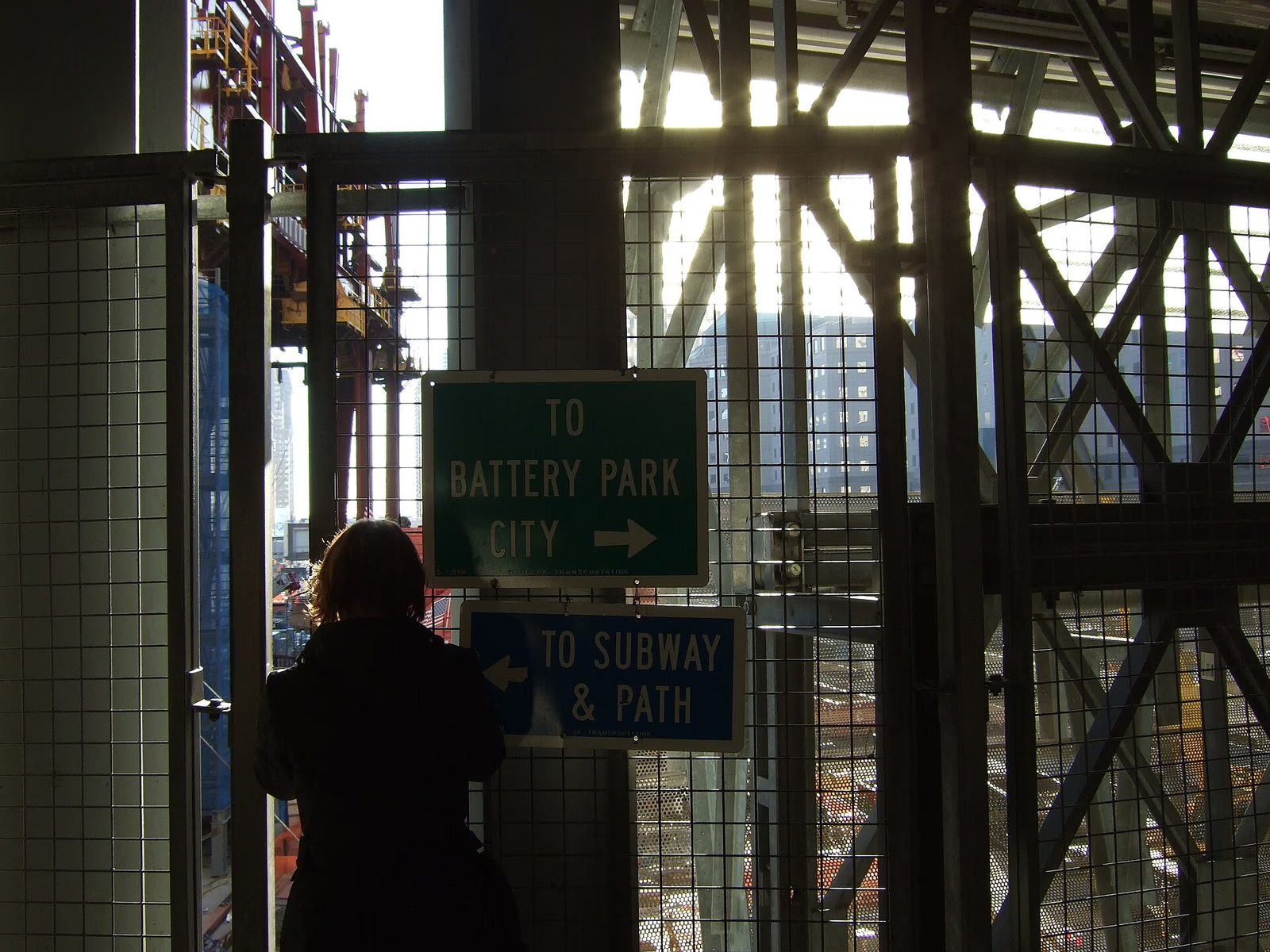
Photo: Manhattan New York City 2009 PD 20091129 010.JPG by Sterilgutassistentin — CC BY-SA 3.0, via Wikimedia Commons.
Light Is Everything, Even on the Street
Studio photographers control every photon. Street photographers take what the day offers, which is why awareness of light matters more here than anywhere else.
Overcast days are the gift. The clouds act as a softbox, spreading light evenly and removing the harsh shadows that appear under eyes and chins. On sunny days, find open shade: the shadow side of a building, under an awning, beneath a tree, or in the lee of a wall. Direct midday sun is the worst available light for people, and moving two metres into shade fixes in ten seconds what no amount of editing fixes later. If you want to understand why the difference is so large, the mechanics are the same ones behind fixing bad lighting in photographs.
For the cases where harsh light is unavoidable, Mustaparta describes a workable trick: have the subject face the sun with their eyes closed, then open them on your count. The light on the face is beautiful and luminous, and the squint that would otherwise ruin the shot never happens.
Edit With Restraint
Her editing philosophy mirrors everything else she says: enhance, do not transform. Slight adjustments to exposure, contrast and colour balance to make the photograph look like the best version of what was actually there.
Heavy filters date quickly because they carry the taste of a particular year. A light edit is timeless by comparison, and on street work it also preserves the thing you were photographing, which is real people in real light on a real day.
Find Your Voice
What separates Mustaparta from the thousands of other people photographing fashion week is not technique. It is a point of view. Her images do not simply document what someone was wearing; they capture an attitude and a moment.
Developing that takes time and a lot of frames, and it starts with a question asked before pressing the shutter: what am I trying to say with this image, and what do I want someone to feel? Technical skill can be learned in a couple of years. Vision takes considerably longer, and it is the only part of the work that cannot be bought or copied.
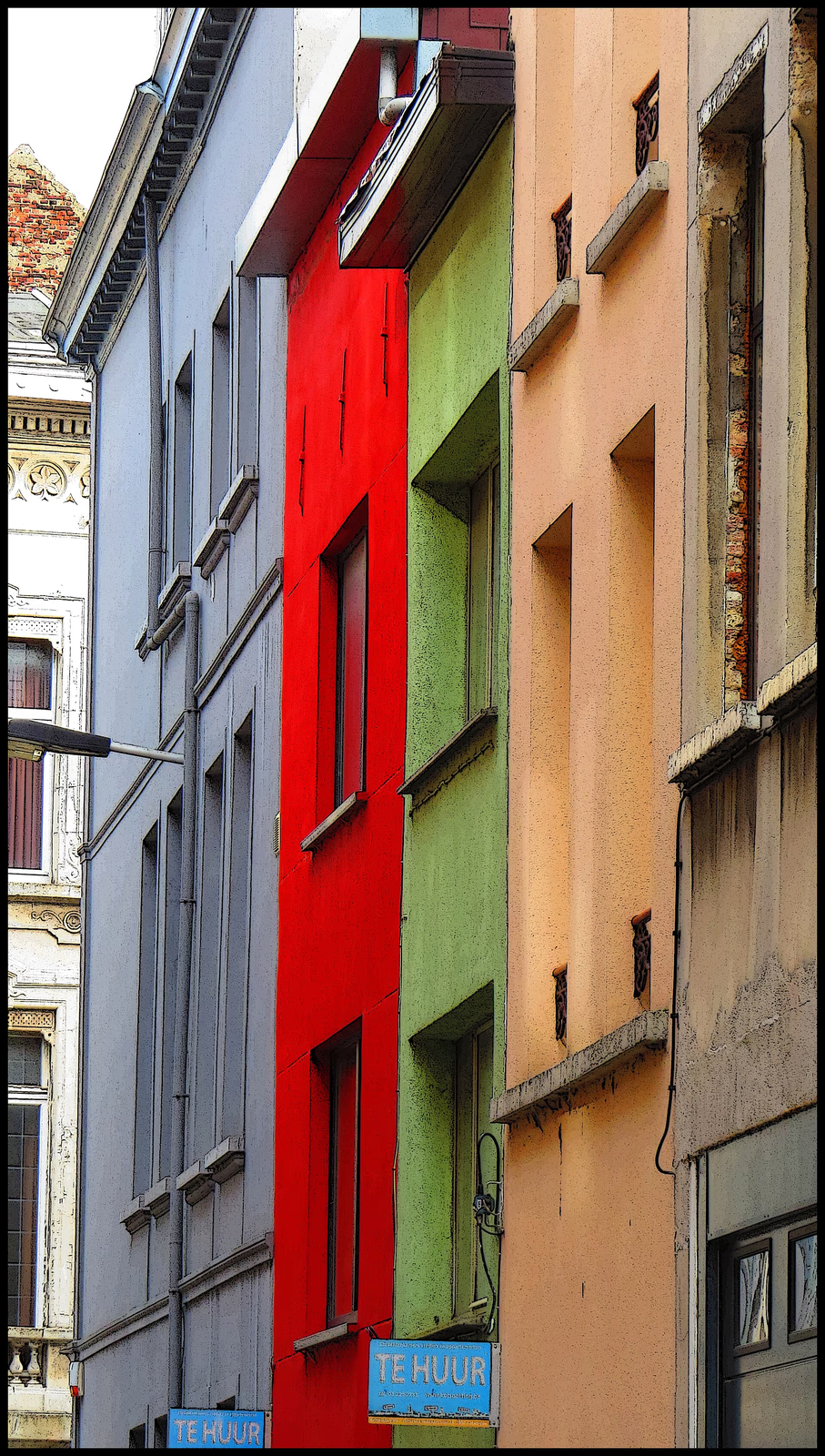
Photo: Colorful Facades - panoramio.jpg by agracier - NO VIEWS — CC BY-SA 3.0, via Wikimedia Commons.
Shooting Street Style: What Works in Practice
Ask before you assume. Most people are pleased to be photographed, especially at a fashion event, and a direct, specific compliment followed by a request works far better than a long lens aimed from across the street. Tell them where the photo will appear. Offer to send it.
Anticipate rather than chase. Position yourself where people will walk into good light, and let them come to you. Standing in a doorway with a clean background beats following someone down a crowded pavement.
Set your exposure for the highlights. Bright sky and reflective facades blow out easily. Expose so that the brightest areas hold information, then lift the shadows in editing rather than letting the background turn white.
Keep the camera low-profile. A small body and a short lens keep the scene natural. Big lenses change how people behave, and the change is visible in the pictures.
Shoot the second and third frame, not the first. The first frame catches a face still adjusting to being photographed. By the third, a subject has relaxed and the expression belongs to them.
Choose a background before you need one. Good street photographers know three or four spots within a short walk that work in any weather, and they return to them.
Practical Tips
- Give clear direction and listen to what the subject tells you in return.
- Keep the subject moving. Static posing rarely survives the edit.
- Treat the street as a compositional element rather than a backdrop.
- Use open shade on sunny days. Overcast light is a gift.
- In harsh sun, position the subject facing the light, eyes closed, and have them open on your count.
- Edit to enhance. Heavy filters age badly.
- Ask before shooting, and say where the image will be used.
- Shoot thousands of frames. Style emerges from volume and attention, not from a preset.
Conclusion
Mustaparta's advice closes the distance between the person in front of the camera and the person behind it, which makes sense given she has spent a career on both sides. The fundamentals do not change with position: give and take direction, keep moving, use what the street gives you, treat the light as part of the composition, and edit like someone who respects the scene.
Above all, the work is the seeing. Nobody arrives with a point of view. It is assembled out of thousands of frames, most of which get deleted, and it is the only part of photography that takes a lifetime and cannot be shortcut.
FAQ
How do I pose naturally for street style photographs?
Keep moving. Walk, turn, shift your weight, look at something other than the camera. Static poses almost always read as stiff, and the strongest street style frames catch people mid-motion, engaged with whatever is around them.
What is the best time of day for street photography?
Early morning and late afternoon give the most flattering light, and overcast days are better still because the clouds diffuse everything evenly. If you have to shoot at midday, find open shade and get out of the direct sun.
How do I develop my own photography style?
Shoot constantly, and study widely, including painting, film and design rather than photography alone. Pay attention to what consistently draws your eye and work out why. Style is the accumulation of your influences filtered through what you actually notice.
What editing tools do professional street style photographers use?
Lightroom and Capture One dominate on desktop, with VSCO and Snapseed popular for phone work. The specific app matters far less than consistency. Similar adjustments across a body of work produce a cohesive look; a different filter every day does not.
How do I approach a stranger for a street style photo?
Be polite, direct and specific. Compliment something real, explain why you want the photograph and where it will appear, and offer to send them a copy or tag them. A genuine reason for asking works better than a generic request.
Why do my street photos look flat?
Usually because of light or background rather than technique. Direct midday sun removes the modelling that gives a face dimension, and a cluttered background gives the eye nowhere to land. Move into shade, choose a clean backdrop, and let the subject move through the frame.
Continue reading
How to Photograph Children
September 25, 2026
Colorful Shoes, Woven Bags, Tankinis: 7 Fun Summer Trends Worth Shopping Right Now
May 25, 2026
Why Fashion Stays Silent About Its AI Use — And Why That Silence Is Becoming a Problem
May 24, 2026
Is AI Antithetical to Luxury? What Prada's Controversial Campaign Reveals About Fashion's Biggest Tension
May 24, 2026
Sibling Photoshoot Poses
September 25, 2026
How to Include Pets in Family Photos: Tips and Pose Ideas
July 11, 2026
How to Take the Perfect Engagement Photos: The 5 Rules
September 27, 2026
Photographer Gray Malin's Travel Tips and the Art of the Aerial Beach Photograph
September 27, 2026
Fashion People and Zara Agree: You Can't Go Wrong With This Effortless 3-Piece Summer Outfit Idea
May 25, 2026
5 Chic Jeans and Top Combos You'll Be Wearing All Summer Long
May 24, 2026
How Pixel Moda Is Producing 14 Million AI-Assisted Images a Year — Without Losing the Human Touch
May 24, 2026
Making Money with Stock Photography
September 25, 2026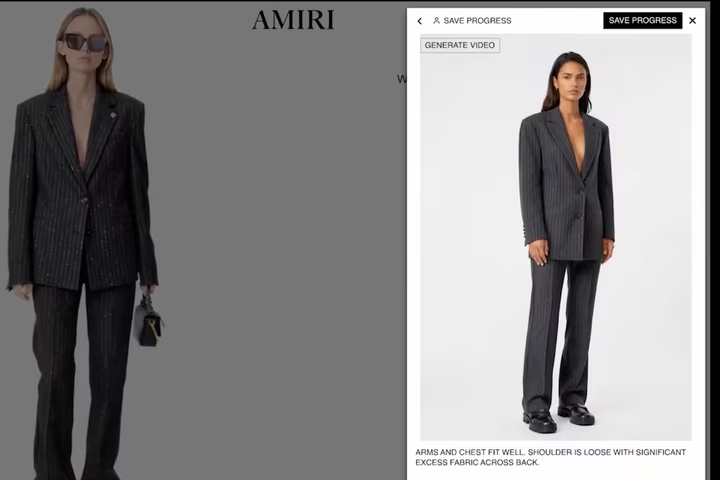
Nvidia and Antoine Arnault Are Betting on Virtual Try-On — Here's What RealFit Could Change
May 24, 2026
8 Sustainable Fashion Photoshoot Ideas That Wow on Instagram
July 11, 2026
How to Photograph Shy, Difficult, or Anxious Pets
May 24, 2026