How to Photograph Children
Children are the worst possible subjects for photography and the best. They do not take direction, they will not hold a pose, they move at unpredictable spee...
Children are the worst possible subjects for photography and the best. They do not take direction, they will not hold a pose, they move at unpredictable speeds in unpredictable directions, and they lose interest in your plan within ninety seconds.
They also produce the best expressions you will ever photograph, because nothing they do is performed for the camera. The whole skill of photographing children is arranging a situation where their real behaviour happens in front of your lens. Everything below is in service of that.
Stop Posing Them
The moment you ask a child to stand and smile, you have lost. The smile becomes a grimace, the shoulders come up, and the picture records compliance rather than childhood.
Photograph what they are already doing. Sit on the floor, keep the camera at your side, and wait for the play to happen. If a child is building something, running somewhere or talking to someone, they are unselfconscious, and unselfconscious is the entire objective.
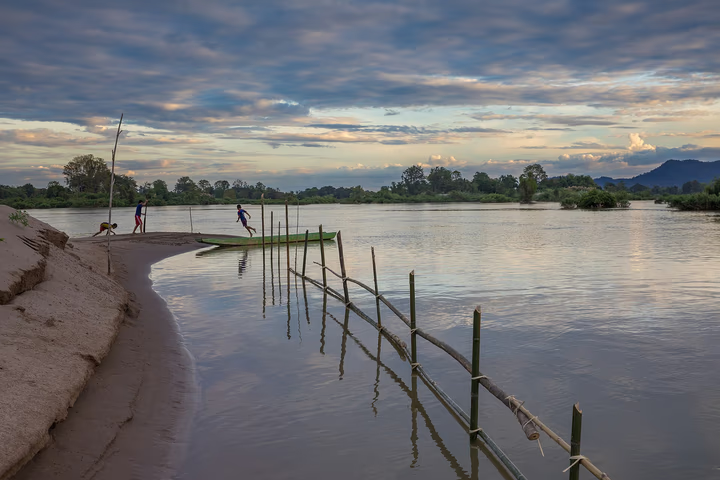
This changes your camera position as well. Photographing a child from adult eye level looks down on them and produces small, disconnected figures. Get down to where they are: kneel, sit, crawl, lie on the floor. Photo: Basile Morin — CC BY-SA 4.0, via Wikimedia Commons.
Let the Session Be Short
Twenty minutes of engaged attention beats an hour of negotiation. Children do not have the stamina for a long shoot, and pushing past their limit produces a photographed argument.
Plan the session around their capacity, and prepare everything before they arrive: light checked, background cleared, settings locked in, props in position. The arrival of the child is the start of the shoot, not the start of your setup. Fumbling with settings while a toddler waits is how sessions collapse.
If you are photographing your own children, this becomes even more important. The camera should be a normal object in the house, sitting on the counter, picked up and put down constantly, never announced. Children who grow up with a camera that appears only for special occasions learn to perform for it. Children whose parent always has a camera nearby eventually stop noticing.
Turn It Into a Game
The fastest way to get real expression is to give them something to do that is more interesting than the camera.
Ask them to jump on the count of three and get them to shout the numbers. Have a competition to see who can make the silliest face. Send them to find something and photograph the search rather than the discovery. Ask them to tell you a secret, then photograph the reaction. Set up a task that has an outcome they care about, and be ready when it happens.
The trick is that the game has to be genuinely interesting to a five-year-old, not interesting to you. Adult ideas about fun are usually transparent to children.
What to Do When a Child Refuses
It happens, and it is not a crisis. Every child has a day when the camera is unwelcome, and forcing the issue teaches them that photography is a conflict.
Put the camera down. Not in ten minutes, now. Come back tomorrow, or next week, when the mood is different. Whatever photograph you were chasing will still be there, and the alternative is a child who hides every time they see a lens.
If a child is consistently reluctant in a family session, photograph them from behind, or in profile, or doing something absorbed, so that the camera is not facing them at all. Some children relax immediately when they stop feeling watched.
Working With Siblings
Two children is four times the difficulty of one, and it is usually worth it, because the relationship between them is the photograph.
Do not ask them to sit side by side and smile. Ask them something that makes them interact: who is taller, who can hold their breath longest, tell your brother a secret. Photograph the exchange rather than the pose. If they start bickering, keep shooting, because the argument is often more interesting than the cooperation.
For very mixed ages, give the older child a job. Handing a four-year-old the responsibility of helping to look after a baby produces a photograph and occupies both of them while you work.
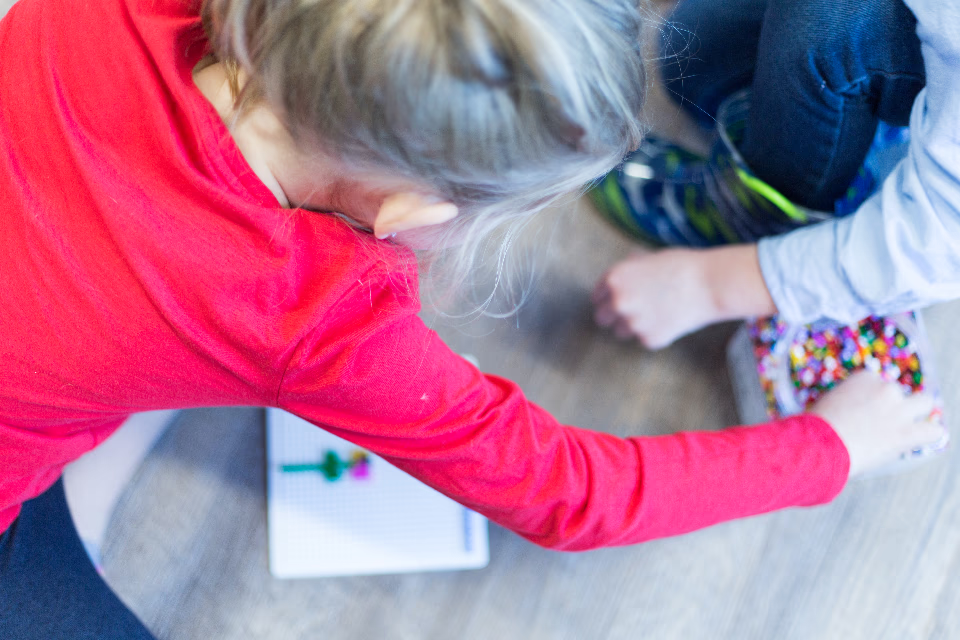
Photo: Kristin Hardwick — CC0, via Openverse.
Light and Space Indoors
Inside the average home, the light is worse than it looks to your eyes. Eyes and brains accommodate almost magically; cameras do not.
The solution is a window. Put the child beside a window with the light falling across their face rather than directly in front of it, turn off overhead lights, and turn off the camera flash. On-camera flash flattens faces, reddens skin and produces hard shadows behind the head, and it also changes the mood of a room instantly. Children react to a flashing light, and you will spend the rest of the session watching them blink.
Push the ISO rather than the flash. A slightly noisy photograph of a real moment beats a clean photograph of a blinking child.
Look at the background before you press the shutter. Half of the clutter problem in indoor photographs is one laundry basket that could be moved with a foot.
Settings That Keep Up
Children move, which makes two settings matter more than the rest.
Use a fast shutter speed. Something in the region of 1/250 second or faster will generally hold a running child, and faster still for jumping. Motion blur from too slow a shutter is the single most common technical failure, and it cannot be recovered later.
Use continuous autofocus with subject or eye detection where your camera offers it. This lets you stop worrying about focus and pay attention to timing, and modern systems handle unpredictable movement well enough to be trusted. Burst mode helps, but shoot in short bursts rather than holding the shutter down, or you will spend the evening deleting near-identical frames.
Outdoors, work with the light rather than against it. Overcast light is a gift for children because it removes squinting. In sun, put the sun behind the child and expose for the face, or move into open shade.

Photo: Family First — CC0, via Openverse.
The Parent Problem
When a parent is present, they usually cannot help directing. You will hear a stream of "look at the camera," "smile properly" and "stand up straight," each of which damages the photograph you are trying to make.
Brief them before the session, in one sentence: your job is to play with them, not to manage them. Explain that the pictures are better when the child is absorbed, and that you will handle the framing. Most parents understand immediately once it is framed as giving the child something else to focus on.
It also helps to remove the audience. A session with four adults watching a child is a performance. Two people, one of them playing, works far better than six people all looking.
Tips That Make a Difference
- Prepare everything before the child arrives, then the session can start properly.
- Shoot at their eye level, which usually means kneeling or sitting on the floor.
- Give them something to do, and photograph the doing rather than the outcome.
- Use window light, turn off the flash, and raise the ISO without hesitation.
- Shoot in short bursts, then stop and look at what you have before shooting more.
- Exploit repetition: the third jump is often better than the first, once the awkwardness has gone.
- Keep sessions short and frequent rather than long and rare.
- Photograph them from behind, in profile and mid-activity, not only facing the lens.
Conclusion
The technical side of photographing children is simple: fast shutter, reliable autofocus, decent light, and a camera position at their height. Everything difficult about it is patience and restraint.
The restraint matters because the instinct when a child is doing something wonderful is to intervene, call their name, and ask them to do it again. That instinct produces a photograph of a child complying with an adult rather than a child being a child. The photographers who do this well are mostly the ones who can wait.
If you are building this into a wider family session, it is worth shooting the children on their own first, and thinking about how they will relate to everyone else in the frame. Working with pets in family photographs follows the same patience-first logic, and poses for siblings together are built around interaction rather than instruction. If grandparents will be in the shoot as well, prepare those three-generation groupings in advance, because they are the part of the session with the least flexibility.
FAQ
How do I get a child to look at the camera?
Put whoever is helping you directly behind your shoulder and have them make a noise or hold a toy, so the child looks toward the lens without being told to. Asking a child to look at the camera produces a stare. Making something interesting happen behind you produces an expression.
What camera settings work best for photographing children?
A shutter speed of at least 1/250 second, continuous autofocus with eye or subject detection, and a higher ISO than you would normally accept indoors. Turn the flash off and use window light instead.
How long should a child photography session last?
Fifteen to twenty minutes of engaged attention for a young child. Prepare everything before they arrive and stop while they are still enjoying it, because a session that ends well is one you can repeat.
What if my child never cooperates?
Photograph what they do rather than what you planned. Children who refuse to pose will happily ignore you while playing, and those unposed frames are usually the ones worth keeping. If a camera has become a signal for conflict, put it away for a few weeks and let the association fade.
Should I use props or costumes?
Rarely, and only if the child is genuinely interested in them. A prop that holds attention for two minutes is useful. An outfit chosen for the photograph rather than the child is usually visible in the result.
How do I photograph children indoors without flash?
Find the best window in the house, position the child beside it with the light striking across the face, kill the overhead lights, and raise the ISO. Match the light in the room so the window reads as the brightest area of the frame rather than being blown out.
At what age do children become easier to photograph?
Generally once they are old enough to understand a request and to find cooperation interesting, somewhere around five or six. Before that, everything depends on play. After it, they may start performing for the camera, which brings its own problem.
Continue reading

Photographer Gray Malin's Travel Tips and the Art of the Aerial Beach Photograph
September 27, 2026
How to Take the Perfect Engagement Photos: The 5 Rules
September 27, 2026
Annie Leibovitz on 5 Images That Have Shaped Her Career
September 27, 2026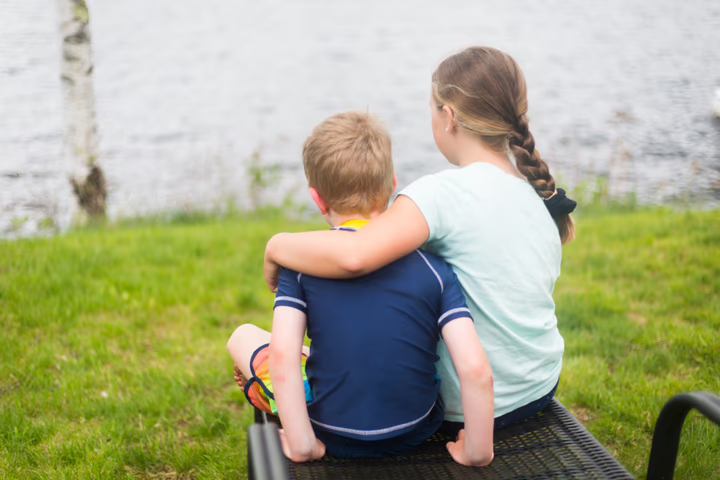
Sibling Photoshoot Poses
September 25, 2026
The 4 Best Ways to Digitize Old Photos (and How to Store Them)
May 24, 2026
'POV Shopping' Videos Are Going Viral — And Luxury Brands Should Be Worried
May 24, 2026
How to Shoot During Golden Hour: Lighting Guide
May 24, 2026
How Big Is a 4×6 Photo? Sizes in Inches, Centimeters, and Pixels
May 24, 2026
Fashion People and Zara Agree: You Can't Go Wrong With This Effortless 3-Piece Summer Outfit Idea
May 25, 2026
How Pixel Moda Is Producing 14 Million AI-Assisted Images a Year — Without Losing the Human Touch
May 24, 2026
Strike a Pose: Street Style Star Hanneli Mustaparta Shows Us How
September 27, 2026
Afterparty Style: Why Custom Clothing Is the Ultimate Expression of Personal Identity
May 25, 2026
How to Format an SD Card on a Mac
May 24, 2026
61 Best Photography Books for All Levels
September 25, 2026
How to Edit Concert Photos for Best Results
July 11, 2026