Photographer Gray Malin's Travel Tips and the Art of the Aerial Beach Photograph
Gray Malin's photographs are the kind you recognise before you read the credit. Umbrellas in perfect rows. Sunbathers arranged across sand in colours that sh...
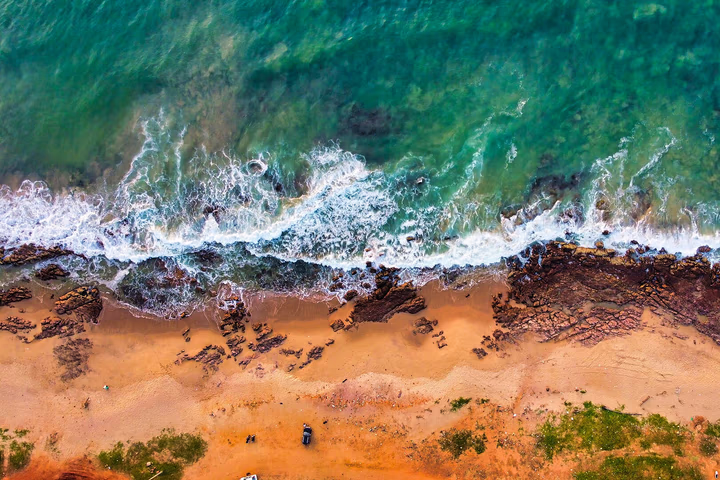
Gray Malin's photographs are the kind you recognise before you read the credit. Umbrellas in perfect rows. Sunbathers arranged across sand in colours that should not work together and do. Coastlines shot from a helicopter with the doors off, so that a crowded beach turns into something closer to a painting than a document.
His Bon Voyage series took that approach around the world, and when he talks about how the pictures get made, the process is less glamorous than the results. Maps, satellite imagery, flight planning, a specific hour of the day, and then complete attention to what is actually happening below. Photo: Aerial view of Rushikonda beach.jpg by iMahesh — CC BY-SA 4.0, via Wikimedia Commons.
Plan, Then Let Go
Malin is famous for pre-production. Before a flight he has studied maps, scouted beaches through satellite imagery, and worked out which locations to shoot and when the light will be at its best.
The point of all that preparation is not control. It is permission to be present. Pattern on a beach shifts by the minute as people arrive and leave. The light moves. Compositions appear and vanish inside seconds, and a photographer still consulting a shot list has already missed them. Preparation is what allows spontaneity to be useful rather than chaotic.
The same logic applies to a trip with a phone in your pocket. Research where you want to be and roughly when, then put the plan away on arrival and respond to what is in front of you. The pictures people remember from their own travels are usually the ones nobody scheduled.
Find the Pattern
What separates Malin's aerials from a drone snapshot of the same beach is an obsessive interest in pattern, repetition and rhythm: rows of striped umbrellas, clusters of towels, the arrangement of bodies on sand. He treats the beach as a composition of repeating forms rather than a collection of individuals.
This habit is learnable, and it is the single most transferable thing in his method. Train yourself to notice repetition wherever you are: a row of windows, a line of bicycles, the steps of a staircase, market stalls repeating down a street. Once you start seeing the geometry, you begin framing it deliberately, and ordinary scenes start producing photographs that look intentional.
Get Above Your Subject
Getting above the subject is Malin's signature move, and it is the reason his work looks like nobody else's. You do not need a helicopter to use the same idea.
Climb a hill. Find a balcony or a rooftop. Stand on a wall. Shoot from the top of a staircase, or from a bridge over a street. The change of angle is doing real work: a beach seen from standing height is familiar, and the same beach seen from forty feet up becomes abstract, geometric and strange. Familiar scenes photographed from unfamiliar positions make viewers stop, because they cannot immediately place what they are looking at. If you want to explore how much that single variable changes, the range of photography types worth trying is largely organised by perspective, not by subject.
Color Is Your Narrative
Malin's palette is the other half of his signature, and it is curated rather than captured. When scouting, he is thinking about colour stories: turquoise water against white sand, the clash of umbrellas and towels, bright swimwear against neutral ground.
For anyone else, the lesson is to be deliberate. Do not photograph whatever colours happen to be present and hope. Seek out the location, the hour and the angle that produce a coherent palette, and then protect it in editing by resisting the urge to push every slider. It also helps to know what time of day gives you the tones you want, since the golden hour guide explains why late afternoon light is the most forgiving starting point for saturated, dimensional colour.
Bring Back the Glamour of Travel
Malin has said his goal is to bring back the glamour of travel, and the phrase is a useful description of his photographs: aspirational, celebratory, and deliberately more beautiful than the scene felt in person.
That is not dishonesty. It is editing in the broader sense. You choose the frame, the hour and the angle, and those choices decide whether a place looks like an inconvenience or an invitation. A busy airport photographed at the wrong angle is a queue. Photographed from above with the light coming through the windows, it is a beginning. Photographers who accept that their job is interpretation rather than documentation tend to produce work that people actually want to look at twice.
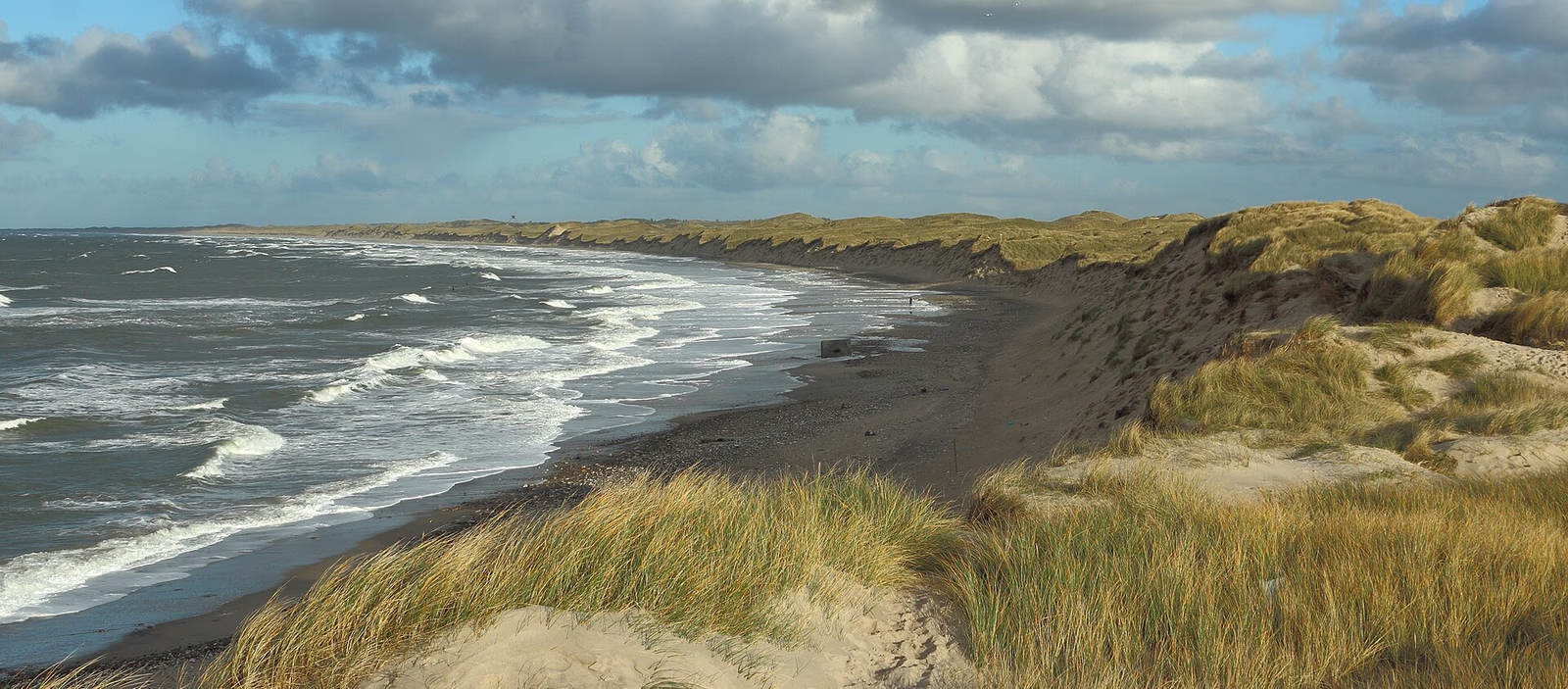
Photo: Nørre Vorupør Coast one third sky 2012-11-18.jpg by Slaunger — CC BY-SA 3.0, via Wikimedia Commons.
Shooting Aerial Style Without a Helicopter
Malin shoots from helicopters with the doors removed, using professional cameras and flights planned around the light. Most people will never do that, and they do not need to, because the visual effect he is after depends on height and geometry rather than on aviation.
Find height nearby. Rooftop bars, parking garages, observation decks, balconies, church towers and hills all work. A hotel window on the sixth floor is enough to turn a street into a pattern.
Shoot looking down, not across. The abstraction comes from a steep angle. Lean over the railing, hold the camera out, and fill the frame with the geometry rather than the horizon.
Let the people be small. In an aerial photograph, individual faces are irrelevant. What matters is the arrangement, which is why a crowded scene works better than an empty one.
Watch for the light. Malin flies in the early morning and late afternoon, when the sun is low and shadows are long, because overhead midday light flattens sand and water into the same grey. Aerial work is even more light-dependent than ground-level work, because there is nothing else in the frame to give it depth.
Steady yourself and keep shooting. Handheld aerials from a height punish camera shake. Use both hands, brace against a solid edge, shoot in bursts, and accept that most frames will be discarded.
Know the rules. Drone use is restricted or banned in many cities, parks and coastlines, and flying over crowds raises privacy issues that vary by country. Check local rules before you fly, and if the restrictions are unclear, use a building instead.
If you ever intend to do something with the results, it is worth understanding print sizes before you crop aggressively, since the differences between 4×6, A4 and larger formats shape how much of the frame you can lose without ruining the image at scale.
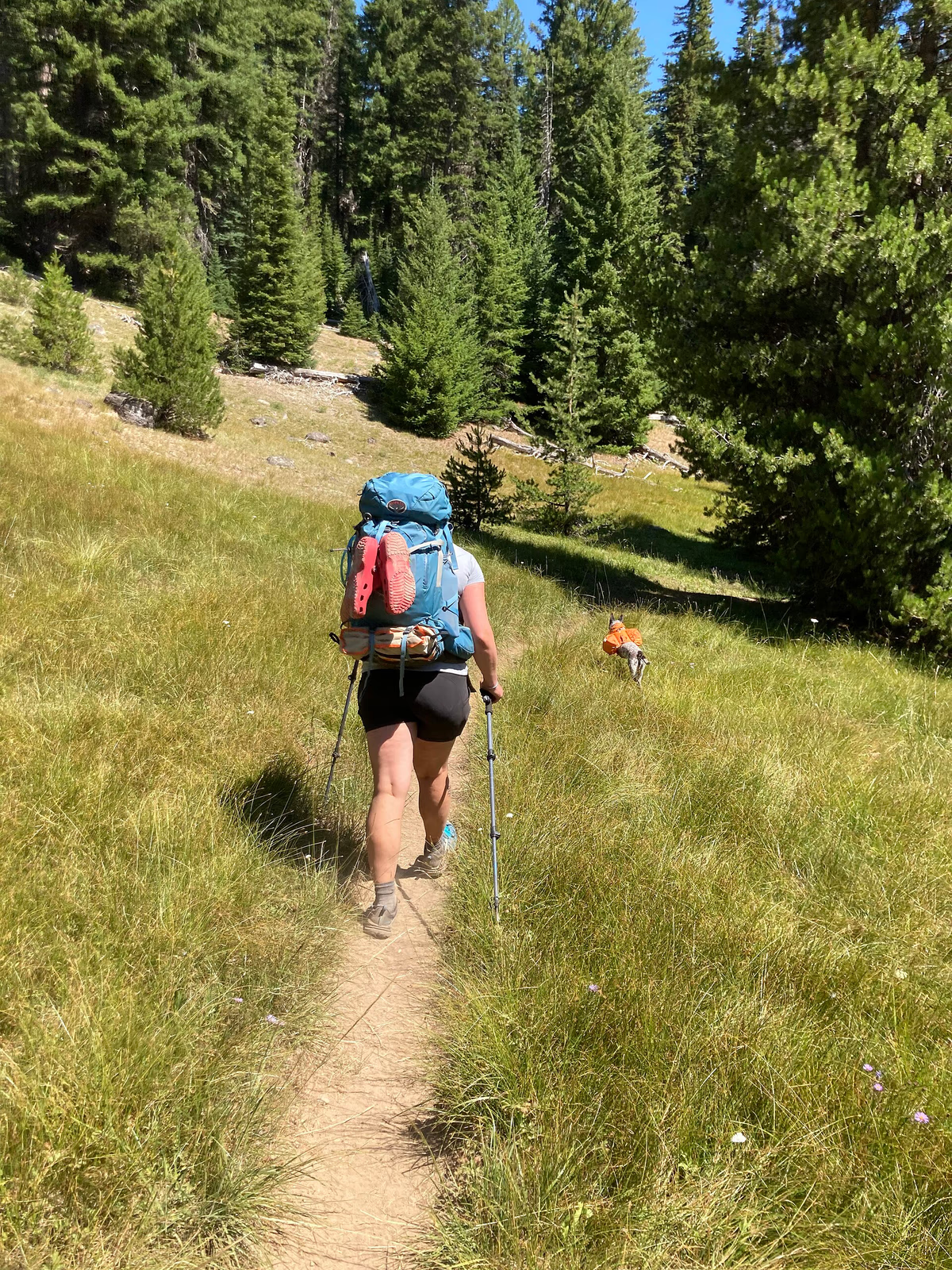
Photo: Backpacker and dog in Goat Rocks Wilderness.jpg by Mattsjc — CC BY 4.0, via Wikimedia Commons.
Practical Tips
- Research locations, light and timing before you travel, then put the plan away and respond to what you find.
- Look for pattern and repetition, and frame the geometry rather than the individual objects.
- Change your height. Rooftops, balconies, garages and hills do most of the work of a helicopter.
- Curate a colour palette deliberately instead of photographing whatever happens to be there.
- Shoot in the early morning or late afternoon for long shadows and saturated colour.
- Aim for images that make people want to go there. Interpretation is part of the job.
- Steady the camera and shoot in bursts from height. Expect to discard most frames.
- Check drone regulations before flying anywhere, and respect local privacy expectations.
- Shoot to print. Cropping decisions change once you consider the final size.
Conclusion
Gray Malin's photography is the product of three habits that have nothing to do with equipment. He prepares so thoroughly that he can be fully present once the flight starts. He looks for pattern and colour rather than for subjects. And he is willing to change his physical position, which is the cheapest and most underused creative decision available to any photographer.
You will probably never shoot through an open helicopter door. You can still find height, notice repetition, choose an hour when the light does something, and decide in advance that your photographs are going to make a place look better than it felt in a queue. That is the entire method, and none of it requires a budget.
FAQ
How does Gray Malin shoot his aerial beach photographs?
He typically shoots from helicopters with the doors removed, using professional cameras, and plans flights around the best light. Locations are scouted extensively through maps and satellite imagery before he ever takes off, so the time in the air is spent responding to what is actually happening rather than searching for it.
Can I get aerial-style photographs without a helicopter or drone?
Yes. Look for any nearby height: rooftops, balconies, parking garages, observation decks, hills, bridges or high windows. The effect comes from a steep downward angle and the geometry it exposes, not from the aircraft.
What time of day does Gray Malin shoot?
Early morning and late afternoon, when the sun is low in the sky, shadows are longer and colours are warmer and more dimensional. Midday light flattens the beach and removes the depth that makes the images work.
How does Gray Malin get such vibrant colour?
A combination of three things: choosing locations with naturally strong palettes, shooting in the right light, and editing carefully to increase saturation and contrast without pushing it into looking artificial. Deliberate location choice does more for colour than any preset.
What gear does Gray Malin recommend for travel photography?
He emphasises preparation and vision over specific equipment. For most travellers, a good mirrorless camera with a versatile zoom and a capable phone cover nearly every situation. The eye behind the camera is the equipment that matters.
Why do his photos look better than the actual place?
Because they are deliberate. Malin chooses the hour, the height and the crop that make the scene work, and he is open about wanting to restore a sense of glamour to travel. Every photograph is an interpretation, and deciding what your interpretation should be is part of the craft.
Continue reading
Met Gala Photographer Hunter Abrams' Tips for Peak Creativity
September 27, 2026
Want to Know What Your Customers Think? Ask an AI-Generated Focus Group
May 24, 2026
'POV Shopping' Videos Are Going Viral — And Luxury Brands Should Be Worried
May 24, 2026
12 Grandparent-and-Grandchild Photo Poses
May 24, 2026
How to Photograph Children: 29 Tips for Creative and Fun Photos
May 24, 2026
Afterparty Style: Why Custom Clothing Is the Ultimate Expression of Personal Identity
May 25, 2026
8 Sibling Rivalry Poses That Turn Fights Into Epic Photoshoots
July 11, 2026
Everything to Know About Wedding Photography Styles
September 27, 2026
99 Most Inspirational Photography Quotes
September 25, 2026
How AI Is Improving Digital Cameras
May 24, 2026
5 Chic Jeans and Top Combos You'll Be Wearing All Summer Long
May 24, 2026
Every Chic Londoner Is Wearing One of These 5 Summer Heatwave Staples This Weekend
May 25, 2026
How to Take the Perfect Engagement Photos: The 5 Rules
September 27, 2026
Fashion's Top Executives Gather in London to Explore AI's Role in the Industry
May 24, 2026
8 Sustainable Fashion Photoshoot Ideas That Wow on Instagram
July 11, 2026