123 Types of Photography to Try
Almost every photographer settles into one genre and then wonders why the work starts feeling repetitive. The usual cause is not a lack of talent. It is that...
Almost every photographer settles into one genre and then wonders why the work starts feeling repetitive. The usual cause is not a lack of talent. It is that the same problems have been solved, and solving problems is what keeps photography interesting.
Shooting outside your usual genre does something specific: it strips away your habits. A landscape photographer who tries macro has to reconsider depth of field entirely. A portrait photographer who tries astrophotography discovers what patience actually means. None of it is wasted, and most of it feeds back into your main work within a month.
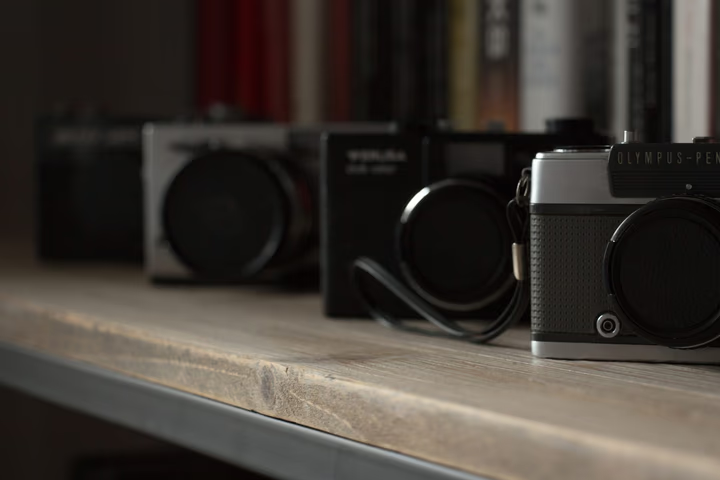
The 123 genres below are grouped by territory rather than ranked. Pick one that is genuinely unfamiliar and shoot it for a weekend before deciding whether you like it. Photo: Javier Salinas — CC0, via Openverse.
People and Portraits
1. Portrait photography. The core discipline: a person, a light, and a decision about how close to stand.
2. Corporate headshots. Repeatable, well-lit portraits for professional use, usually shot in volume against a plain background. The craft is in consistency and in getting a decent expression from someone who hates being photographed.
3. Environmental portraiture. A person photographed inside their own context: their workshop, their kitchen, their studio. The background carries as much information as the face.
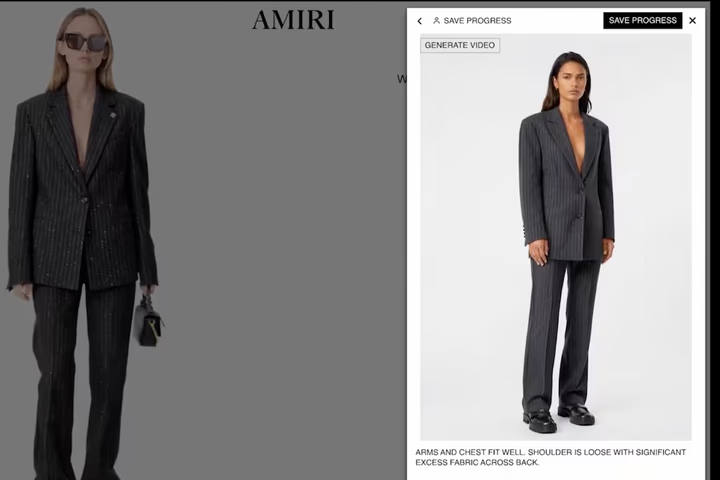
4. Fashion editorial. Styled, directed and narrative, usually for a magazine or a lookbook with a story attached. Higher pressure than it looks, because the clothes must be legible and the mood must be deliberate.
5. Runway photography. Fast, awkward light, no second chances. Strictly a timing and high-ISO discipline.
6. E-commerce and catalogue. Products worn on real bodies or shot as clean packshots, at volume, with an emphasis on colour accuracy over artistic intent.
7. Beauty photography. Skin, eyes and makeup, shot close and lit precisely. The genre where retouching standards are both highest and most contested.
8. Boudoir. Intimate portraiture, usually commissioned as a personal gift, reliant on direction and trust rather than technical complexity.
9. Maternity photography. Pregnancy portraits, often paired with newborn sessions. Mostly a lighting and comfort problem.
10. Newborn photography. Very young babies, very controlled conditions, and safety rules that matter more than any pose.
11. Family photography. Groups of related people, which is the hardest posing geometry there is.
12. Children's photography. Fast shutters, low camera positions and no posing whatsoever if you want real expressions.
13. Wedding photography. Documentary coverage of a day that cannot be repeated, mixed with directed group shots. Roughly half logistics.
14. Engagement and couples photography. Two people, directed lightly, usually outdoors. A good entry point into working with people.
15. Event photography. Conferences, launches, awards. Reliable, repeatable work with a defined shot list.
16. Nightlife photography. Flash-heavy coverage of clubs, bars and parties, usually shot fast and delivered quickly.
17. Theatre and performance photography. Low light, dress rehearsals, restricted movement. Rewards a fast lens and a knowledge of where the action lands.
18. Concert photography. Live music, unpredictable light, and a three-song window in many venues. One of the best training grounds for shooting in bad conditions.
19. Festival photography. Music festivals and cultural events over several days, blending performance, crowd and atmosphere.
20. Street portraiture. Approaching strangers and making a portrait in the open. Half photographic, half social skill.
21. Industrial and corporate reportage. Workers in factories, plants and job sites, photographed as operations rather than as individuals.
22. Executive portraiture. Headshots and features for board-level subjects, usually with limited time and controlled lighting.
23. Graduation and milestone photography. Ceremonies and family celebrations with a predictable shot list.
24. Dog and companion animal portraiture. Pets in studio or on location, which is mostly a patience and squeaker-management exercise.
Places, Travel and Built Environment
25. Travel photography. Places, people and moments in unfamiliar surroundings, held together by the discipline of telling a story rather than collecting views.
26. Documentary travel. Longer-form travel work with an actual subject and a sequence rather than a highlight reel.
27. Street photography. Unstaged moments in public space. The genre with the most practitioners and the fewest agreed rules.
28. Architecture. Buildings photographed for shape, proportion and design intent, in light that describes the structure.
29. Interior photography. Rooms and spaces, usually for design or hospitality clients, where the main problem is mixed lighting.
30. Real estate photography. Fast, wide, commercially oriented interiors and exteriors. Low prestige, steady work.
31. Tilt-shift architecture. Using shift movements rather than software to correct converging verticals. Slow and satisfying.
32. Urban exploration. Derelict buildings and infrastructure, photographed legally or otherwise. Read the law where you live before making plans.
33. Cityscape. City views from high vantage points, usually at blue hour, usually on a tripod.
34. Night cityscape. The same after dark, with long exposures, traffic trails and the problem of mixed colour temperature.
35. Landscape photography. Natural scenery, an unlimited subject and the genre that most rewards understanding how light changes across the day.
36. Fine art landscape. Landscape as a gallery object, often large-format, often printed big and editions limited.
37. Seascape and coastal photography. Water, long exposures and the particular problem of spray on the front element.
38. Mountain and alpine photography. High-altitude work with weather, altitude and safety as real constraints.
39. Desert photography. Sand, dunes and extreme contrast. Rewards early starts and understanding of reflected light.
40. Aerial and drone photography. A completely different relationship with the landscape, plus a thicket of local regulations worth reading properly.
41. Astrophotography. Stars, the Milky Way and deep-sky objects, requiring dark skies, tracking and stacked exposures.
42. Night sky and star trail photography. Long sequences combined into trails, or single long exposures of the same subject.
43. Aurora photography. Northern and southern lights, which need dark skies, wide apertures and a willingness to stand outside in the cold for hours.
44. Storm and weather photography. Severe weather as a subject, with obvious personal risk that should not be underestimated.
45. Ruins and archaeology photography. Sites and artefacts documented for record as much as for beauty.
Nature, Wildlife and the Very Small
46. Wildlife photography. Animals in their environment, demanding fieldcraft, patience and long lenses.
47. Bird photography. A specialism in its own right, with its own gear culture and a hard requirement for field skills.
48. Macro photography. Life-size and beyond, where depth of field collapses to millimetres and every technique changes.
49. Insect photography. Field macro with living subjects that do not cooperate at all.
50. Botanical photography. Plants as subjects, from formal studies to garden work.
51. Underwater photography. Housings, strobes and buoyancy. Expensive, technical and genuinely different.
52. Marine life photography. Whales, sharks, reefs and the practical difficulty of being in the right place underwater.
53. Conservation photography. Documentary work on environmental subjects, usually attached to advocacy or research.
54. Zoo and captive animal photography. Photographing animals in controlled settings without making the enclosure obvious.
55. Herpetological photography. Reptiles and amphibians, which are patient subjects and awkward ones to light.
56. Wildflower photography. Seasonal, local and much harder than it looks, because the light is usually wrong.
57. Fungi and mycology photography. Forest floor work, often at ground level, often in very low light.
58. Safari photography. Vehicle-based wildlife shooting in managed reserves, with its own etiquette about crowding animals.
59. Pet photography. Domestic animals as commissioned subjects, usually with an owner standing just out of frame.
60. Equine photography. Horses, which are large, fast and unpredictable in ways that flatten assumptions.
61. Farm and rural life photography. Agricultural work and rural communities, with access as both the main obstacle and the main value.
62. Natural history reference photography. Careful, evenly lit images made to document a species rather than to dramatise it.
Science, Industry and the Technical
63. Medical photography. Clinical documentation with strict standards for consistency, colour and consent.
64. Surgical photography. Theatre work, requiring sterile handling and an unusual tolerance for intensity.
65. Laboratory and scientific imaging. Procedures, equipment and research environments for publication and funding materials.
66. Microscopy. Images made through an instrument rather than a lens, where the imaging chain is the whole technique.
67. Forensic photography. Evidentiary images made to a standard that will survive legal scrutiny.
68. Industrial photography. Plants, machinery and processes, usually shot for corporate and safety communications.
69. Construction photography. Progress documentation and promotional work on building sites, with access and safety as daily problems.
70. Mining and heavy industry photography. Environments that require protective equipment and a serious conversation about risk.
71. Agricultural photography. Crops, livestock and machinery, at scales from a single field to an aerial survey.
72. Aviation photography. Aircraft in the air and on the ground, with a strong technical subculture around focal lengths and locations.
73. Aerospace and space imaging. Launch photography and imagery from space agencies, both of which involve equipment that is far from consumer grade.
74. Automotive photography. Cars as subjects, from dealership work to advertising, with light shaping doing most of the work.
75. Motorsport photography. Racing, where the craft is anticipation, panning and knowing the corner where the drama happens.
76. Maritime and shipping photography. Vessels, ports and dockside industry, largely a documentary discipline.
77. Energy and infrastructure photography. Power stations, grids, wind farms and pipelines, usually commissioned by the operators.
78. Abstract industrial detail. Close-up studies of machinery, textures and decay, often exhibited as fine art.
Commercial, Product and Studio
79. Product photography. Objects photographed for sale or promotion, where the lighting is the entire craft.
80. Still life photography. Arranged objects made as pictures in their own right rather than as representation of goods.
81. Food photography. Subject to strong trends and constant collaboration with stylists. Almost entirely about light and freshness.
82. Food and beverage photography. Drinks add condensation, glass and pour timing to the food problem.
83. Jewellery and watch photography. Tiny, reflective and unforgiving, with focus stacking often required.
84. Packshot and ghost mannequin work. Standardised e-commerce imagery produced at volume to a fixed template.
85. Lifestyle stock photography. People in aspirational situations, shot for licensing rather than for a specific campaign.
86. Conceptual and advertising photography. A single image built to carry an idea, usually created in collaboration with an art director.
87. Lookbook photography. Consistent imagery of a collection, shot as a set rather than as individual hero frames.
88. Beauty macro. Extreme close-ups of eyes, lips and skin, where retouching expectation is at its highest.
89. Flat lay photography. Objects arranged on a surface and shot from directly above, a staple of editorial and social work.
90. Tabletop and miniature photography. Model worlds built and lit rather than found, with scale implied by depth of field.
91. Splash and high-speed studio photography. Water, paint and glass frozen with short flash durations and precise triggering.
92. Cosmetics photography. Packaging and application imagery, where colour accuracy and gloss control dominate.
93. Album and music artwork. Cover imagery built to survive being shrunk to a thumbnail.
94. Book and print cover artwork. Commissioned imagery for covers, where the space for text is part of the brief.
Sport and Motion
95. Sports action photography. Fast, reactive work at the limits of autofocus and shutter speed.
96. Team sports photography. Matches and clubs, requiring positional knowledge as much as technique.
97. Athletics photography. Track and field, with finish-line geometry and the problem of a decisive moment measured in thousandths.
98. Extreme and adventure sports photography. Participant and photographer are often in the same dangerous place.
99. Surf photography. Water-based work, usually with a long lens from the shore or a housing in the break.
100. Ski and snowboard photography. Exposure on snow, plus the logistics of carrying gear uphill.
101. Skate photography. Close-in work with wide lenses and flash, often with the photographer lying on the ground.
102. Cycling photography. Road, track and mountain bike racing, from motorbike and from the roadside.
103. Martial arts and combat sports photography. Timed to the impact, in light that is usually terrible.
104. Dance photography. Rehearsal and performance work, where the subject's line and the timing are everything.
105. Motion and long exposure photography. Intentional blur used to imply movement rather than freeze it.
Documentary and Storytelling
106. Photojournalism. News and current affairs photography made to a publication deadline and an ethical standard.
107. Conflict photography. War and its aftermath, the most dangerous and most contested area of the medium.
108. Social documentary. Long-term work on communities, issues and conditions, usually without a news deadline.
109. Human rights and NGO photography. Commissioned work for advocacy organisations, with consent and dignity as central working constraints.
110. Environmental reportage. Climate, pollution and land use, increasingly the largest documentary subject there is.
111. Portrait documentary. Portraits made as part of a longer project rather than as isolated commissions.
112. Photo essay and long-form sequencing. Building an argument over fifteen or thirty images rather than one.
113. Rephotography and archival comparison. Returning to a historical viewpoint to show change, one of the clearest uses of a photographic archive.
114. Street documentary. Street photography with an explicit intent to record a place or period.
115. Community and oral history projects. Photographic work made with a community rather than about it, frequently paired with recorded interviews.
Creative, Experimental and Historical Processes
116. Infrared photography. Foliage turning white and skin going waxy, depending on the filter and conversion used.
117. Pinhole photography. A hole instead of a lens, with infinite depth of field and exposure times measured in seconds.
118. Cyanotype. A nineteenth-century iron-based process producing blue prints, still widely used for handmade work.
119. Wet plate collodion. Photographs made on glass or metal while the plate is still wet, in real time and with real risk of failure.
120. Light painting. Long exposures built by moving a light source through the frame.
121. Multiple exposure. Several frames combined in camera or in post into a single image, often used for movement studies.
122. Intentional camera movement. Deliberate blur as the subject, turning a scene into colour and gesture.
123. Experimental process work. Chemigrams, scanner-based images, photographic emulsion on alternative surfaces and everything else that sits between photography and printmaking.
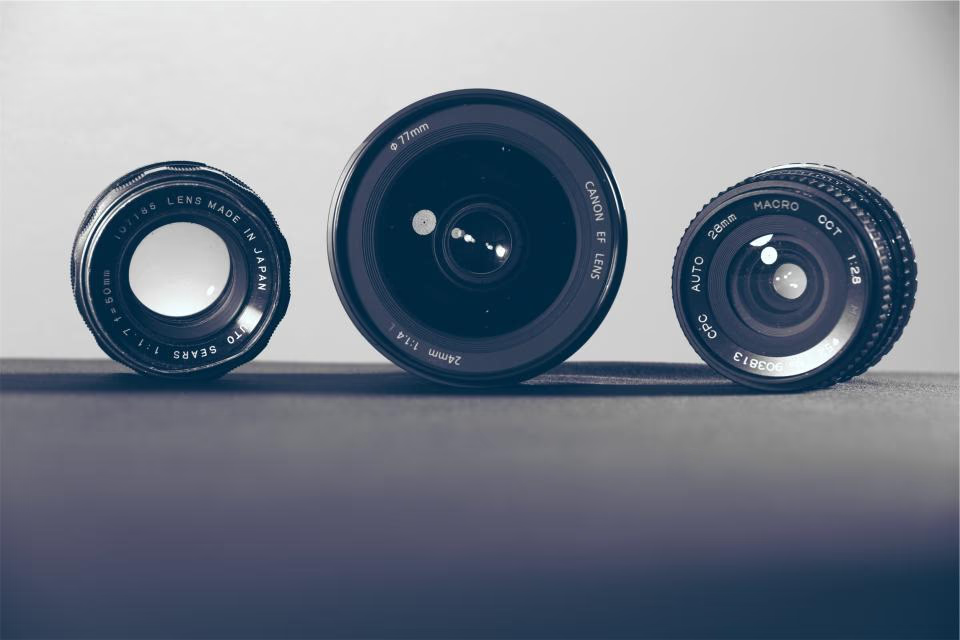
Photo: Evan Wise — CC0, via Openverse.
Genres That Overlap More Than People Admit
The list looks tidy and the practice is not. Concert photography is documentary work with terrible light. Fashion editorial is portraiture with a stylist. Architecture is landscape with a client. Most photographers who work professionally end up in three or four adjacent genres rather than one, and the transferable skills are what make that possible.
That is the real argument for trying unfamiliar ground. If you normally photograph concert sets, shooting a controlled studio still life teaches you that you have been guessing at light rather than shaping it. If you shoot fashion and styling work, a month of landscape will teach you patience with conditions you cannot control.
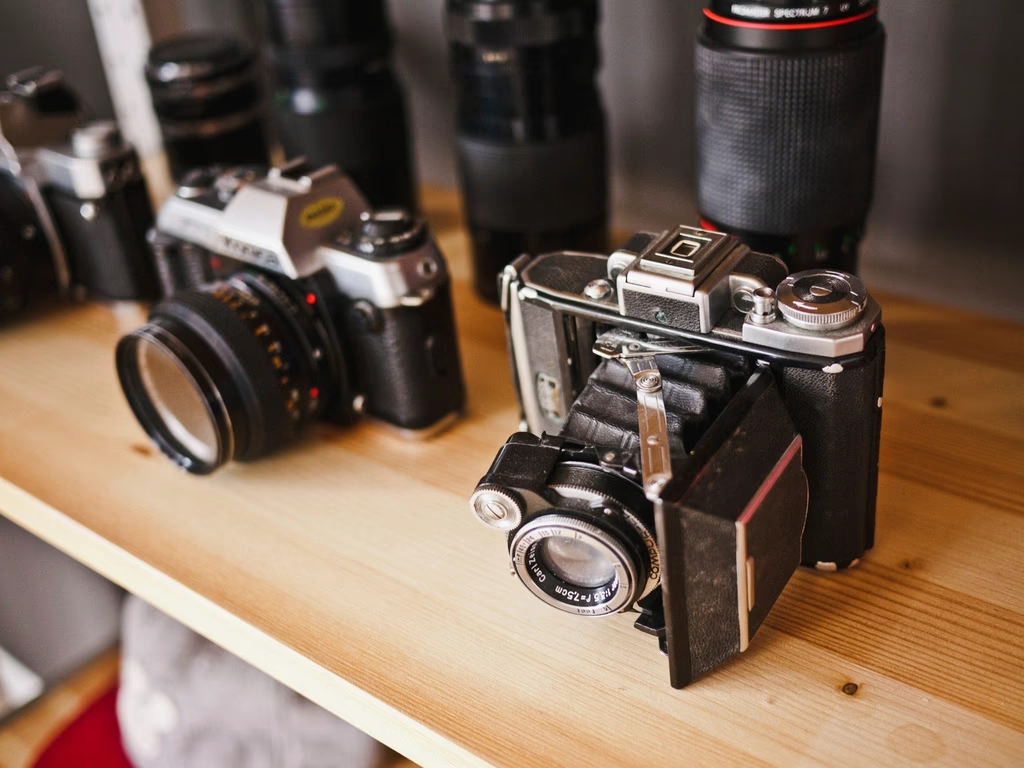
Photo: Openverse — CC0, via Openverse.
How to Choose What to Try Next
Pick the genre you have the strongest opinion about, particularly if the opinion is dismissive. The genres we look down on are usually the ones we understand least, and understanding them tends to change the opinion.
Then look at what your current work lacks. Portfolios that feel static benefit from a movement genre. Portfolios that feel technically thin benefit from macro or product work. Portfolios that feel impersonal benefit from street portraiture, where the social problem is the whole craft.
Give it a real attempt. Three months, not a weekend, with a small project at the end of it. Almost nobody discovers a new direction in a single afternoon, and the genres that look easy from the outside are usually the ones with the steepest learning curve.
Tips for Trying New Genres
- Choose one that uses the opposite conditions to your usual work: tripod instead of handheld, flash instead of available light, strangers instead of landscapes.
- Give yourself a defined project with a title, because a project gives you a reason to keep going past the first bad session.
- Borrow gear rather than buying it for a genre you are testing.
- Study the practitioners who are actually good at it before forming an opinion on it.
- Expect the first three attempts to be poor, and keep the frames anyway so you can see the difference later.
- Bring one habit back to your main genre deliberately, and see whether it sticks.
- Write down what was hard. That list is a better guide to your weaknesses than any critique.
Conclusion
Genre is a tool for generating problems, and problems are how technical skill is built. The photographers who improve fastest are rarely the ones doing the most shooting. They are the ones deliberately working in unfamiliar conditions.
Take one entry from this list that made you slightly uncomfortable and shoot it properly for a season. The worst outcome is a month of mediocre pictures. The more likely outcome is that you return to your own subject with a technique you did not have before, and a clearer idea of why you prefer the work you prefer.
FAQ
What is the most difficult type of photography?
Conflict photography carries the highest personal risk, and astrophotography and extreme macro probably carry the highest technical difficulty per successful frame. Wet plate collodion deserves a mention for making every mistake permanently visible.
Which genres pay best?
Commercial, product, architecture and corporate work generally pay more reliably than editorial, documentary and landscape. Weddings pay well per day and impose heavy physical and administrative demands.
How many photography genres should one photographer work in?
Most working photographers operate in three or four adjacent genres and lean on the overlap. Trying to cover everything at once produces shallow work in all of it.
What is the easiest genre to start with?
Street photography and landscape, because they need almost no specialist equipment and no client. Easiest to start with is not the same as easiest to do well.
Do I need different gear for different genres?
For some, yes: long lenses for wildlife, housings for underwater, shift lenses for architecture. For most genres listed here, technique and location matter far more than equipment, and renting gear for a test is cheaper than buying it.
Is it worth trying a genre I have no interest in?
Yes, if something about it annoys you. Contempt usually signals a gap in understanding, and closing that gap tends to improve your main work more than another year of the same subject.
Continue reading
How Pixel Moda Is Producing 14 Million AI-Assisted Images a Year — Without Losing the Human Touch
May 24, 2026
Want to Know What Your Customers Think? Ask an AI-Generated Focus Group
May 24, 2026
27 Flattering Portrait Poses
September 25, 2026
How to Pose and Photograph Shy, Difficult, or Anxious Pets
September 25, 2026
AI-Generated Mockups Are Going Viral — But Are They Good for Fashion Brands?
May 24, 2026
Afterparty Style: Why Custom Clothing Is the Ultimate Expression of Personal Identity
May 25, 2026
Instagram Stars Share Their Secrets to Taking Amazing Photos
September 27, 2026
Master Flow Posing Photography: 9 Dynamic Techniques
July 11, 2026
9 Steps to Finding the Perfect Wedding Photographer
September 27, 2026
How AI Is Improving Digital Cameras
May 24, 2026
How to Include Pets in Family Photos: Tips and Pose Ideas
July 11, 2026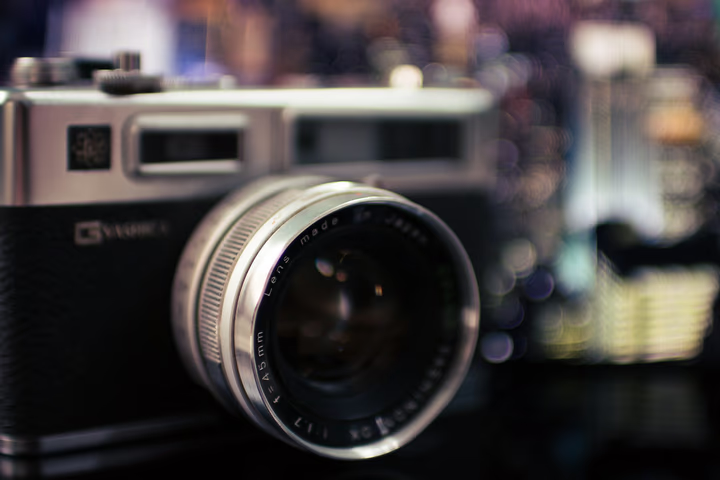
12 Grandparent-and-Grandchild Photo Poses
May 24, 2026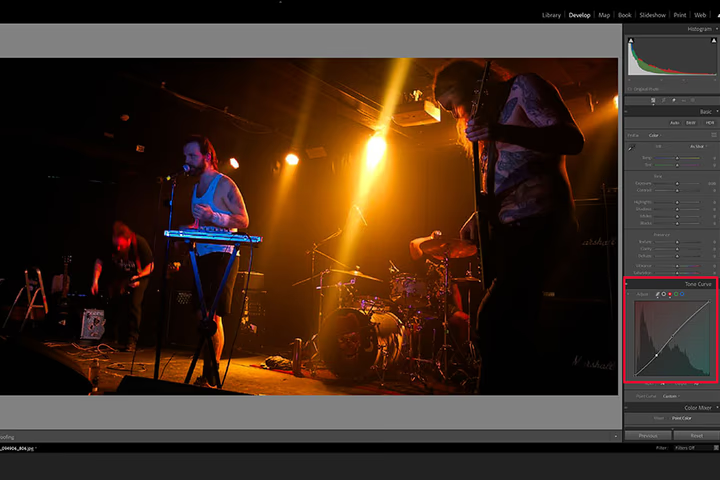
How to Edit Concert Photos for Best Results
July 11, 2026
61 Best Photography Books for All Levels
September 25, 2026
Why Fashion Stays Silent About Its AI Use — And Why That Silence Is Becoming a Problem
May 24, 2026