How to Pose and Photograph Shy, Difficult, or Anxious Pets
A cat that bolts under the bed the moment a camera appears is not a failed session. It is a session that needs a different plan, and most of the advice writt...
A cat that bolts under the bed the moment a camera appears is not a failed session. It is a session that needs a different plan, and most of the advice written for photographing cooperative dogs will make the problem worse.
Pets do not understand what a camera is for. What they understand is whether a person is chasing them, whether a room feels safe, and whether the last twenty minutes were pleasant. Work on those three things and the photographs follow. Chase the shot and you teach the animal that the camera predicts something bad, which is how a slightly shy pet becomes an impossible subject over a couple of years.
Here is how to read what the animal is telling you, how to work at its pace, and how to get usable frames without a single stressful minute.
Read the Signals Before You Lift the Camera
The most valuable skill here is knowing when to stop. Stress in dogs shows up as a tucked tail, ears pinned back, lip licking with no food around, yawning out of context, turning the head away, whale eye (the whites showing as the dog looks sideways), and a stiff, frozen stance. Cats are quieter about it: flattened ears, a twitching tail, crouching low with the body compressed, and pupils that go wide in a room that is not dark.
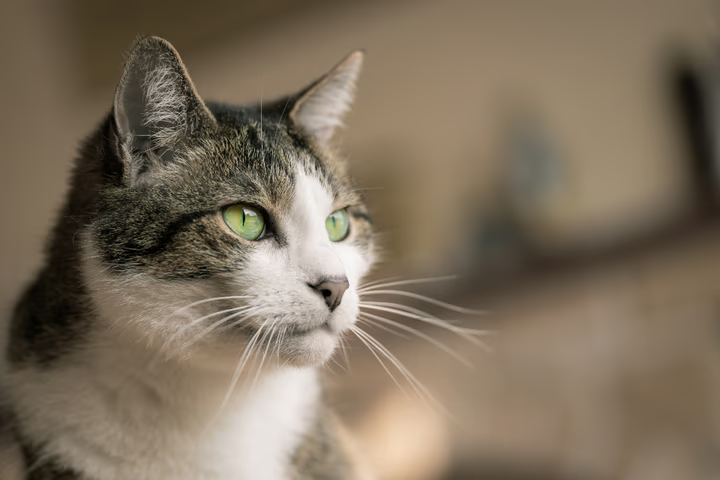
If you see two or three of those signals at once, put the camera down. Not later in the session, now. An animal that is stressed does not photograph well anyway, since tension reads in the eyes and the mouth, and a session that ends calmly is a session you can repeat tomorrow. Photo: Ian Livesey — CC0, via Openverse.
Let the Pet Come to You
The single most effective change is to stop approaching. Sit on the floor, put the camera down beside you where the animal can see it, and wait. Most shy pets will eventually investigate, and the moment they choose to close the distance is worth more than an hour of coaxing.
Photograph that approach. A cat walking toward the lens, curious, makes a better picture than a cat held in place by a hand under its chest.
For anxious dogs, sitting on the floor at their level and letting them lean on you does two things at once. It reassures them, and it puts your hands free to shoot one-handed at close range.
Use Distance and a Longer Lens
Getting closer is not the answer with a nervous animal. Phone cameras force you into their personal space, which is exactly what a shy pet is avoiding. A longer focal length lets you work from across the room while the animal behaves normally.
This is where a modest telephoto or a fast prime earns its place. You can sit still at the far end of a sofa and shoot a cat on a windowsill with no interference at all. The photographs look more natural because nothing about the situation is unusual to the animal.
Keep the shutter speed up, since indoor light plus a moving pet equals blur. Accept a higher ISO rather than risking a soft frame; a slightly grainy sharp photograph beats a clean blurry one every time.
Treats, Toys, and the Squeaker Problem
Food works, with two conditions. First, the treat must be something the animal actually wants, not a dry biscuit it tolerates. Second, you need a third hand, which in practice means bringing an assistant.
The assistant-and-treats setup is the most reliable attention-getter there is. The assistant stands just behind your shoulder, holds the treat or toy at roughly lens height, and rewards the pet for looking. You get the ears forward and the eyes open. The assistant gets scratched. This is a fair trade.
The squeaker trick works, but it stops working if you overuse it. A squeaker used five times in a session produces attention for the first three frames and then nothing. Treat it as a limited resource and save it for the frame that matters.
Laser pointers, jingling keys and phone noises have the same profile: brief effectiveness, then habituation. Rotate through two or three different sounds rather than leaning on one.
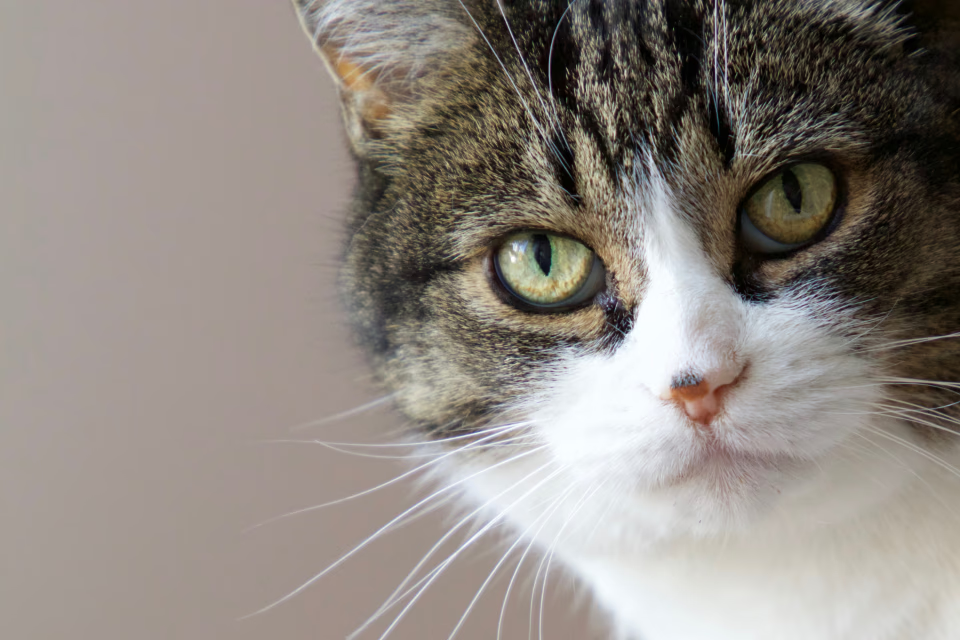
Photo: Travel Photographer — CC0, via Openverse.
Work Through Doorways and Behind Furniture
A cat will sit in a doorway for twenty minutes. A dog will hold still behind a chair. Use furniture as camouflage: stand back, shoot through the gap, and the animal behaves as though nobody is there.
Shooting through a doorway also gives you a natural frame within the frame, which looks intentional and hides the fact that you are five metres away.
For very anxious animals, the best photographs often come from the pet's own space. A cat on its own cat tree in its own room, a dog on its own bed, reads as relaxed because it is relaxed. Working in an unfamiliar studio with an anxious animal is usually a mistake, and if a client insists on it, budget the first fifteen minutes for the animal to simply exist in the room without a camera pointing at it.
Keep Sessions Short and Repeated
A great session with a nervous pet lasts ten to fifteen minutes, not ninety. Short sessions build tolerance; long sessions build avoidance.
Try this across a week instead of in one afternoon. Ten minutes on Monday with no camera at all, just sitting with the animal. Ten minutes on Tuesday with the camera switched off. Ten minutes on Wednesday with a few frames at a distance. By the weekend you have an animal that no longer associates the lens with anything threatening, and you will get better pictures than you would have on day one.
For anxious rescues specifically, this slow build is not optional. It is the difference between a pet that tolerates photographs and one that hides whenever a phone comes out.
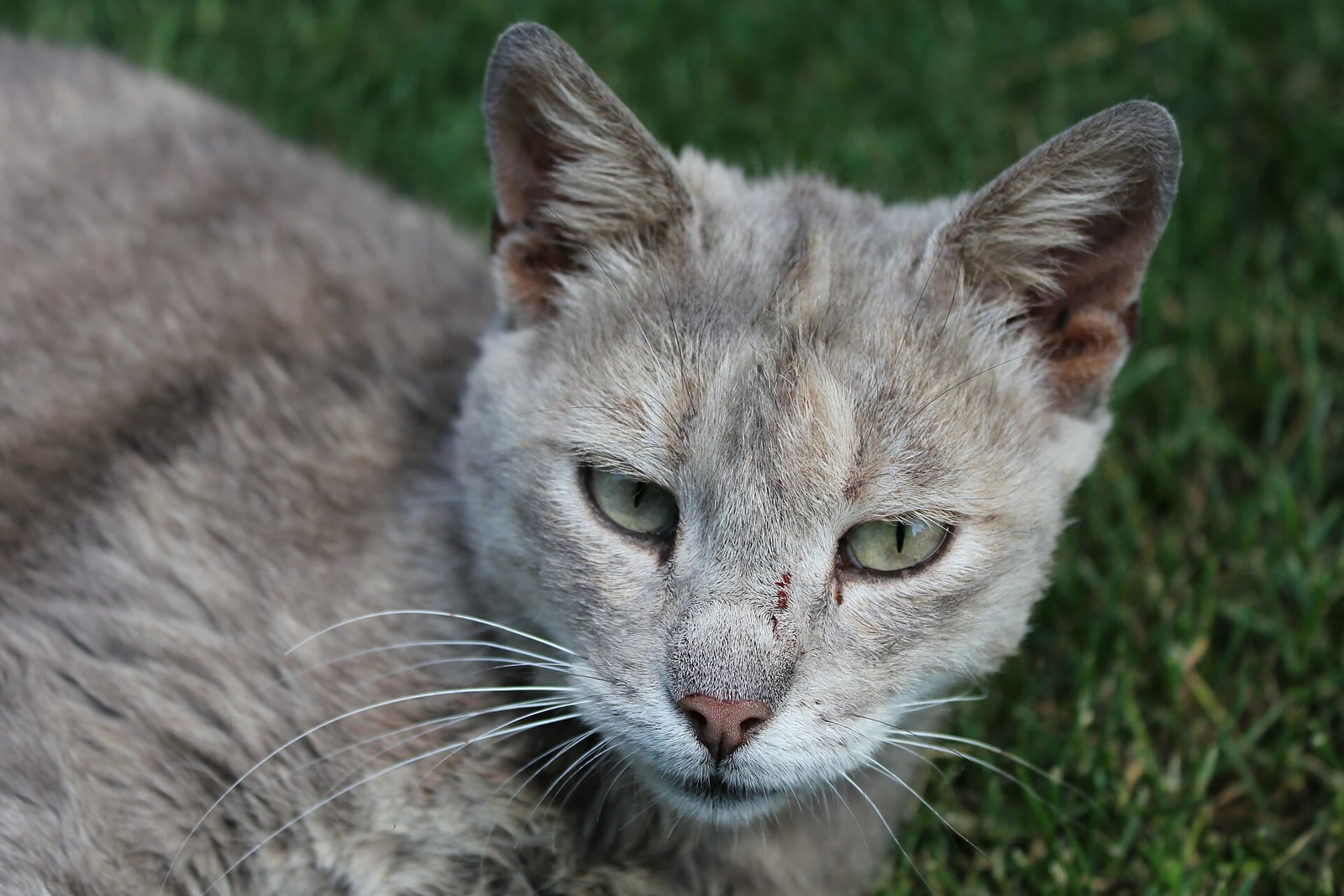
Photo: <a href="https://pixnio.com/media/grey-domestic-cat-nose-mou — CC0, via Wikimedia Commons.
Get the Technical Basics Right
Focus on the eye nearest the camera, always. With a shallow depth of field at close range, sharp eyes carry the whole image.
Shoot at the animal's eye level rather than standing and pointing down. Kneel, sit, or lie on the floor. Photographs taken from above make pets look small and camera-shy, which is rarely the flattering look you had in mind.
Watch the background before you press the shutter. A cluttered floor behind a black cat turns a good portrait into visual noise. Move two steps sideways and the problem usually disappears.
Keep burst shooting for the moments that matter. Firing continuously at a nervous animal adds noise and movement without adding keepers.
Tips for a Clean Session
- Decide who the relaxed one is. If the animal is unhappy, the session ends, no matter how good the light is.
- Bring an assistant with treats rather than trying to hold a toy and shoot at the same time.
- Use a longer lens and stay across the room. Distance is a tool, not a compromise.
- Save the squeaker for three frames at most, and never open with it.
- Work in short blocks across several days rather than one long sitting.
- Shoot at the pet's eye level and check the background before every frame.
- Let the animal leave when it wants to leave. A pet that can escape is a pet that stays.
Conclusion
Shy animals are not difficult subjects. They are honest ones, and they will show you immediately whether your approach is working. Everything that matters here is about pace: reading the signals, keeping distance, working in short sessions, and letting the animal decide how close to come.
The photographs that come out of that process look different from staged ones. The eyes are open, the ears are doing something, and the body is relaxed because it actually was. That is the trade you are making when you stop chasing the shot.
If you are building up to a session with the whole family, it pays to photograph the animal on its own first, in its own space, when nothing else is happening, and then apply what you learned to including pets in family photos. The same patience solves the other half of that problem, because children need the same treatment: short sessions, no chasing, and a subject that wants to be there. If the shoot involves grandparents as well, plan the generational groupings before anyone arrives, since the older relatives will be the ones who tire first.
FAQ
How do I photograph a cat that won't sit still?
Work at a distance with a longer lens and keep the shutter speed high. Let the cat choose a spot in its own space, then wait for it to settle rather than following it around with the camera. A cat that has stopped moving on its own will hold that pose long enough for a few frames.
Should I use treats to get a pet to look at the camera?
Yes, with an assistant. Have someone stand just behind your shoulder at roughly lens height and hold the treat or toy so the pet looks in the right direction. Reward after the frame, not before, or you will spend the session photographing an animal chewing.
How long should a pet photography session last with a nervous animal?
Ten to fifteen minutes, and end it while the animal is still relaxed. Several short sessions across a week produce better photographs and a calmer pet than one long session, especially with rescue animals.
Why does my pet look away as soon as I raise the camera?
Because the camera, the phone, and the pose you adopt when you use it have become a predictor of something the animal dislikes. Stop pointing it directly at the pet for a few days. Sit with the camera switched off, let the animal investigate it, and rebuild the association before you try again.
What camera settings work best for shy pets indoors?
A shutter speed of at least 1/250 second, an aperture wide enough for the available light, and a higher ISO than you would normally accept. Focus on the nearest eye. If the photographs are noisy but sharp, the settings were right.
When should I get professional help rather than pushing through?
If the animal shows sustained fear responses, hides for hours afterwards, or becomes reactive when the camera appears, stop and work with a vet or a qualified behaviourist. Photographs are not worth a lasting stress response, and there is always another week.
Continue reading
Photographer Gray Malin's Travel Tips and the Art of the Aerial Beach Photograph
September 27, 2026
How to Include Pets in Family Photos: Tips and Pose Ideas
July 11, 2026
Instagram Stars Share Their Secrets to Taking Amazing Photos
September 27, 2026
How to Fix Bad Lighting in Photos on iPhone, Lightroom, and Photoshop
May 24, 2026
42 Free Photography Books
September 25, 2026
Everything to Know About Wedding Photography Styles
September 27, 2026
Making Money with Stock Photography
September 25, 2026
Is AI Antithetical to Luxury? What Prada's Controversial Campaign Reveals About Fashion's Biggest Tension
May 24, 2026
How to Edit Concert Photos for Best Results
July 11, 2026
How to Photograph Children
September 25, 2026
99 Most Inspirational Photography Quotes
September 25, 2026
Which Fashion Brands Are Winning the AI Discovery Battle — And Why It Matters More Than SEO
May 24, 2026
'POV Shopping' Videos Are Going Viral — And Luxury Brands Should Be Worried
May 24, 2026
Why Fashion Stays Silent About Its AI Use — And Why That Silence Is Becoming a Problem
May 24, 2026
13 Unique Father's Day Gifts That Go Way Beyond the Usual Mug
May 24, 2026