Everything to Know About Wedding Photography Styles
You can change the flowers, the seating plan and the cake. You cannot change how your wedding gets photographed, and the photographs are the part you will st...
You can change the flowers, the seating plan and the cake. You cannot change how your wedding gets photographed, and the photographs are the part you will still be looking at in thirty years.
That is the argument for understanding wedding photography styles before you book anyone. Two photographers can charge the same money, work the same venue, and produce completely different records of the same day, because the style is not decoration. It decides what gets photographed, how much you are directed, and what the pictures feel like when the day is over.
"The role of the photographer, whether more photojournalistic or more fine art, is to go into a wedding with a sensibility and vision, but being open to the wonderfully unexpected moments," says wedding photographer Corbin Gurkin. "Find a photographer whose work you feel so deeply connected to that you cannot imagine any other person interpreting your day. You are hiring this person for his or her eye, and that should really guide the decision."
Photographer Adriana Rivera makes the same point from the other direction. Couples "need to think how the person they trust to capture their wedding will greatly influence their overall wedding experience, contributing their energy to every moment. Rather than simply choosing your photographer solely on talent, look for chemistry, connection, and an understanding that the process is just as important as the outcome."
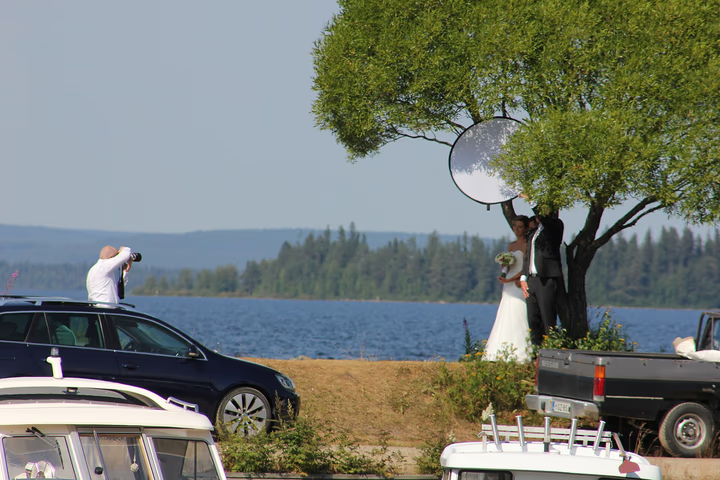
Below are the seven main styles, what each one actually looks like on the day, and who each one suits. Photo: A wedding couple at Paltaniemi beach, Kajaani.JPG by Kajaanifoto — CC BY-SA 4.0, via Wikimedia Commons.
1. Traditional Photography
Traditional coverage is the style most people picture when they picture a wedding album: staged portraits of the couple and family, the key ceremony and reception moments captured in order, and a clear, complete record of the day.
"Those with a checklist of key shots to be captured may opt for this style and can expect a more structured and posed photo session, ensuring all crucial moments are captured meticulously," says Lisa Raffo Ashley of The Wedding Artist Co. "Traditional photography offers a classic and timeless approach to wedding photographs."
It suits couples who want certainty. The first look, the kiss, the cake cutting, the first dance, the formal groups: all of it happens, and all of it is photographed. The photographer takes charge of arranging people, which is a real skill when there are thirty relatives and fifteen minutes before dinner is served.
The trade-off is that structure is visible in the results. Traditional albums tend to look organised rather than spontaneous, which is either exactly what you want or a good reason to look at the next style on the list.
2. Editorial Photography
Editorial wedding photography is built to look like a magazine spread, and the photographer behaves more like a director than a recorder.
"An editorial photography style encompasses creatively compelling, visually driven, and narrative-rich images," says Rivera. "Creating meaningful and beautiful photographs requires time, trust, and preparation. Take a moment to reflect on what truly matters to both of you, and share these details with your photographer."
In practice, editorial means you will be positioned, moved, and asked to do things you would not have thought of, which is why posing built around movement suits it far better than standing still and holding a shape. The light gets shaped, the background gets chosen, and the frame gets cleared of anything distracting before the shutter goes. A fashion sensibility often creeps in, which is why editorial weddings frequently look like a styled shoot that happens to have vows in the middle of it.
This style depends on trust. You are handing over creative control of how your day is depicted, and if you resist being directed, the results will suffer. It also needs time in the schedule, so a tight timeline and an editorial approach are a bad pairing. If you like the look, worth asking directly how much direction is involved and how long the couple portraits take.
3. Photojournalism and Documentary
Documentary photographers find the picture in what is already happening. Nobody looks at the camera, nothing is rearranged, and the photographs carry the day's texture: a hand on a shoulder during the vows, laughter during a speech, the quiet ten seconds a couple thinks nobody is watching.
"Every wedding day has a story. Photojournalism is an approach where the photographer captures the moment as it unfolds without interrupting, using images to narrate the feelings, moments, and nuances that collectively tell a bigger story," says photographer Twah Dougherty.
Dougherty also describes the hybrid most working photographers actually operate in. "Strict photojournalism is where the photographer does not interject any direction. A hybrid approach allows the photographer to occasionally give light direction or influence the scenario to optimize the couple's best angles. This does not take away from moments when true photojournalism is needed to tell that authentic story."
That hybrid is worth understanding, because pure documentary is rarer than the marketing suggests. The honest version of the question to ask is not "are you documentary" but "how much of my day will you direct, and when does that start?"
4. Fine Art Photography
Fine art wedding photography treats each frame as a standalone picture rather than a record of an event. Composition is deliberate, colour is soft and restrained, and the finished images often look closer to painting than photojournalism.
"Fine art photography is often a must-have for couples getting married," explains Ashley. "It requires a keen eye for detail while creatively using lighting and angles to create beautiful, timeless imagery that transcends typical photography. Fine art photography is optimal for couples who value a creative, artistic touch to their wedding photos."
Photographers working this way often use film bodies, unusual lenses, or specific post-processing to build a signature look. The style is unforgiving of clutter, so it works best in venues with clean architecture and soft light, and it usually needs more time per image than a documentary approach.
One practical note: fine art relies heavily on the quality of available light. If your venue has beautiful light in the late afternoon, the timing of your portraits matters more than most couples realise. Shooting into the last hour before sunset is what makes those images glow, and it is worth rearranging the schedule for.
5. Film Photography
Film has made a substantial return to weddings. Some photographers shoot film exclusively, and many more use it alongside digital for part of the day.
"Film photography for weddings often evokes a timeless and romantic aesthetic," say Trent and Dara Bailey of Trent Bailey Studio. "It's characterized by its soft, warm, and dreamy quality, which can be quite different from the sharp and pristine look of digital photography. Film has a unique way of capturing textures and details, which can add depth and character to the images."
There is one important thing to know before you filter your search by it. The look is not the same as the medium. "We get people all the time who insist they want a film photographer but end up falling in love with a photographer who actually shoots digitally and their work just looks like film," says Ashley. "When it comes to a visual medium like photography, it's better to let the images speak for themselves."
So search for the look, not the label. A digital photographer whose editing reads as film will deliver the album you want, and may deliver more images, because there is no roll of thirty-six frames running out at the wrong moment.
Photo: Russia, Moscow Oblast. Young woman with umbrella, studio portrait.jpg by Dmitry Makeev — CC BY-SA 4.0, via Wikimedia Commons.
6. Dark and Moody Photography
Some couples want light, airy and bright. Others want the opposite: rich blacks, deep shadow, low saturation and a cinematic weight that feels closer to a film still than to a wedding album.
Dark and moody coverage leans on shadow rather than light, uses darker editing, and often borrows from vintage film palettes. It is particularly well suited to evening weddings, candlelit receptions, and venues with dramatic architecture, where the building itself is doing half the work.
The style is less forgiving of bad lighting than any other on this list, because there is nowhere to hide a bad frame. If this is the look you want, ask to see full receptions rather than ceremony highlights, and pay attention to how the photographer handles a genuinely dark room.
7. Lifestyle Photography
Lifestyle photography sits between traditional posing and pure documentary. The photographer leads, positions you, and then works to get something natural out of it.
This is often the best fit for couples who like the honesty of documentary work but know they will freeze when a camera points at them. You get direction for the parts of the day that need it, and genuine moments everywhere else. Most couples discover, after seeing the results, that the photographs they love most came from the unposed half.
How to Choose a Style Without Getting Stuck on Labels
Here is the piece of advice that saves the most time: do not build your search around the words.
"My typical advice to couples is to not actually put too many words into what they think they are looking for," says Ashley. "What one person thinks is editorial, another person might think is classic or artistic."
So collect images instead. Spend a few evenings saving every photograph you respond to, from photographer sites, blogs and the albums of friends. Then look for the pattern rather than the label. If the saved images are consistently soft, quiet and pale, you are looking at fine art. If they are dark with deep shadow, you want moody. If nobody in them is looking at the camera, you want documentary.
The test that matters is emotional rather than technical. When you look through a photographer's portfolio and think "this is how I want to remember the day," you have found the right person, whatever their site calls their style.
One Photographer, Several Styles
The assumption that you must pick one of the seven is usually wrong. Most photographers blend, and most weddings need blending: traditional coverage for the family groups, editorial for the couple portraits, documentary for the ceremony and reception.
Ask a photographer to describe how they work through the day rather than which box they tick. The answer will tell you whether their natural mix matches the one you want, and it also reveals how they handle the difficult parts. Anyone can shoot a happy hour at golden hour; the differences show up in a dark reception or a rushed timeline, and that is exactly what fixing lighting problems in dark rooms separates.
Practical Tips
- Browse portfolios before contacting anyone, and let the images do the arguing.
- Save the photographs you react to, then look for the pattern rather than a label.
- Ask about chemistry as well as talent, because you will spend the day together.
- Assume a hybrid: most photographers blend styles across the ceremony, portraits and party.
- Do not exclude digital photographers if you want a film look. Judge the images, not the medium.
- Ask where the natural light will be best at your venue, and build the timeline around it.
- Plan for how much direction you personally want, then find someone who works that way.
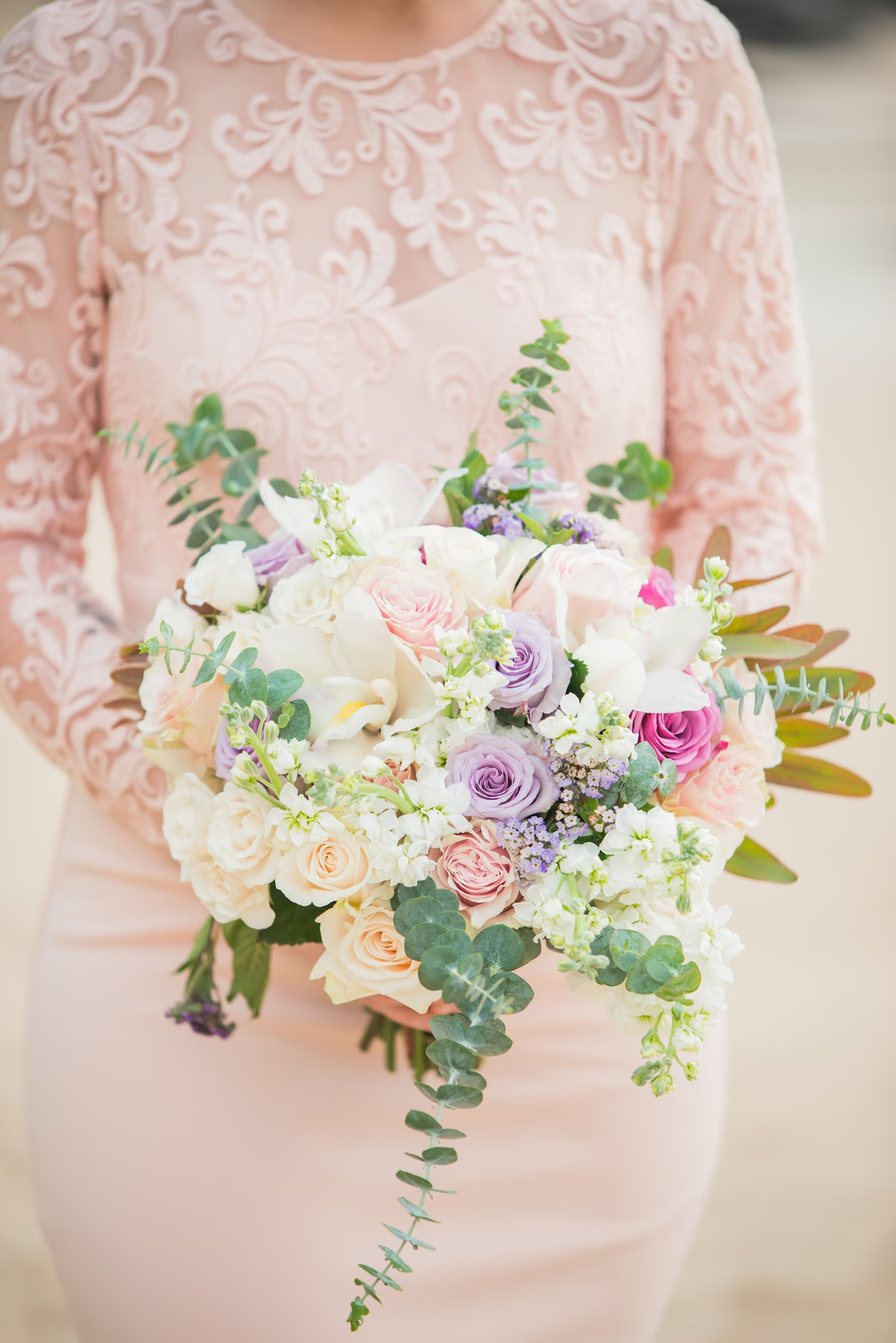
Photo: Beach Wedding Bouquet.jpg by Simple Maui Wedding — CC BY 2.5, via Wikimedia Commons.
Conclusion
The seven styles are a vocabulary, not a menu. Understanding them lets you describe what you want and recognise it when you see it, which is more useful than picking a category and searching for photographers who claim to fit it.
Whether the album ends up traditional, editorial, documentary, fine art, film-looking, dark and moody, or some combination, the decision that matters is whether the person holding the camera sees your day the way you want to remember it. That is a feeling rather than a specification, and it is why portfolios beat labels every time.
Do the research, look at full weddings rather than highlights, and meet your shortlist before booking. The style will follow from the photographer, not the other way around.
FAQ
What is the difference between editorial and photojournalistic wedding photography?
Editorial is directive. The photographer guides you into flattering positions, shapes the light, and composes each frame deliberately, like a magazine shoot. Photojournalism is observational: the photographer documents what happens without intervening. Many photographers work a hybrid of the two across the day.
Do I need a film photographer to get the film look?
No. Plenty of digital photographers have built editing approaches that reproduce the soft, warm, slightly grainy quality people associate with film. Look at finished weddings rather than equipment lists, and let the images decide.
Can I combine several photography styles?
Most weddings already do. A common mix is traditional coverage for family groups, editorial for the couple portraits, and documentary for the ceremony and reception. Raise it during the consultation so the photographer knows which parts matter most.
Which wedding photography style works best outdoors?
Fine art and lifestyle both work well outdoors, especially when the photographer knows how to use natural light. Dark and moody coverage can also be striking at an outdoor evening event with a dramatic backdrop.
How far ahead should I book a wedding photographer?
Twelve to eighteen months ahead is the usual answer, and it matters most for peak-season weekends. Start once the date and venue are fixed, because that is when the best calendars begin to fill.
Is traditional wedding photography old-fashioned?
Not if you want a complete, orderly record of the day. Traditional coverage guarantees you get the moments that matter, including the formal family groups, which are the photographs most likely to end up framed in relatives' houses.
What should I ask a photographer about their style?
Ask them to describe how they shoot four parts of the day: getting ready, the ceremony, the formal portraits, and the reception. That answer reveals more about their real style than any description on their website, and it is where hybrid approaches show up.
Continue reading
Colorful Shoes, Woven Bags, Tankinis: 7 Fun Summer Trends Worth Shopping Right Now
May 25, 2026
Annie Leibovitz on 5 Images That Have Shaped Her Career
September 27, 2026
How to Include Pets in Family Photos: Tips and Pose Ideas
July 11, 2026
99 Most Inspirational Photography Quotes
September 25, 2026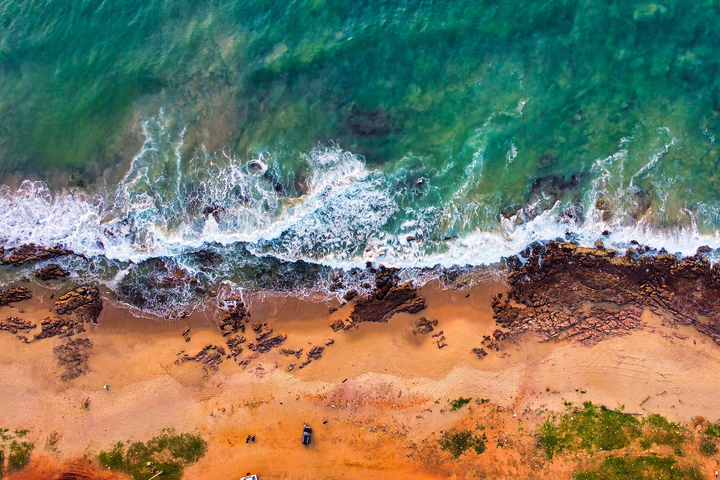
Photographer Gray Malin's Travel Tips and the Art of the Aerial Beach Photograph
September 27, 2026
How to Shoot During Golden Hour: Lighting Guide
May 24, 2026
The 4 Best Ways to Digitize Old Photos (and How to Store Them)
May 24, 2026
Working With Roxanne Lowit, the Queen of Backstage Photography
September 27, 2026
Why Fashion Stays Silent About Its AI Use — And Why That Silence Is Becoming a Problem
May 24, 2026
Which Fashion Brands Are Winning the AI Discovery Battle — And Why It Matters More Than SEO
May 24, 2026
Every Chic Londoner Is Wearing One of These 5 Summer Heatwave Staples This Weekend
May 25, 2026
How to Photograph Children: 29 Tips for Creative and Fun Photos
May 24, 2026
8 Sibling Rivalry Poses That Turn Fights Into Epic Photoshoots
July 11, 2026
Making Money with Stock Photography
September 25, 2026
How to Take the Perfect Engagement Photos: The 5 Rules
September 27, 2026