How to Take the Perfect Engagement Photos: The 5 Rules
Engagement photos have become a rite of passage, and they have also become a source of stress. The phrase "just act natural" gets repeated at every session,...
Engagement photos have become a rite of passage, and they have also become a source of stress. The phrase "just act natural" gets repeated at every session, and it is spectacularly unhelpful advice for two people who have never been photographed professionally and are suddenly standing in a park at six in the morning while a stranger circles them with a camera.
The photographs that work are not the ones where you performed being relaxed. They are the ones where something real happened while the camera was up, and the rules below are mostly about engineering the conditions for that.
Rog Walker, the photographer behind Solange Knowles's striking viral wedding shoot in New Orleans, puts the balance well: "Stories are important. The key is to communicate without projecting. Although we can direct and decide what shots to take, the story comes from the subjects and the authentic interactions taking place. Everyone remembers their wedding day, but there's something special about looking back at the moments before."
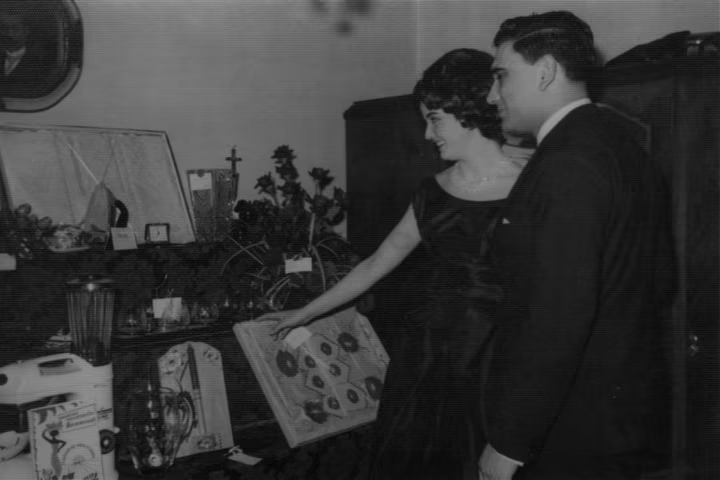
Below are the five rules that matter, with guidance from portrait and event photographer Hannah Thomson. Photo: A couple gazing upon the gifts received to mark their engagement.png by UnknownUnknown — CC BY-SA 4.0, via Wikimedia Commons.
Rule 1: Choose the Right Photographer, Not the Most Available One
Take the time to find someone whose work you genuinely like, rather than someone whose calendar happens to be free on the weekend you have in mind.
The old principle applies here: the best predictor of future behaviour is past behaviour. If a photographer's portfolio consistently shows couples who look comfortable and unforced, that is a pattern built over hundreds of sessions, not a lucky afternoon. If you are not sure where to start, ask friends and coworkers who have already been through it.
The relationship matters as much as the portfolio, because you will spend hours together, often in moments where you feel self-conscious. If you are not at ease with the person holding the camera, it shows in every frame. When you look through a portfolio, look not only for technical skill but for evidence that the photographer knows how to put people at ease. A good one will also collaborate on your ideas and give you straight advice on locations and clothing, rather than simply executing what you ask for.
Rule 2: Go Somewhere That Means Something
A house, a park, a street, a beach, the café where you spend Sunday mornings: pick a place that is already part of your relationship and let the photographer work with it.
Thomson remembers one session with a couple from Minnesota who flew to New York for their engagement photos. "It was a very special New York weekend for them, and they chose Bethesda Fountain in Central Park as their starting point. It was a beautiful fall day and after spending an hour in the park we made our way down to The New York Public Library and ended the session on Le Carrousel at Bryant Park. They chose a location that they were excited about, and you can really see that in the pictures."
The location does not need to be exotic or expensive. It needs to be meaningful. The spot where you had a first date, the route you walk the dog every Sunday, the bench where you had an argument and then made up. When a place carries emotional weight, that weight is visible in the photographs, and it is the one thing a spectacular but impersonal backdrop cannot provide.
Rule 3: Stop Trying to Look Natural
Let go, and accept that the first twenty minutes will feel strange. Almost everyone feels awkward at the start, and the photographers who are good at this are expecting it.
The trick is to give your attention to your partner rather than to the camera. Do not attempt anything that feels forced, and do trust the photographer to find the flattering angle, because that is the job you are paying for.
"Sometimes I may ask couples to hold hands or embrace, and it is often the laughter right before or after moving into or out of the pose that is the shot," Thomson says. That is the useful insight, and it is worth internalising before the session: the photograph is rarely the pose. It is the second before it or the second after it, when the two of you break character and look at each other properly.
This is why good photographers keep shooting through the transitions instead of waiting for the arrangement to be perfect. If you understand that, you stop worrying about holding a position and start enjoying the parts that produce the pictures, which is why the same idea sits at the centre of posing built around movement rather than static positions.
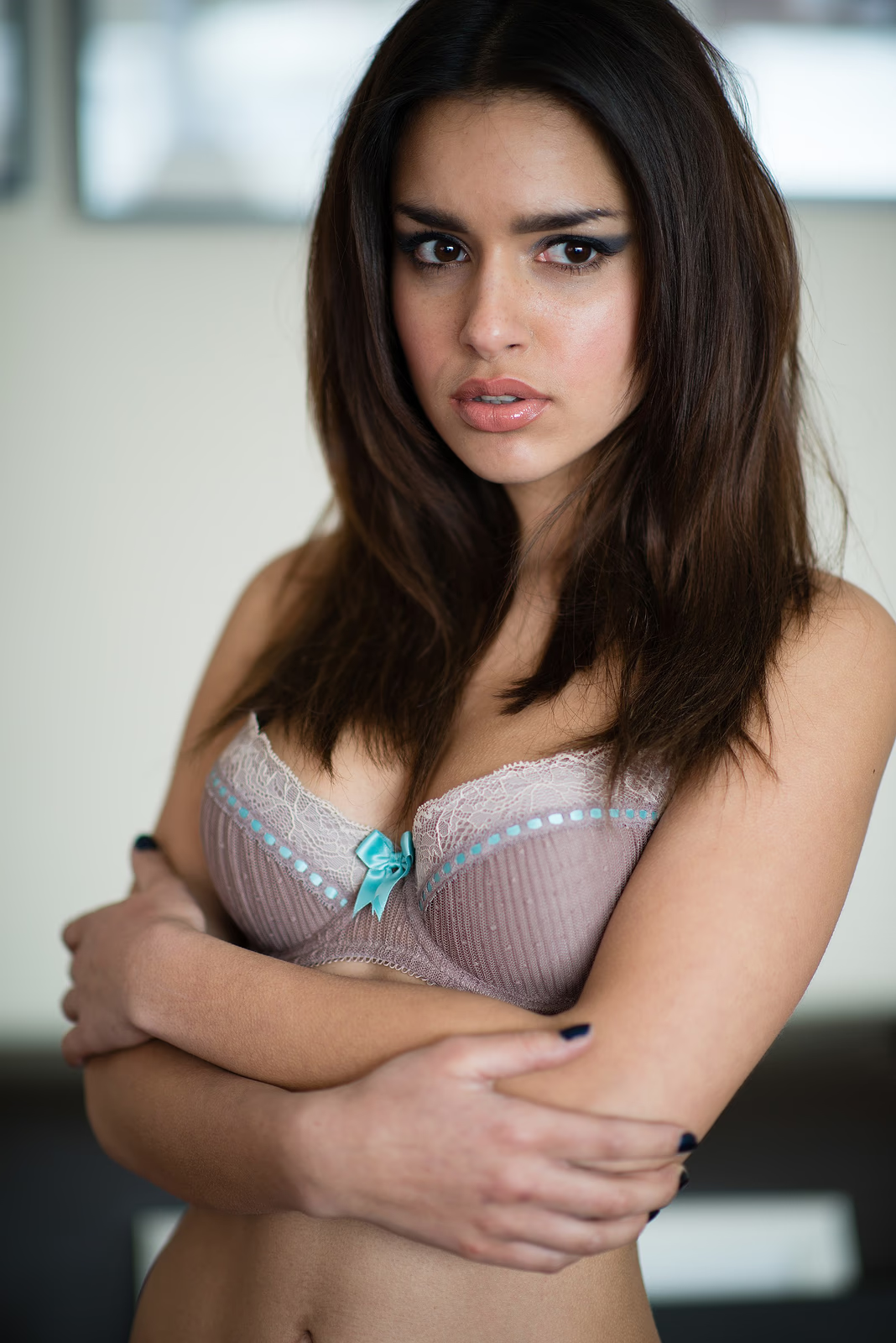
Photo: Emma - Natural Light.jpg by Lies Thru a Lens — CC BY 2.0, via Wikimedia Commons.
Rule 4: Dress Like Yourselves, Not Like a Shoot
The clothes cause more anxiety than anything else, and they matter less than you think. Wear something comfortable, flattering, and recognisably you.
Thomson suggests bringing two or three options in a garment bag, just in case. If you are going casual, bring your favourite jeans and a couple of tops, and consider layering, since a casual silk blouse or a plain tee under a blazer gives the photographs more variety without changing your whole look.
Her specific advice on colour is worth following: "Avoid black and white for location shoots, since these colors have a tendency to be harsh." And on the coordination question, "try to match the level of formality in dress to your partner's. By match, though, I certainly do not mean matching outfits!" Coordinated colours and a shared formality level photograph far better than identical outfits. You want to look like a couple, not like a pair of twins booking in at a hotel.
One practical note from experience: large logos and busy patterns date quickly and pull attention away from faces, and anything that needs constant readjustment will cost you shooting time. Plain, well-fitted clothing in tones that sit naturally beside your partner's is the reliable answer.
Rule 5: Aim for Variety, Not Perfection
A good engagement set mixes formal portraits with candid frames. The photographer should be watching closely and catching you at your best angles, which means moving between a few deliberate arrangements and long stretches of you simply interacting.
"Just get into it. The best photographs will often be the ones that you can't even remember the photographer taking," Thomson says.
That is the most liberating part of this whole exercise. The images you end up framing are likely to be the ones you did not notice being made. Stop performing, be present with your partner, laugh at something stupid, repeat an inside joke that means nothing to anyone else in the park. Those unguarded seconds are worth more than a hundred tidy portraits, and they are also the reason it is worth taking twenty minutes to think about how you naturally look at each other. Knowing the angles that flatter almost everyone helps you relax, because you can stop worrying about whether your chin looks wrong.
Before the Session: Timing, Light and Logistics
Most couples schedule engagement photos six to eight months before the wedding. That window gives you time to use the images for save-the-dates, a wedding website, and reception displays, and it doubles as a rehearsal with your photographer before the wedding day, when there is no time to learn how each other works.
Think about light when you choose the time. Many couples default to an afternoon slot and end up shooting in the worst light of the day. The last hour before sunset, when the sun is low and soft, is the most forgiving, and overcast weather is the next best thing. Midday sun produces hard shadows and squinting, and no amount of editing solves it.
Plan the logistics too. Work out the route between locations in advance, keep the number of outfits to two or three so changing does not eat the session, and bring the things you would actually want in a photograph: the dog, a coffee, a bike, the book you are reading. Props work when they belong to you and fail when they are borrowed from a prop box.
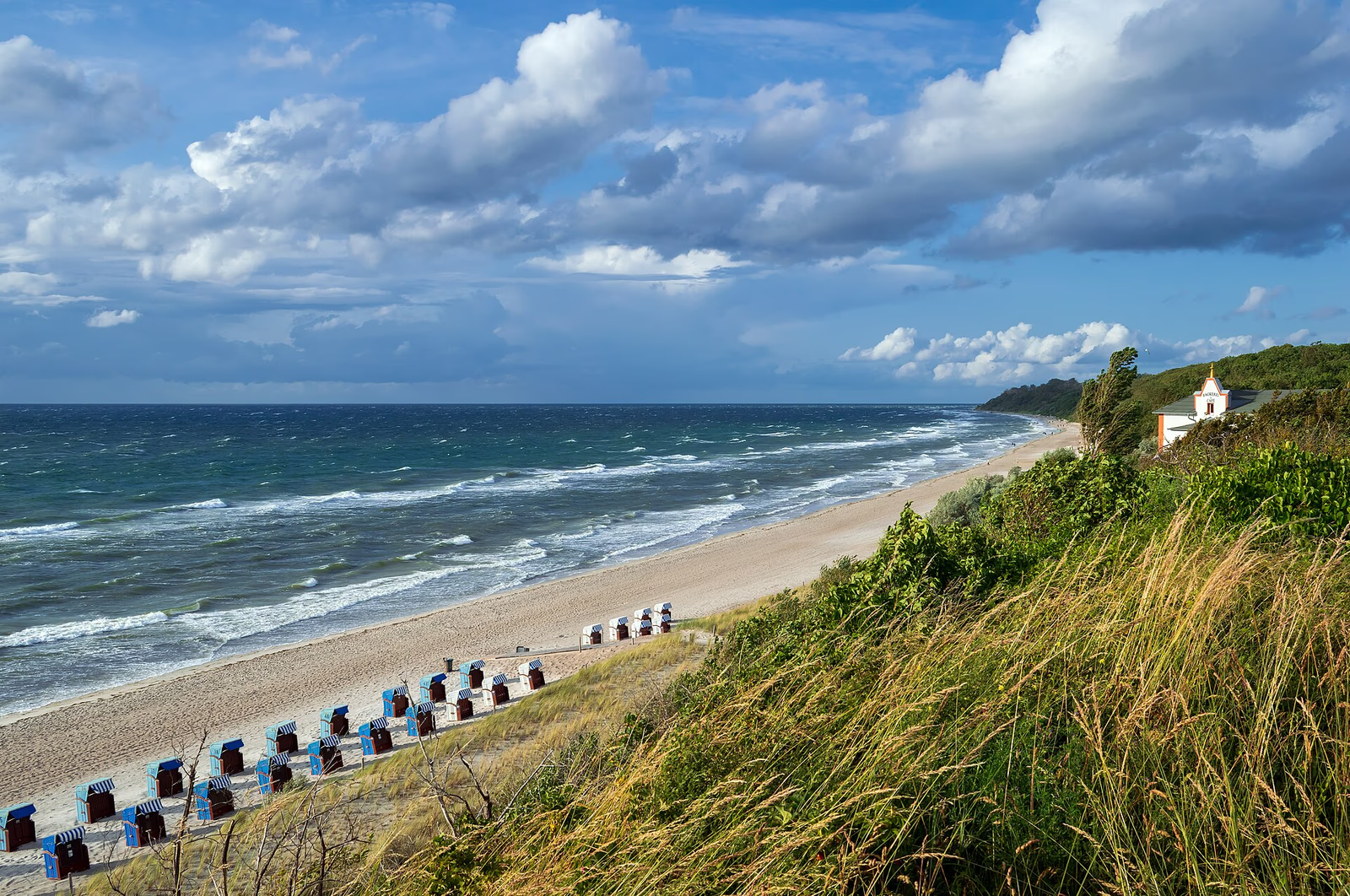
Photo: Baltic Sea view from Schmiedeberg hill in Rerik, 2025-06-23.jpg by Radomianin — CC BY-SA 4.0, via Wikimedia Commons.
Practical Tips
- Choose a photographer whose portfolio genuinely moves you, not the cheapest or the most available option.
- Pick a location with personal meaning rather than chasing whatever is trending.
- Bring two or three outfits in a garment bag and avoid harsh black and white for outdoor sessions.
- Coordinate colour and formality with your partner, and never wear matching outfits.
- Trust the photographer during the session. The best frames land in the unscripted moments.
- Do not practise poses beforehand. Arrive with nothing prepared and let the session find its own shape.
- Shoot in the last hour before sunset, or on an overcast day, and let the light do the work.
- Bring your dog if you have one. It gives both of you something to do with your hands and produces reliably good frames.
Conclusion
Good engagement photographs are not the product of perfect posing, an expensive location, or elaborate styling. They come out of two people who trust the person holding the camera and are comfortable enough to stop managing their own faces.
Choose a photographer you actually like, pick a place that already belongs to your relationship, dress like yourselves, and let go of the idea that you need to look natural on demand. The photographs worth keeping happen when you forget the camera is there, which is exactly what the five rules are built to produce.
FAQ
How long before the wedding should we take engagement photos?
Six to eight months ahead is the usual window. It leaves time to use the images on save-the-dates, a wedding website and reception displays, and it gives you a low-pressure rehearsal with your photographer before the day that actually counts.
What should we wear for engagement photos?
Something comfortable and recognisably you. Bring two or three options, avoid harsh black and white for outdoor locations, and coordinate colour and formality with your partner without wearing matching outfits. Layers add visual variety without changing the look.
How do we stop feeling awkward in front of the camera?
Give your attention to your partner instead of the lens. Talk, laugh, and interact. A skilled photographer keeps shooting through the in-between moments, which is where the strongest frames usually come from. The harder you try to pose well, the stiffer the results.
Is a meaningful location better than a photogenic one?
Meaningful wins almost every time. A photographer can make an ordinary place look good, but nobody can manufacture the connection you have to the spot where you had your first date. If you can find a place that is both meaningful and handsome, take it.
How many outfit changes should we plan?
Two or three. That is enough variety without turning the session into a wardrobe exercise. A common approach is one dressy option, one casual option, and one in between, all carried in a garment bag so nothing arrives wrinkled.
When is the best time of day for engagement photos?
The hour before sunset, when the light is low, warm and directional. Overcast days are the next best option because the light is soft and even. Midday sun is the one to avoid, since it produces hard shadows and makes everyone squint.
Continue reading

14 Best Stock Photography Sites
September 25, 2026
Ryan McGinley's Top Tips for Taking Stylish Travel Photos
September 27, 2026
9 Steps to Finding the Perfect Wedding Photographer
September 27, 2026
61 Best Photography Books for All Levels
September 25, 2026
Instagram Stars Share Their Secrets to Taking Amazing Photos
September 27, 2026
Every Chic Londoner Is Wearing One of These 5 Summer Heatwave Staples This Weekend
May 25, 2026
How to Pose and Photograph Shy, Difficult, or Anxious Pets
September 25, 2026
How Big Is a 4×6 Photo? Sizes in Inches, Centimeters, and Pixels
May 24, 2026
How AI Is Improving Digital Cameras
May 24, 2026
31 Famous Photographers to Know
September 25, 2026
Family Photoshoot Poses
September 25, 2026
Nvidia and Antoine Arnault Are Betting on Virtual Try-On — Here's What RealFit Could Change
May 24, 2026
Fashion People and Zara Agree: You Can't Go Wrong With This Effortless 3-Piece Summer Outfit Idea
May 25, 2026
How Pixel Moda Is Producing 14 Million AI-Assisted Images a Year — Without Losing the Human Touch
May 24, 2026
42 Free Photography Books to Download (PDF + eBooks)
May 24, 2026