Ryan McGinley's Top Tips for Taking Stylish Travel Photos
Ryan McGinley is based in New York, but the city only gets five months of his year. "I'm in New York City five months of the year, and the other seven, I'm r...
Ryan McGinley is based in New York, but the city only gets five months of his year. "I'm in New York City five months of the year, and the other seven, I'm road tripping through the United States or in other countries," he says. He travels with professional gear, an iPhone, and a habit he picked up in the late 1990s: shooting Polaroids.
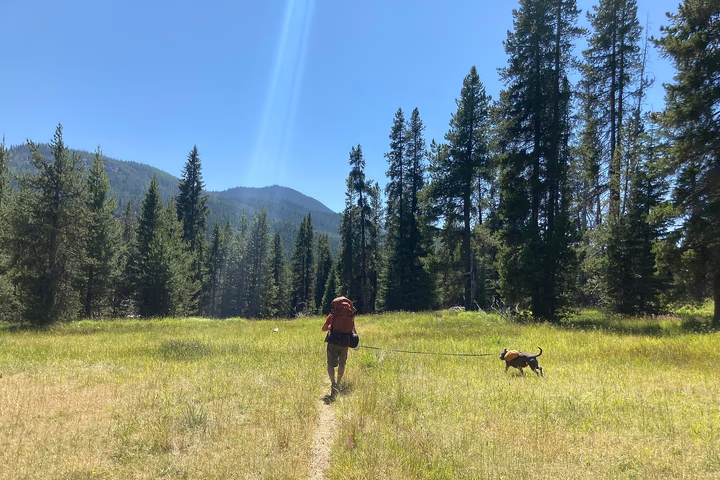
That Polaroid habit produced The Kids Are Alright, the 1999 self-published book he made from several thousand photographs of everyone who passed through his East Village apartment between 1998 and 2003. It led to a solo show at the Whitney in 2003, when he was in his early twenties. The format stayed with him, and his advice about travel photography comes back to the same handful of ideas: follow what interests you, use whatever camera is at hand, and pay attention to light. Photo: Backpacker and dog in Goat Rocks Wilderness 01.jpg by Mattsjc — CC BY 4.0, via Wikimedia Commons.
Chase Vibrant Colors
"During the fall, I love to go to upstate New York, just for the color explosion," McGinley says. "A lot of times, I'll just get in my car, drive, and pull over on the side of the road, sometimes maybe 50 times a day, just to be guided by color. When I see something that looks interesting, I'll stop and try to shoot a photo there."
Letting colour lead is a better strategy than most people expect, because it replaces a plan with a reflex. You stop hunting for the shot you decided on in advance and start noticing what is actually around you: a market stall, a painted wall, autumn leaves against a grey sky, a row of shutters.
The 50 pull-overs a day are the point. Almost none of them will produce a photograph worth keeping, and that is fine. Travel photography rewards volume and attention, and colour is simply the easiest thing to set your attention to.
Look for the Light
"Shooting at dawn or magic hour is always a way to get a really beautiful, pastel-y background."
This is the most repeated piece of advice in photography for a reason. The hour after sunrise and the hour before sunset give warm, directional light that creates depth instead of flattening everything. The pastel tones McGinley describes are particularly kind to portraits, producing a soft quality that artificial light cannot reproduce. If you only change one habit on your next trip, build your day around the golden hour rather than around the map.
Rethink Flash
"I love shooting with flash on my iPhone. I just like the way it looks more like a disposable camera."
Coming from a fine artist, this is a deliberately unfashionable opinion, and it is worth taking seriously. Most photographers treat direct flash as an error to be avoided. McGinley uses it for the specific look it produces: slightly blown out, casual, closer to a party photograph taken on a disposable camera than to a carefully lit portrait.
The implication is larger than flash itself. Technical perfection is not the goal. Mood is. A frame with visible flash and a slightly awkward expression can carry more personality than a cleanly lit one that looks like a stock photo, and on a trip, personality is usually the thing worth bringing home. It also helps that a flash makes the phone a genuinely capable low-light tool in the ten minutes after sunset.
Blur Your Eyes to See Shapes
"Choose your landscape wisely. I like to blur my eyes for the first two seconds when I'm taking a picture, so I can focus less on the person and more on the shapes, to see if the shapes feel balanced. I think that helps me compose something interesting."
This one costs nothing and improves almost every photograph. Defocus your gaze for a couple of seconds and you stop seeing a person standing in front of a building and start seeing masses, negative space and visual weight. Is the frame balanced? Is the subject competing with something they should not be competing with?
Doing this check before pressing the shutter is how you catch the posts growing out of people's heads, the horizon that is two degrees crooked, and the bright patch behind the subject that will pull every viewer's eye away from the face.
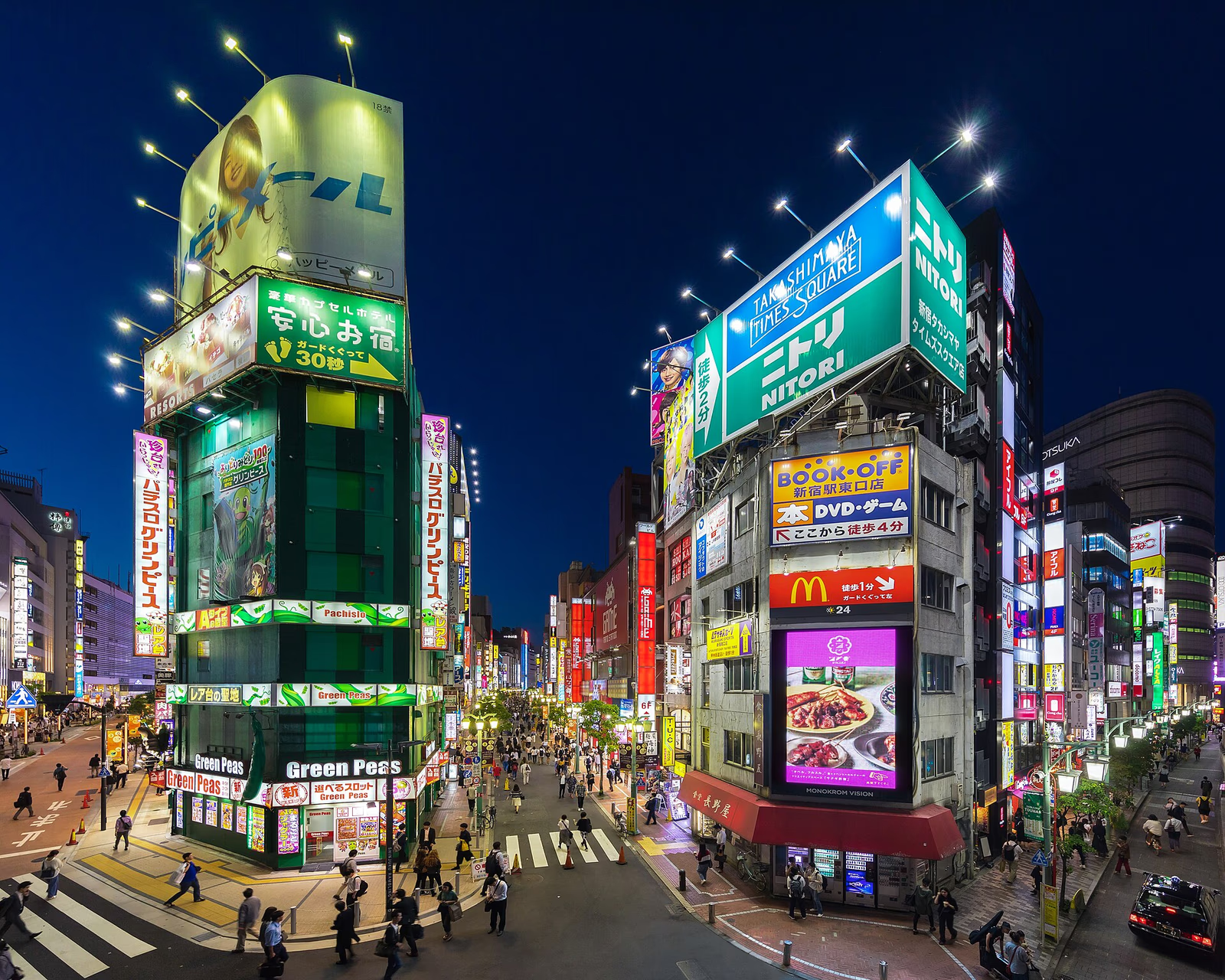
Photo: Buildings with colorful neon street signs at blue hour, Shinjuku, Tokyo.jpg by Basile Morin — CC BY-SA 4.0, via Wikimedia Commons.
Edit Wisely
"Spend time to color correct your photos. I usually open up the shadows a little bit, add some contrast, bring down the highlights."
That is the whole editing philosophy, and it is worth noting how conservative it is. No heavy filters, no dramatic transformations. Three moves: lift the shadows to recover detail, add contrast so the image has some punch, and pull the highlights back so nothing blows out and distracts.
For phone photographers, these three adjustments are usually worth more than any preset. They also address the most common failure in travel photographs, which is a bright sky competing with a badly exposed subject. It is the same principle as fixing lighting problems in editing rather than in the camera: decide what the photograph is about, then make the tones serve it.
Talk to Your Subject Throughout
"I shoot a lot, and I talk to the person through the entire process. One of my photo shoots is sort of like aerobic, mixed with a therapy session and beautiful light."
Constant conversation keeps a subject engaged instead of frozen. That is why the good travel portraits look like something happened between two people rather than something was done to one of them. A silent photographer creates tension. A conversational one creates chemistry, and chemistry is the only reliable way to get an expression that is not a performance. If you need a fallback, movement-based posing gives the subject something to do with their hands while you keep talking.
Don't Underestimate Nature, and Shoot What You Love
"There are a lot of things that you wouldn't expect that you stumble upon. You just have to put in the time to go through the process to find those things. When you do, it's worth the journey."
Serendipity responds to time rather than planning. A hidden waterfall or a field of wildflowers does not appear on a schedule, which is why McGinley's advice about pulling over 50 times a day is really advice about leaving slack in the itinerary. Over-scheduled trips produce photographs of the itinerary.
His last point is the one that actually determines whether the images last. "You'll see the authenticity in the photograph," he says. When you care about the subject, whether it is a person, a place or a bowl of fruit, that care shows. Viewers cannot articulate why one photograph of a street feels alive and another feels like a record, but they can see it instantly. Photograph the things you genuinely like and skip the ones you think you are supposed to photograph. Nobody is checking.
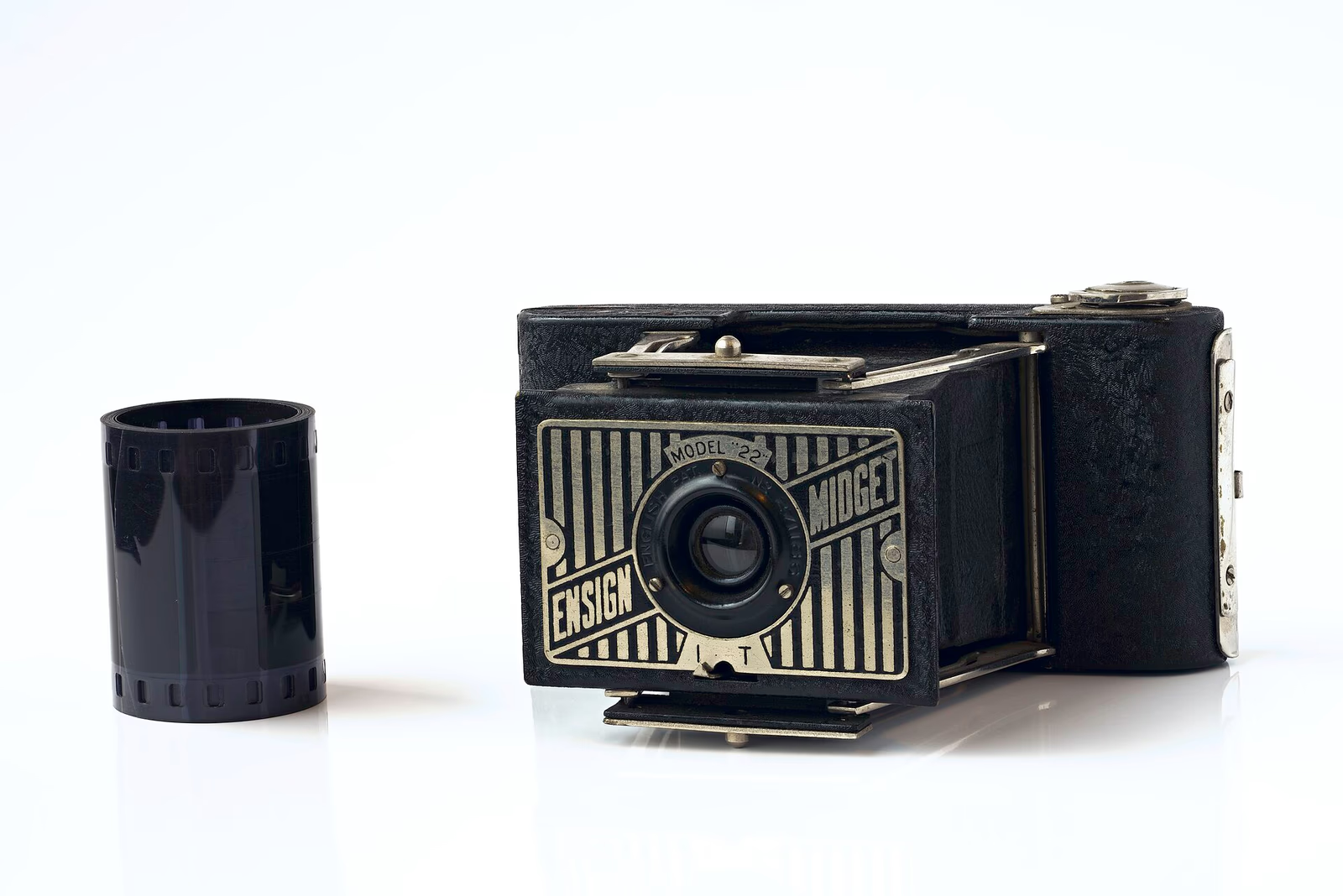
Photo: Ensign Midget - model 22 camera in comparison to a type 135 film roll.jpg by Franz van Duns — CC BY-SA 4.0, via Wikimedia Commons.
Practical Tips
- Let colour guide you. Stop when something catches your eye instead of sticking to a shot list.
- Shoot at dawn or in the last hour before sunset for soft, pastel-toned backgrounds.
- Try direct flash on a phone for a disposable-camera look. Perfection is not the goal.
- Blur your eyes for two seconds before composing, and check whether the shapes balance.
- Edit with restraint: open the shadows, add contrast, pull down the highlights.
- Keep talking to your subject for the entire shoot, not just the first minute.
- Leave unstructured time in the itinerary. The unexpected finds are the ones worth having.
- Photograph what you actually care about, and skip the rest.
- Shoot Polaroids or film if the process itself keeps you interested. The archive you build is the real asset.
Conclusion
McGinley's travel advice is notable for what it leaves out. No expensive gear recommendations, no elaborate technique, no requirement that you visit anywhere famous. Instead: follow colour, use the light you have, talk to the person you are photographing, edit gently, and make sure you actually care about the subject before you raise the camera.
He has been shooting Polaroids since the late 1990s and still travels seven months a year, which is the clearest argument for the approach. The method is sustainable because it is built on curiosity rather than equipment, and curiosity is the only travel photography resource that never runs out.
FAQ
What camera does Ryan McGinley use for travel photos?
A mix. He shoots on his iPhone, on Polaroid cameras he has used since the late 1990s, and on professional gear. The range is a practical demonstration that the camera matters less than how you see, and that the format you enjoy using is the format you will actually carry.
What is magic hour and why does it matter?
Magic hour, also called golden hour, is the period shortly after sunrise and before sunset when the sun is low in the sky. The light is warm, soft and directional, producing pastel tones and long shadows that flatter both portraits and landscapes. It is the single easiest improvement available to any travel photographer.
How do I blur my eyes to check composition?
Slightly defocus your gaze so you stop perceiving details and start seeing shapes, masses and tonal balance. Two seconds is enough to judge whether the composition is balanced and whether anything in the frame is competing with your subject. Then refocus and take the shot.
Should I use flash for travel photography?
Try it. McGinley uses direct iPhone flash specifically for the raw, disposable-camera look it creates. It is a deliberate aesthetic choice rather than a technical compromise, and it works especially well for night shots and casual portraits where mood matters more than cleanliness.
How do I find unexpected photo opportunities while travelling?
Leave gaps in the itinerary. Drive or walk without a fixed destination, pull over when something catches your eye, and accept that most of those stops produce nothing. The good frames are a function of time spent looking, not of the number of landmarks visited.
How much editing should travel photos get?
Less than most people apply. Open the shadows, add a little contrast, bring the highlights down, and stop. Heavy presets date quickly and flatten the differences between places, which is the opposite of what travel photography is for.
Continue reading

A Day by Boat: How to Dress, What to Bring, and Why It's the Ultimate Summer Experience ⛵️
May 24, 2026
12 Grandparent-and-Grandchild Photo Poses
May 24, 2026
How AI Is Improving Digital Cameras
May 24, 2026
Working With Roxanne Lowit, the Queen of Backstage Photography
September 27, 2026
13 Unique Father's Day Gifts That Go Way Beyond the Usual Mug
May 24, 2026
How to Format an SD Card on a Mac
May 24, 2026
6 Chic Sandal Trends That Will Give Your Summer Shoe Collection Some Personality
May 24, 2026
Which Fashion Brands Are Winning the AI Discovery Battle — And Why It Matters More Than SEO
May 24, 2026
Want to Know What Your Customers Think? Ask an AI-Generated Focus Group
May 24, 2026
How to Shoot During Golden Hour: Lighting Guide
May 24, 2026
Why Fashion Stays Silent About Its AI Use — And Why That Silence Is Becoming a Problem
May 24, 2026
How to Photograph Shy, Difficult, or Anxious Pets
May 24, 2026
Colorful Shoes, Woven Bags, Tankinis: 7 Fun Summer Trends Worth Shopping Right Now
May 25, 2026
99 Most Inspirational Photography Quotes
September 25, 2026
'POV Shopping' Videos Are Going Viral — And Luxury Brands Should Be Worried
May 24, 2026