9 Steps to Finding the Perfect Wedding Photographer
Your wedding photographs are the only part of the day that gets more valuable with age. The flowers die within a week, the cake is gone by Sunday, and the dr...
Your wedding photographs are the only part of the day that gets more valuable with age. The flowers die within a week, the cake is gone by Sunday, and the dress goes into storage. The pictures stay on the wall, in an album, and on the phone of every relative who was there.
That is why the choice of photographer deserves more attention than the choice of centrepieces. It is also why so many couples make the decision badly: they book the first photographer whose portfolio made them feel something, without checking whether that person can deliver three hundred usable frames from a day that cannot be reshot.
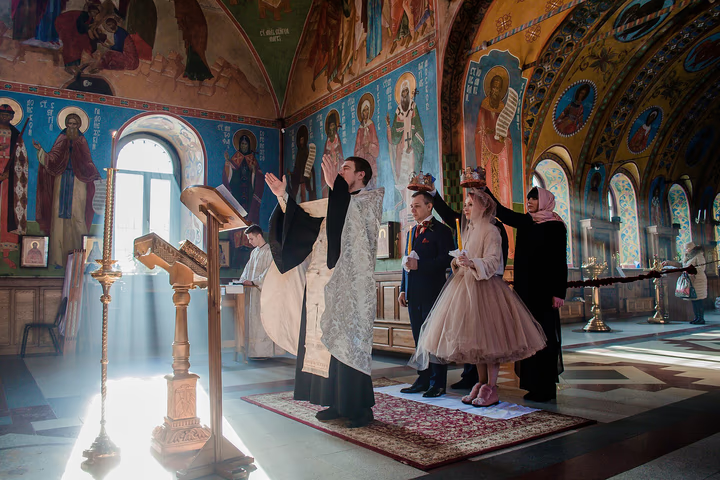
The nine steps below are the ones that actually reduce risk. They are in order, and skipping the early ones is the usual way couples end up unhappy. Photo: Christian wedding in Russia.jpg by Виктория Злых — CC BY-SA 4.0, via Wikimedia Commons.
1. Ask Around First
Word of mouth still beats every algorithm. Talk to friends who married in the last two years, and ask specifically about the experience rather than the pictures. Did the photographer turn up on time? Did they keep the schedule moving without being pushy? Were the family portraits done in twenty minutes or ninety?
Coworkers and relatives whose wedding albums you have actually looked through are the highest-value recommendations you can get. You have seen the results and heard the first-hand version of the day, which is more information than any portfolio page will give you.
Personal recommendations also come with a useful social cost. A photographer who disappointed someone you know will not be recommended twice, which quietly filters out the worst options before you have spent an evening researching.
2. Decide What You Actually Want Before You Look
Most couples start browsing photographers before they know what they like. That is backwards, and it is how people end up talked into a style they never wanted.
Spend a week collecting images and saving every one that stops you. Wedding blogs, Pinterest boards, Instagram accounts, the albums of friends. After thirty or forty saves, look for the pattern. Light and airy fine art? Dark and moody editorial? Candid and documentary, with nobody looking at the camera? Classic posed portraits, carefully arranged? A mix, and if so, in what proportion?
Knowing your own taste before you start interviewing does two things. It shortens your shortlist dramatically, and it stops a persuasive photographer from selling you a style you do not actually love. Photographers are salespeople as well as artists, and the genuinely good ones are very good at selling.
3. Look at Full Galleries, Not Highlights
Every working photographer has twenty spectacular images on the front page of their site. The question is what the other three hundred look like.
Ask to see two or three complete weddings from start to finish, and look for consistency. Are the getting-ready pictures as strong as the ceremony ones? Do the reception photographs hold up when the light is bad and everyone has been drinking since four? Does the coverage of the dance floor look like a plan or an afterthought?
Pay particular attention to the parts of the day that are technically difficult. Dark receptions are where weak photographers disappear. Harsh midday ceremony light, backlit altar windows, and rainy outdoor portraits separate people who understand light from people who understand presets.
If the photographer cannot show you a full gallery, treat that as an answer.
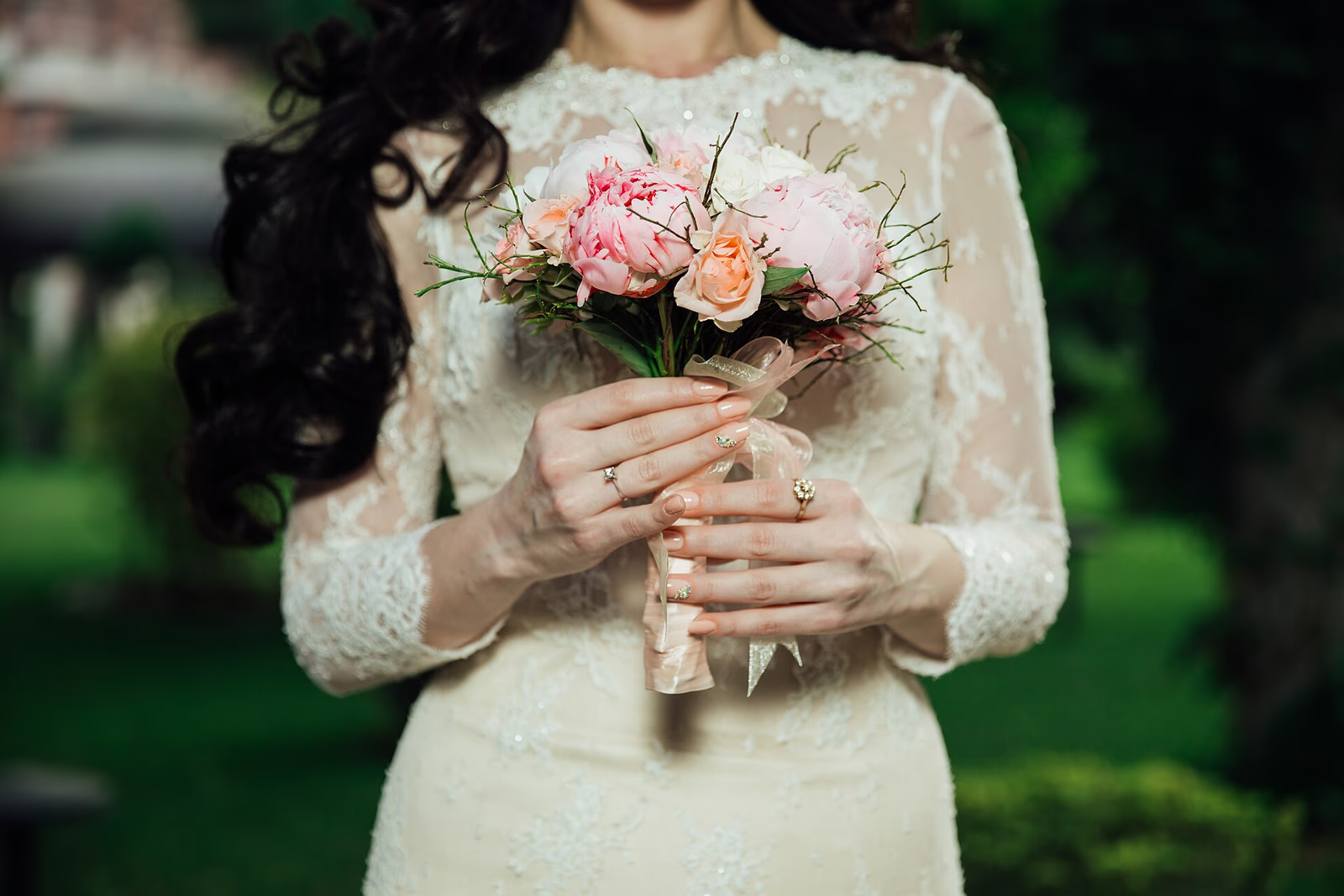
Photo: 22, Bridal bouquet (Unsplash).jpg.jpg) by Alvin Mahmudov alvinmahmudov — CC0, via Wikimedia Commons.
4. Read the Reviews Properly
Star ratings tell you almost nothing. Read the actual sentences, and read the critical ones even more carefully than the glowing ones.
Look for details. Do reviews mention how the photographer made people feel on the day? Do they mention delivery deadlines being met? Do multiple reviews describe the same mild problem, such as slow email replies or a long wait for the gallery?
A photographer who produces beautiful work and stresses you out for eleven months is a bad choice. The day is long, the schedule is tight, and the person holding the camera is standing a metre from your face for ten hours.
5. Meet Them Before You Book
Chemistry is not a soft factor in wedding photography. It is a working requirement. You will spend more of your wedding day within three metres of your photographer than with almost anyone else, including your brand new spouse.
Book a call or a meeting with your top two or three. Notice whether they listen, whether they ask about your plans before describing their own approach, and whether they can explain what happens when something runs late. Trust your reaction. If a consultation feels slightly off, it will feel considerably worse at four in the afternoon on the day.
6. Ask How They Actually Work
Photographers sit somewhere on a line between directive and observational, and being on the wrong side of that line for your personality is miserable.
Directive photographers will position you, adjust your hands, tell you where to look, and build each frame deliberately. Observational photographers stay back and document what happens, which produces honest pictures and requires you to be comfortable being ignored. Most work somewhere between the two.
Ask them to describe four specific parts of the day: getting ready, the ceremony, the family formals, and the reception. The answer tells you more than any portfolio. If you are camera-shy, say so and watch how they respond, because some photographers have genuinely good systems for people who hate being photographed and you can tell within a minute whether they do.
This is also where posing skill shows up. A photographer who can put a nervous couple at ease without a stiff catalogue pose is worth more than one with a better website, and the techniques that replace static posing with movement are the ones to ask about directly.
7. Nail Down Deliverables and Timeline in Writing
This is the step couples skip, and it is the one that causes most of the arguments afterwards.
Ask exactly what arrives and when. How many edited images? How long until the full gallery, and how long until a sneak peek? Are the files high resolution? Do you get printing rights? Is an album included or extra? Is a second shooter in the package? What happens if the photographer is ill?
Get all of it into the contract: date, hours of coverage, number of photographers, delivery timeline, number of edited images, usage rights, cancellation policy, and payment schedule. A photographer who will not put it in writing is not the right choice, however good the pictures are.
8. Decide Whether You Need a Second Shooter
A second photographer solves three real problems. They cover a different angle during the ceremony, they shoot the cocktail hour while the primary photographer does portraits, and they are a backup if something fails.
Most couples find one rule useful: over a hundred guests, a second shooter is strongly worth it, because simultaneous things happen in different rooms and one person cannot be in both. Under fifty guests, at an intimate wedding, one skilled photographer is usually enough, and a second body often means two people photographing the same moment.
9. Commit Once You Have Decided
After the research, the meetings, and the contract, make the decision and stop revisiting it.
Second-guessing a booked photographer costs you nothing except the enjoyment of the months before the wedding. You chose them because the work moved you, the conversation went well, and their approach fits how you want the day to feel. Let them do their job.
The one thing worth doing at this stage is a short conversation about priorities. Name the three things you care about most, whether that is the ceremony, the grandparents, or the party, and make sure the photographer knows. Then get out of the way.
What It Costs and When to Book
Two numbers matter most when you start planning. Photography usually accounts for somewhere between ten and fifteen percent of an overall wedding budget, and in major markets that puts experienced photographers in the range of roughly four thousand to ten thousand dollars and up, depending on hours, coverage, and inclusions.
The second number is timing. Booking twelve to eighteen months ahead is what gives you a real choice, particularly for weekends between May and October, when most good calendars fill. If your date is flexible you have more options and more leverage on price, because you are no longer asking for a Saturday in June.
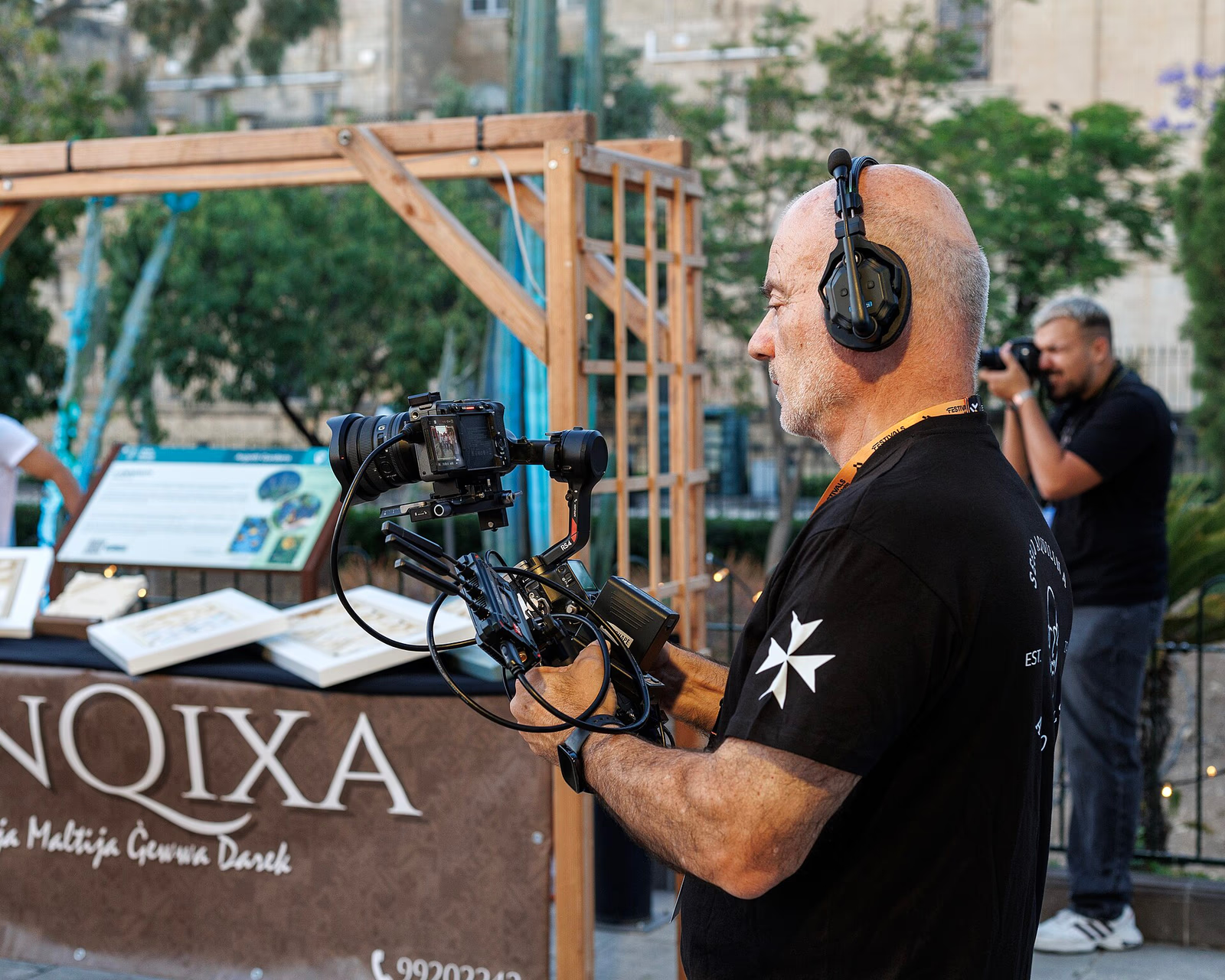
Photo: Festghana 22May2026 gb Camera Person 1.jpg by Godwin Borg — CC BY 4.0, via Wikimedia Commons.
Practical Tips
- Start looking twelve to eighteen months out, before the good calendars close.
- Ask for full galleries, not portfolio highlights.
- Ask about backup equipment and what happens if the photographer is ill.
- Confirm whether a second shooter is included or an add-on, and what it costs.
- Get the image count and the delivery deadline in writing.
- Name your three priorities for the day, so coverage is not spread evenly over everything.
- Trust your reaction to the consultation. Chemistry is a working requirement, not a luxury.
- Plan the family formals in advance, including the exact combinations you want. That part of the day has the least patience available and the most relatives standing around.
Conclusion
The right wedding photographer is not the most expensive, the most awarded, or the most followed. It is the person whose work you keep returning to, whose company you find easy, and whose approach matches the way you want to experience your own wedding.
Work the steps in order and most of the risk disappears. Ask people you trust, decide what you like, look at whole weddings rather than highlights, read the reviews properly, meet before booking, understand how they work, get the details in writing, decide about a second shooter, and then stop worrying about it.
The rest is the photographer's job. The best thing you can do on the day is be present in it, and the most useful preparation is simply knowing how a good photographer will arrange people. The same approach that works for family photographs applies to wedding portraits: arrange people in staggered layers, give everyone something to do with their hands, and photograph the interaction rather than the pose.
FAQ
How much should I budget for wedding photography?
Photography typically takes ten to fifteen percent of the overall wedding budget. In major markets, experienced photographers generally run from around four thousand to ten thousand dollars and above, depending on hours of coverage, whether a second shooter is included, and what is delivered at the end.
How far in advance should I book a wedding photographer?
Twelve to eighteen months is the comfortable window, especially for Saturdays between May and October. The strongest photographers fill their peak-season dates first, so a shorter timeline usually means choosing from what is left rather than choosing freely.
Do I really need a second shooter?
Over a hundred guests, usually yes. Two things happen at once in different rooms and one photographer cannot cover both. Under fifty guests, a single experienced photographer is generally enough, and a second body can end up duplicating coverage you already have.
What should be in the photography contract?
The date, hours of coverage, number of photographers, delivery timeline, number of edited images, usage and printing rights, cancellation policy, and payment schedule. If a photographer will not put those in writing, that is your answer about working with them.
How long does it take to get the wedding photos back?
Four to twelve weeks is the normal range for a full gallery, with a handful of sneak peeks usually arriving within days. Ask for a specific number rather than a general promise, and check that reviews mention deadlines being met.
Are raw files included?
Usually not. Most photographers deliver edited images and keep the raw files, and some will release them for an additional fee. If raw files matter to you, raise it before the contract is signed rather than afterwards.
Is it worth paying more for a well-known photographer?
Only if you genuinely prefer their work. Reputation raises the price and does not automatically mean better coverage of your particular wedding. A mid-range photographer whose full galleries are consistently strong is often the better decision than a famous name whose style you like less.
Continue reading
13 Unique Father's Day Gifts That Go Way Beyond the Usual Mug
May 24, 2026
Master Flow Posing Photography: 9 Dynamic Techniques
July 11, 2026
A French Woman Walks Into Nordstrom — 33 Items She's Buying From the Half-Yearly Sale
May 24, 2026
Why Fashion Stays Silent About Its AI Use — And Why That Silence Is Becoming a Problem
May 24, 2026
Making Money with Stock Photography
September 25, 2026
How Big Is a 4×6 Photo? Sizes in Inches, Centimeters, and Pixels
May 24, 2026
Sibling Photoshoot Poses
September 25, 2026
42 Free Photography Books
September 25, 2026
How to Edit Concert Photos for Best Results
July 11, 2026
The 4 Best Ways to Digitize Old Photos (and How to Store Them)
May 24, 2026
Fashion's Top Executives Gather in London to Explore AI's Role in the Industry
May 24, 2026
Nvidia and Antoine Arnault Are Betting on Virtual Try-On — Here's What RealFit Could Change
May 24, 2026
61 Best Photography Books for All Levels
September 25, 2026
Casual Going Out Fit: How Luxury Streetwear Is Redefining After-Dark Dressing
May 25, 2026
12 Grandparent-and-Grandchild Photo Poses
May 24, 2026