Family Photoshoot Poses
Three people in a frame is manageable. Five is a geometry problem. Add a toddler, a dog and a grandparent who needs to sit down, and the standard advice abou...
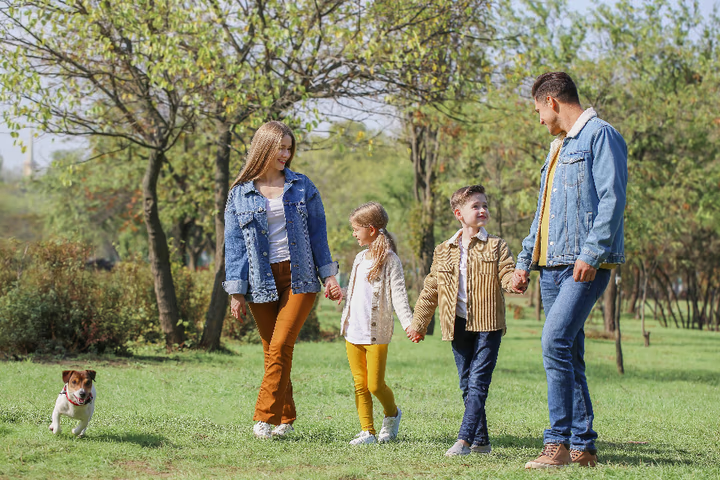
Three people in a frame is manageable. Five is a geometry problem. Add a toddler, a dog and a grandparent who needs to sit down, and the standard advice about posing stops being useful very quickly.
The core difficulty with families is that everyone occupies a different plane. Somebody ends up behind somebody else, someone's face is at the wrong height, and the smallest person in the group is either hidden or standing awkwardly in front. Solving that is mostly about arranging bodies in staggered layers rather than a flat row, and then finding something for the group to do so nobody has to hold a smile for six seconds.
Below are fifteen arrangements that work with real families, followed by the light, direction and clothing problems that decide whether the shoot succeeds. Photo: Family Moments — CC0, via Openverse.
Fifteen Arrangements That Work
1. The Staggered Height Line
Arrange the group in height order but offset each person slightly forward or backward so no two heads sit on the same line. Ask them to turn their bodies about 45 degrees toward the centre rather than facing the camera square. The shoulders create a diagonal and the faces separate cleanly.
Leave a gap the width of a person at one end for someone to step into later, or for a panel of text if the image is going on a card.
2. Walking and Holding Hands
Line everyone up and have them walk toward you, or across the frame, holding hands. Walking gives the group something to do, which removes the stiffness, and the movement creates a natural variety in the heads and shoulders.
Shoot a burst and pick the frame where the feet look intentional. This pose also handles the awkward question of what to do with small children, who simply get carried or walk between two adults.
3. The Bench Grouping
A bench, a low wall or a step gives you two tiers, which fixes the overlapping-head problem instantly. Seat the shorter people in front and stand the taller ones behind, with the standing group leaning slightly in rather than standing to attention.
Have the seated people angle their knees to one side. Bodies turned the same direction look like a group; bodies squared up look like a queue.
4. Overhead Lie-on-the-Grass
Everyone lies on the grass in a loose cluster, heads toward the middle, and you photograph from directly above. This works because a floor arrangement is genuinely comfortable for children and grandparents alike, and because the composition reads as a shape rather than a row.
Watch for anyone who has ended up looking like they were placed rather than belonging. Move one person two feet and the whole group relaxes.
5. Piggyback and Shoulder Stacks
Let the older children ride on the adults' backs. It solves three problems at once: it puts smaller faces at a useful height, it gives everyone a job, and it produces genuine expressions rather than arranged ones.
Time the shot for the moment after everyone is settled, not the moment of climbing, unless you want the chaos frame as a second option.
6. Toddler on Shoulders
The smallest person in a family shoot is usually the problem. Putting them on a parent's shoulders gets them into the top layer of the frame where their face is clear, and it keeps the parent's hands free.
Be ready for the moment the toddler grabs the parent's hair. That frame is frequently the best one of the session.
7. Everyone Look at the Baby
A newborn or a small baby is the most reliable attention magnet a family has. Put the baby at the centre and let the group pile in around it, or hold it up so everyone looks toward it.
The expressions you get are real, because nobody has to be told how to look at a baby.
8. The Tickle Shot
For a group that will not stop looking stiff, assign one person the job of attacking the group. Photograph the chaos that follows and keep shooting through it.
You will throw away most of the frames and end up using one where everyone is genuinely laughing. Those frames are the reason family shoots exist.
9. Back-Lit at Golden Hour
Put the sun behind the group, expose for the faces, and let the background go bright. The rim light on hair separates people from the background and makes even a simple arrangement look deliberate.
This works best in the hour before sunset, when the light is warm and low. If you have never shot into the light before, the technique is worth practising once on your own before a session where everyone is waiting.
10. The Porch or Doorway Frame
Stand the family inside a doorway or on a porch and shoot from outside. The frame does the composition work for you, which is a real advantage with an awkward number of people.
It also gives children a defined area to stand in, which reduces the drifting that ruins group shots.
11. The Kitchen Table Candid
Rather than another posed frame, photograph the family actually doing something domestic: eating, drinking tea, baking. Seat them around a table, stand back, and let them talk. It requires a bit of patience and a wide enough lens.
This is the pose that grandparents tend to like best, because it looks like their house and their life rather than a studio.
12. Including the Family Pet
Bring the dog into position last, after everyone else is settled. A pet in the middle of a group photograph creates one point that nobody planned, which is often what stops the image feeling corporate.
Keep a hand on the animal between frames, and shoot immediately when the head comes up. If the animal is shy or anxious, photograph it separately and composite nothing; instead build the group around its chosen position.
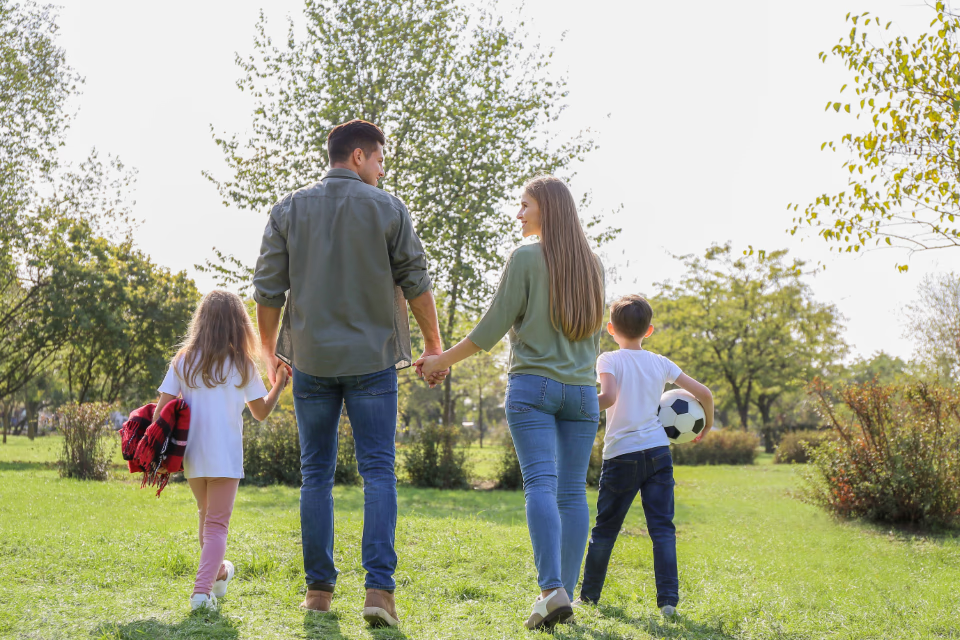
Photo: Family Moments — CC0, via Openverse.
13. Three-Generation Tiers
With grandparents present, use three levels, the arrangement covered in more detail in these grandparent and grandchild groupings: seated grandparents in front, standing adults behind, children placed wherever they fit physically. This is the arrangement that looks most like a formal portrait and, done well, is the one most likely to be printed.
Seat the grandparents first. They set the shape of everything else, and they will not want to stand for long.
14. Walking Away
Photograph the whole group walking away from the camera, along a path, a beach or a street. Faces are not needed, so the pressure disappears and the shot becomes about the group as a unit.
It also works as the closing image of a set, and it is the easiest way to photograph a family who all hate being photographed.
15. The Deliberate Imperfect Frame
For once, do not ask everyone to look at the camera. Ask them to look at each other, or at one person, or at nothing in particular. Photograph the moment before they notice you.
Half of these frames get deleted and the other half become the picture everyone wants, because they show a family rather than a lineup.
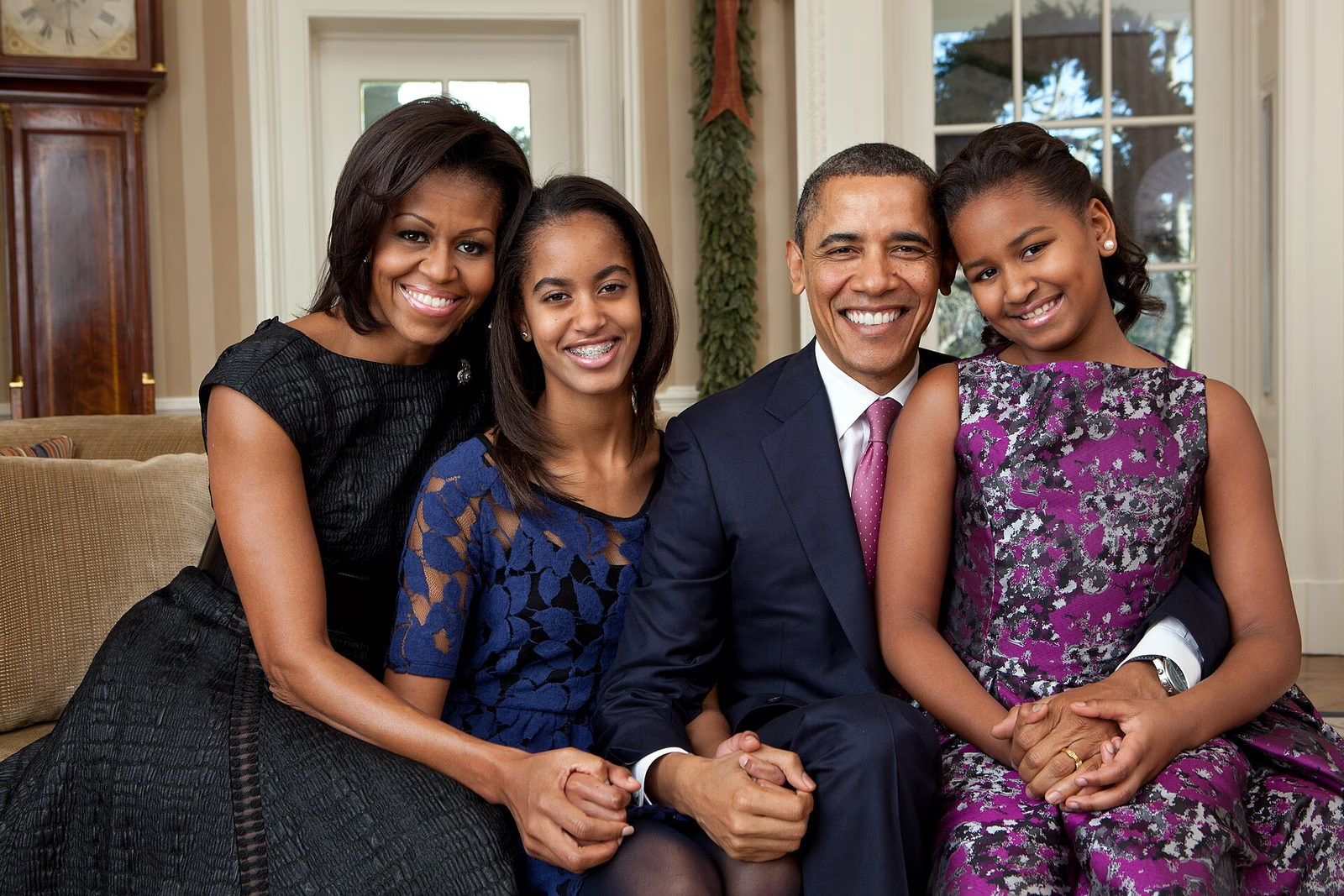
Photo: Pete Souza — Public Domain, via Wikimedia Commons.
Light for Groups
Open shade beats direct sun almost every time with more than two people. Hard sunlight produces squinting, hard shadows across faces, and patches of blown highlight that no amount of editing recovers.
Find a large tree, a wall in shade, or the side of a building away from the sun, and put the group just inside the shade with their faces turned toward the open light. Everything softens and everyone can open their eyes.
If you are working in sun, put the sun behind the group. The rim light separates them from the background and the faces fall into even shade that you can lift in editing.
Directing a Group Without Blinks
Blinks ruin more family photographs than bad posing. The trick is to shoot in bursts and never rely on a single frame, then build the final image from two or three exposures if you have to.
For attention, avoid the countdown. Ask everyone to close their eyes and open them on a signal, then shoot immediately. The eyes will be open and the expressions will be three-quarters natural.
With small children, work fast and in short blocks. Nobody under six will hold a position for more than a couple of minutes, so take the toddler-inclusive frames first while energy is high and do the adult-only arrangements afterwards.
Clothing Without Matching Outfits
Fully matched outfits read as dated and a bit forced. A workable palette is the next best thing: two or three colours that sit together comfortably, distributed across the group so no one person stands out, plus one accent.
Ask people to avoid large logos, and to avoid everyone wearing the same pattern at the same scale. Warn them about that one relative who will arrive in neon if not told otherwise.
Conclusion
Family photographs are decided by arrangement and expression, not by location or equipment. Get the group into staggered layers, put the shorter people where they can be seen, give everyone something to do, and shoot through the mess rather than trying to eliminate it.
The frames people keep are rarely the technically perfect ones. They are the ones where the family looks like it actually is, which is why the walk-away shot and the kitchen table candid so often beat the carefully arranged lineup.
If the session includes animals, plan for them explicitly rather than hoping they cooperate, and if children and grandparents are both present, seat the grandparents early and photograph the children first. A family shoot with a pet and a toddler is a logistics exercise, and the relaxation only comes back once the difficult parts are finished.
FAQ
How do I pose a family of five so nobody is hidden?
Arrange them in staggered layers rather than a single row. Seat two people in front and place three behind with offset positions so no two heads align, and turn everyone about 45 degrees toward the centre of the group.
What is the best time of day for a family photoshoot?
The hour before sunset, or any period of open shade. Hard midday sun causes squinting and harsh shadows across faces, which is the most common reason family photographs look unflattering.
Should everyone wear matching outfits?
No. Matching outfits look dated. Coordinate a palette of two or three colours with one accent, and ask people to avoid large logos and identical patterns.
How do I get young children to cooperate in a family shoot?
Give them something physical to do, whether that is walking, being carried or tickling someone else. Shoot the interaction rather than the arrangement, and take the frames involving small children first while their patience is intact.
What if someone blinks in every frame?
Shoot in bursts and expect to blend two frames. Asking the group to close their eyes and open them together on a signal produces open eyes and more natural expressions than a countdown.
How do I include a dog in a family photograph?
Position the animal last, once everyone else is settled, and keep a hand on it between frames. Photograph immediately when the head lifts. For anxious animals, work out where they choose to sit first and build the group around that spot.
Where should the tallest person stand?
Anywhere except dead centre, and preferably in the back layer. Keeping the tallest person out of the middle prevents the group from forming a visual pyramid, which makes everyone else look smaller than they are.
Continue reading
Working With Roxanne Lowit, the Queen of Backstage Photography
September 27, 2026
Instagram Stars Share Their Secrets to Taking Amazing Photos
September 27, 2026
Why Fashion Stays Silent About Its AI Use — And Why That Silence Is Becoming a Problem
May 24, 2026
Nvidia and Antoine Arnault Are Betting on Virtual Try-On — Here's What RealFit Could Change
May 24, 2026
Master Flow Posing Photography: 9 Dynamic Techniques
July 11, 2026
Sibling Photoshoot Poses
September 25, 2026
Fashion People and Zara Agree: You Can't Go Wrong With This Effortless 3-Piece Summer Outfit Idea
May 25, 2026
61 Best Photography Books for All Levels
September 25, 2026
How Pixel Moda Is Producing 14 Million AI-Assisted Images a Year — Without Losing the Human Touch
May 24, 2026
9 Steps to Finding the Perfect Wedding Photographer
September 27, 2026
Strike a Pose: Street Style Star Hanneli Mustaparta Shows Us How
September 27, 2026
How AI Is Improving Digital Cameras
May 24, 2026
Fashion's Top Executives Gather in London to Explore AI's Role in the Industry
May 24, 2026
Ryan McGinley's Top Tips for Taking Stylish Travel Photos
September 27, 2026
AI-Generated Mockups Are Going Viral — But Are They Good for Fashion Brands?
May 24, 2026