Met Gala Photographer Hunter Abrams' Tips for Peak Creativity
Hunter Abrams works the parts of fashion week that most photographers never see. Backstage in the ten minutes before a show, on the street outside between ve...
Hunter Abrams works the parts of fashion week that most photographers never see. Backstage in the ten minutes before a show, on the street outside between venues, on the red carpets that run from September through awards season, and at the Met Gala, where the guest list is the hardest in the industry and nobody gets a second take.
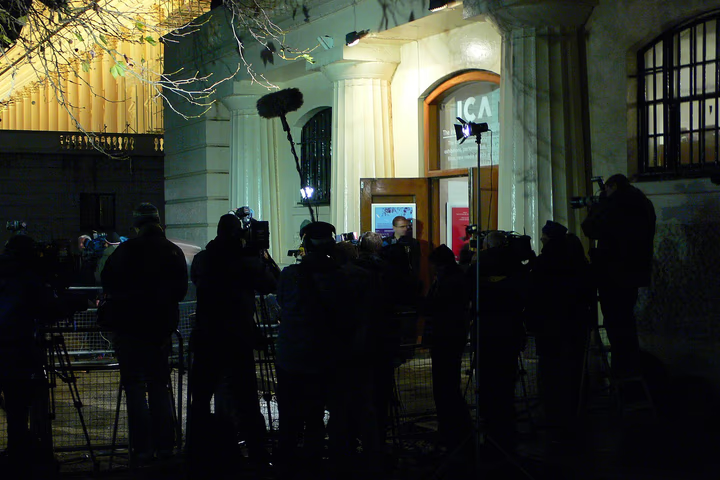
Speaking to Vogue Club for its Career Secrets series, Abrams described a method that has almost nothing to do with gear and everything to do with preparation, adaptability and how you treat the person in front of the lens. The advice transfers directly, whether you are shooting the biggest night in fashion or your friend's birthday. Photo: Paparazzi ICA Decemeber 2005 1.jpg by Unknown — CC BY-SA 2.0, via Wikimedia Commons.
Research, Research, and Research
Abrams names research as their first and most important piece of advice, and repeats it deliberately: "Research, research, and research."
The research is specific rather than general. Before a major shoot they study the venue and how light behaves in it, the people they will be photographing, and the work other photographers have produced in the same environment. They look at fashion history, art references and cultural context that might inform the approach.
None of this is about copying. It builds a store of visual reference you can draw on automatically when there is no time to think, which is precisely the situation at any large event. On a red carpet you have seconds per subject and no control over the light, so every decision has to be made before you arrive. Preparation is the difference between working a room and surviving it, and it is also how you stop being surprised by the thing that ruins other people's photographs, such as lighting that changes from room to room.
Find That Thing That Makes You Different
In a field where technical competence is close to universal, standing out has to come from somewhere else. Abrams encourages emerging photographers to identify what makes their perspective their own and then lean into it rather than smoothing it away.
That difference might be a particular way of seeing colour, an unusual approach to composition, a talent for making people relax, or a background in another discipline that shows up in how you frame a picture. Whatever it is, suppressing it in order to fit the industry's current taste removes the only thing you have that nobody can copy. Everyone can buy the same lens. Nobody else arrives with your obsessions.
The practical way to find it is to look at your own archive and see what repeats. The subjects you keep returning to, the light you keep choosing, the way you keep placing people in the frame. Those patterns are the start of a voice, and they are usually visible long before the photographer notices them.
Adaptability Is Everything
Event photography is unpredictable by nature. Light shifts as you move through a building. Subjects have a minute and varying degrees of patience. Equipment fails. Weather does not care about your plan.
Abrams arrives with a broad creative vision and the technical fluency to execute it under conditions that are nothing like the ones they would choose. Crucially, they do not arrive with a rigid shot list, because a shot list that collapses at the first complication takes the photographer's confidence with it.
That is a distinction worth internalising. A shot list is a set of expectations. A creative vision is a set of priorities. When you know which three things actually matter about a shoot, you can lose everything else and still come back with a usable set.
Build Genuine Connections
The thing that separates Abrams' portraits from the hundreds of other frames taken at the same event on the same night is how comfortable their subjects look. This is not a small achievement when the subject has already been photographed forty times that evening and is being pulled towards the next interviewer.
Their method is to treat everyone as a collaborator rather than a target. They talk to people, learn names, and build a small working relationship inside the two minutes available. When a subject is treated as a person instead of a source of content, it shows in the face.
That approach also pays off technically. A subject who feels seen will hold a pose rather than bolt, will turn towards the light rather than away from it, and will give you the second frame that is better than the first. Learning where to place a subject so the camera flatters them takes an afternoon. Getting them to stay there long enough takes trust, and trust is built in the first ten seconds.
Keep Pushing Through Rejection
Abrams is candid about how the career was built: rejected pitches, unanswered emails, doors that stayed shut. What separated the work they eventually got from the work they did not was persistence. They kept shooting, kept refining the portfolio, kept contacting people, kept turning up.
This is uncomfortable advice because it cannot be shortcut. The photographers who last are rarely the most gifted ones in the room. They are the ones who did not stop when the interesting part was over, which is usually about two years in, when the first portfolio stops looking impressive and the work has to get genuinely better.
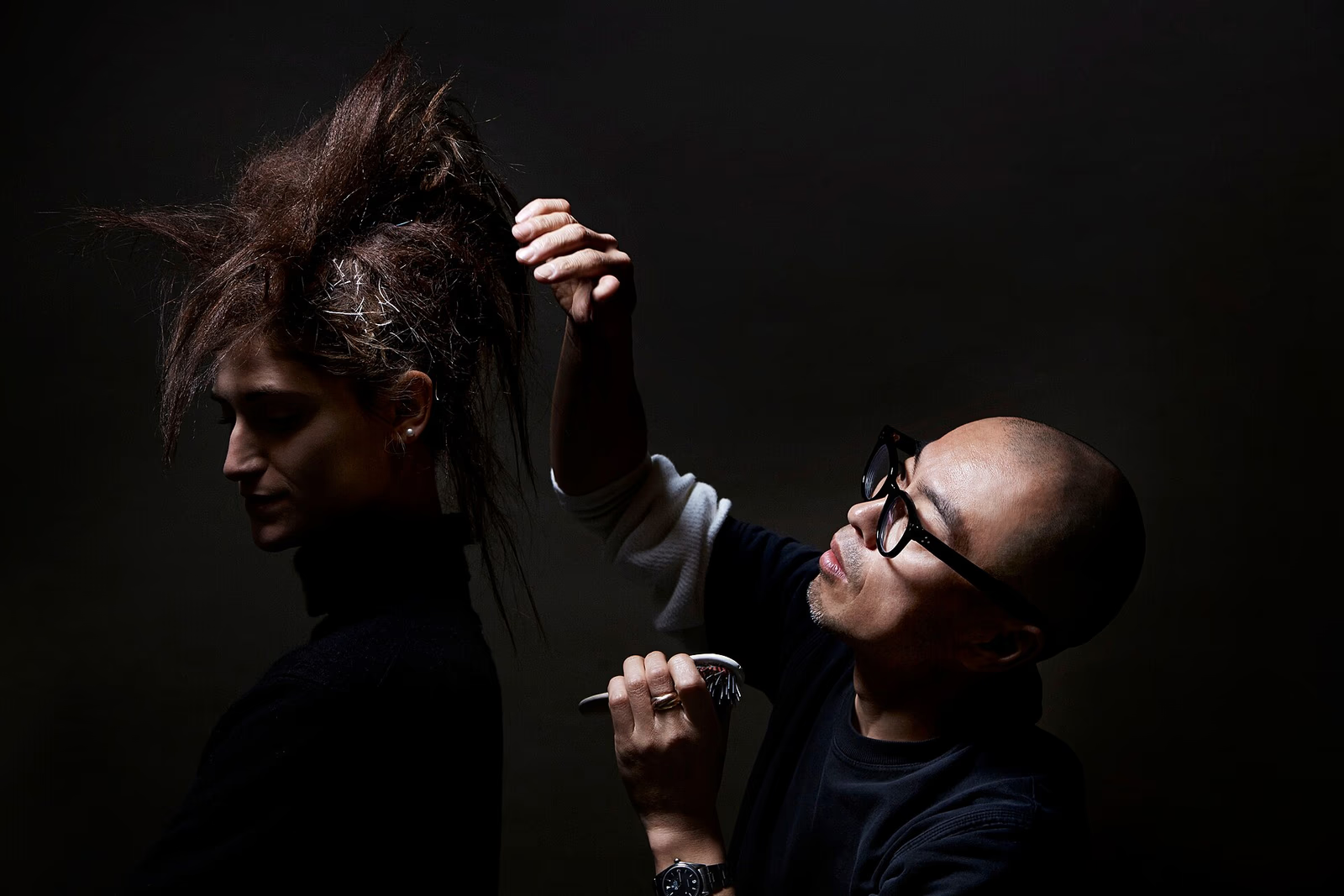
Photo: Haider Ackermann backstage at the Paris Fashion Week Fall-Winter 2015.jpg by Aveda Corporation — CC BY 2.0, via Wikimedia Commons.
What Preparation Actually Looks Like
"Research" is easy to say and vague to act on, so it is worth spelling out what it means in practice on a fast-moving shoot.
Scout before you shoot. Arrive early, walk the route, note where the light is good and where it is hopeless. Ten minutes of walking saves an hour of improvisation.
Know the run of show. On a red carpet, guests arrive in a known order. Knowing who is coming and when lets you position yourself deliberately instead of reacting to whatever happens in front of you.
Set the camera up in advance. Exposure, white balance, focus mode and burst settings should be dialled in before the first subject appears. When conditions change, you should be making one adjustment, not five.
Carry redundancy. A second body, spare batteries, spare cards. Technical failure on a shoot with no retakes is a loss that preparation could have prevented.
Have two or three ideas ready. Not a shot list that dictates the outcome, but a small set of directions you can fall back on when the environment offers nothing: a wall that works as a background, a doorway that gives framing, a piece of shade that fixes the light. For subjects who freeze once the camera is up, directions built around movement rather than static poses give them something to do instead of something to hold.
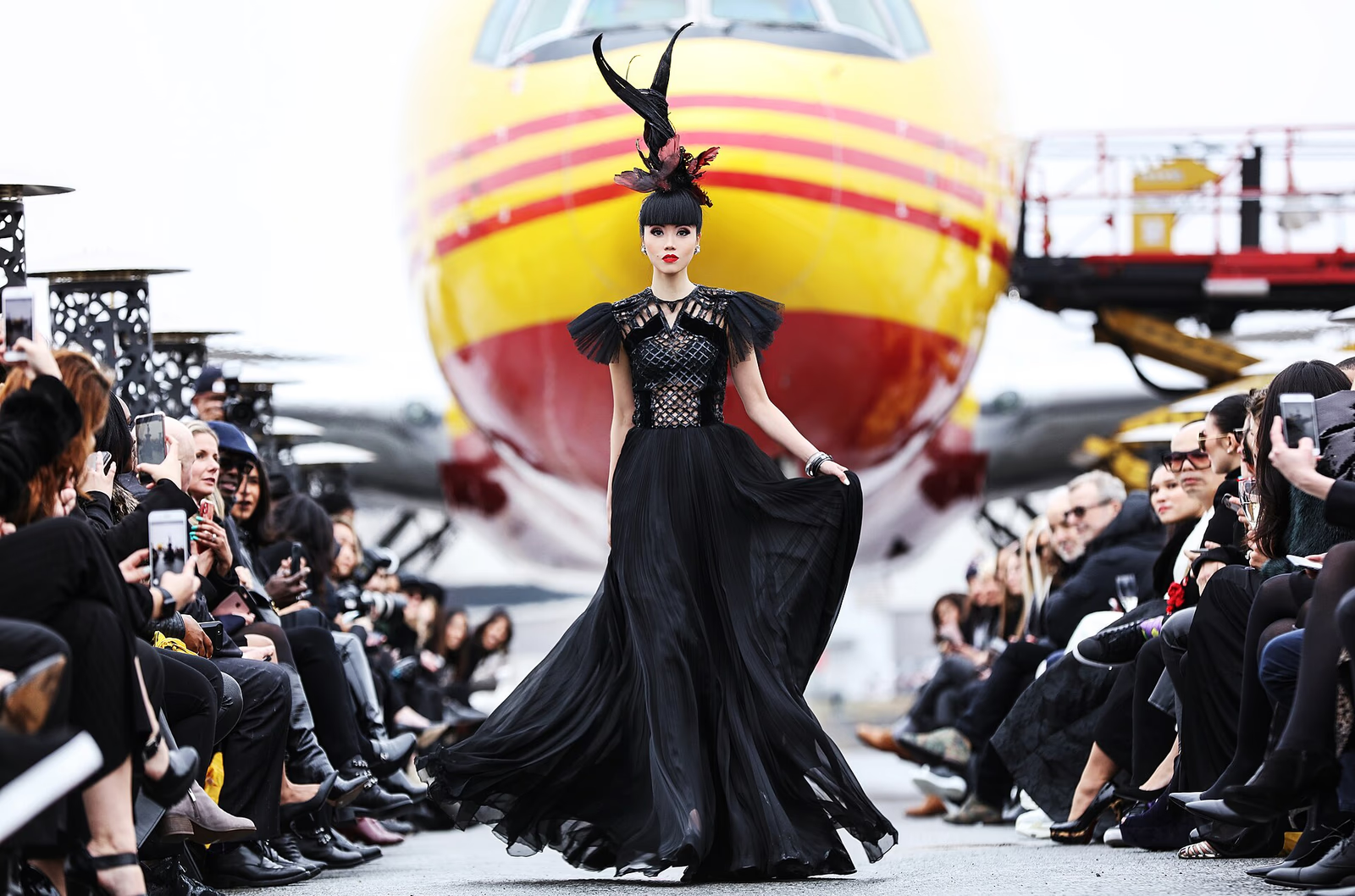
Photo: Jessica Minh Anh at Runway on the Runway Fashion and Sustainability Show 2020.jpg by John Oakley — CC BY-SA 4.0, via Wikimedia Commons.
Practical Tips
- Research the venue, the light, the subjects and the references before every significant shoot.
- Identify what makes your perspective different, then stop hiding it.
- Build technical fluency so you can adapt when conditions change, and arrive with priorities rather than a rigid shot list.
- Learn names and talk to your subjects. Two minutes of conversation is what makes a portrait possible.
- Expect rejection as a normal part of the job, not a verdict on your ability.
- Build a body of work that reflects your own vision rather than what you think the industry wants this season.
- Arrive early and walk the space. Most lighting problems are solved by standing somewhere else.
- Carry backup gear. On a shoot with no second take, redundancy is not optional.
Conclusion
Abrams' career is a good argument against the idea that creativity is a mysterious gift. Their working method is unglamorous: research the environment, know the gear well enough to improvise, talk to people properly, keep going after the rejections, and make decisions in advance so that the only thing left to do on the day is look.
Whether the subject is a Met Gala guest or your own family, the same three things determine the result. Do the homework. Be yourself rather than a version of what you think is expected. Treat the person in front of the lens as a person. Everything else is technique, and technique can be learned.
FAQ
How do I prepare for a high-pressure photography event?
Research the venue, the lighting, the subjects and the photographers who have shot in the same place. Scout the location in advance if you can, dial in your settings before the first subject arrives, and carry backup equipment. Arrive with a clear creative priority and enough flexibility to abandon everything that is not essential.
How do I develop my own photography style?
Look for what consistently draws your eye across your existing work rather than deciding on a style in advance. Study photographers you admire without imitating them, and bring in influences from outside photography, such as film, painting, music or design. Your voice is the sum of your interests, not a filter preset.
How do I make subjects comfortable during a shoot?
Talk to them, learn their name, explain what you are trying to achieve and ask for their input. Treat the session as a collaboration. People who feel respected and involved look different in photographs, and that difference is visible immediately.
What should I do when equipment fails mid-shoot?
Stay calm, and have a plan that does not depend on a single body or a single card. Know your gear well enough to diagnose common faults quickly, keep spare batteries and cards on you, and if something cannot be fixed on the spot, change the approach rather than the schedule.
How do I deal with rejection as a photographer?
Treat it as a permanent part of the work rather than evidence that you should stop. Keep shooting, keep improving the portfolio, and keep making contact with the people you want to work with. Most careers in this industry are built on relationships that took years to turn into work.
What makes event photography different from studio work?
Control. In a studio you decide everything. At an event you decide almost nothing, so the work moves from lighting to positioning, timing and speed. The photographers who do it well have prepared so thoroughly that the decisions left on the night are small ones.
Do I need expensive gear to shoot fashion events?
No. You need gear you can operate without thinking and a second body as a backup. The difference between strong and weak event photography is almost never the sensor. It is knowing where to stand, what to look for, and how to get a subject to relax in the two minutes you have.
Continue reading
13 Unique Father's Day Gifts That Go Way Beyond the Usual Mug
May 24, 2026
Every Chic Londoner Is Wearing One of These 5 Summer Heatwave Staples This Weekend
May 25, 2026
Colorful Shoes, Woven Bags, Tankinis: 7 Fun Summer Trends Worth Shopping Right Now
May 25, 2026
Afterparty Style: Why Custom Clothing Is the Ultimate Expression of Personal Identity
May 25, 2026
99 Most Inspirational Photography Quotes
September 25, 2026
123 Types of Photography to Try
September 25, 2026
Photographer Gray Malin's Travel Tips and the Art of the Aerial Beach Photograph
September 27, 2026
How to Photograph Children: 29 Tips for Creative and Fun Photos
May 24, 2026
8 Sibling Rivalry Poses That Turn Fights Into Epic Photoshoots
July 11, 2026
How to Photograph Shy, Difficult, or Anxious Pets
May 24, 2026
Everything to Know About Wedding Photography Styles
September 27, 2026
The 4 Best Ways to Digitize Old Photos (and How to Store Them)
May 24, 2026
Sibling Photoshoot Poses
September 25, 2026
14 Best Stock Photography Sites
September 25, 2026
12 Grandparent-and-Grandchild Photo Poses
May 24, 2026